you may well recall Bob Spink was Ukip’s First MP having defected from the Tories in 2008 – he retained his Castle Point seat as a turncoat until the subsequent election, where having tried to hedge his bets by announcing, rather feebly, that although he had defected to Ukip he never paid his membership, which was denied by Farage at the time but having two such untrustworthy characters accusing eachother of telling lies just made them both look foolish.
Either way Bob Spink lost his seat in the 2010 election!
Bob Spink also had a period as Chairman of the little known and insignificant CIB (Campaign for an Independent Britain), an organisation that seems to consider building a bank account and over paying a few staff is its main aim rather than investing its money in campaigning for an independent Britain!
In his efforts to find a job VBob Spink, who is almost 70, also stood under the Ukip banner as their Police and Crime Commissioner in Essex, something of a non job which he unsurprisingly failed to get.
Bob Spink has his own problems with the Police at the moment as he faces charges for electoral Crime in Crown Court today 05-Jun-2017:
Former Ukip MP Dr Bob Spink and party campaigner James Parkin appear in court to face electoral fraud allegations
A FORMER Ukip MP and a party campaigner have appeared in court charged with electoral fraud at last May’s council elections.
Dr Bob Spink, who served as MP for Castle Point for almost nine years until 2010, and James Parkin, 38, are charged with a total of 14 offences.
The pair appeared at Southend Magistrates’ Court this morning to deny the allegations, which relate to nomination papers for candidates at last year’s vote in the Castle Point borough.
Dr Spink, 68, of Downer Road, Benfleet, faces five allegations that on or before April 5 he obtained the genuine signature of an elector for the purposes of nominating a candidate, despite the elector not knowing it was for that purpose.
Parkin, of Castle View Road, Canvey, faces the same five allegations in addition to four charges of supplying a false signature on nomination papers.
Dr Spink, wearing a black suit and blue and burgundy tie, shook his head as the charges were read out.
Both men indicated through their lawyer they deny the accusations and want the case to be heard by a crown court jury.
Both men were released on bail until the June 5 hearing.
Dr Spink was the Tory MP for Castle Point between 1992 and 1997, and won the seat again at the 2001 election.
He defected to Ukip in 2008, becoming the party’s first MP, but left later that year. He lost his seat in 2010 to Tory Rebecca Harris but later rejoined Ukip.
The Yorkshire-born politician also recently unsuccessfully stood for Ukip to become Essex Police and Crime Commissioner, losing out to Tory candidate Roger Hirst.
Parkin served as Ukip’s election agent and also stood in Castle Point’s Cedar Hall ward in May’s vote but was defeated by Tory candidate Liz Wass.
Dr. Bob Spink & James Parkin
His wife, Lucy Parkin, stood in the Winter Gardens ward but lost out on a seat to Allan Taylor, from the Canvey Independent Party.
Interestingly in something of a reveral of Bob Spink’s move from Tory to a daliance with Ukip a past aspirant leader of Ukip, Craig McKinley, who joined the Tories when he was defeated for the leadership by Nigel Farage and then went on to stand against Nigel Farage for the Thanet seat as an MP, which he won, seemingly under something of a cloud is also facing the Courts for Electoral Fraud!
The belated charges brought against McKinley, just before the General Election, have all the justification for complaint against the CPS & Electoral Commission as were leveled against the FBI by supporters of Hillary Clinton, but despite the allegations of investigation of Nigel Farage for too close an association with Russia and its agents – I would doubt that Russia has as much interest in the well being of McKinley as they would seem to have had manipulating the American Presidential elections in which Farage & his chum and sponsor Aaron Banks became embroilled!
Regards, Greg_L-W.
~~~~~~~~~~#########~~~~~~~~~~
Posted by: Greg Lance-Watkins
tel: 44 (0)1594 – 528 337
Calls from ‘Number Withheld’ phones Are Blocked
All unanswered messages are recorded.
Leave your name & a UK land line number & I will return your call.
I try to make every effort to NOT infringe copyrights in any commercial way & make all corrections of fact brought to my attention by an identifiable individual
minded that on this site we have introduced reference to both OLAF’s current enquiries in some detail in December and even long before that, we have also alluded to Russian money in conection with Aaron Banks going back some seven years and there is little doubt Nigel Farage has been a beneficiary of Aaron Banks’ clearly dubious and far from transparent income!
It is a well documented fact that Nigel Farage and Ukip have been funded by Aaron Banks, what is not well documented with any degree of transparency has been both Aaron Banks’ income sources or for that matter those of Nigel Farage!
I expect Nigel Farage to run off to Mssrs. Carter Ruck, as he has in the past, to seek to suppress this story and any further speculation that might give arise to the truth becoming known – however I have my doubts that Carter Ruck will be willing to embroil themselves in confrontation with the FBI, CIA & NSA – all of whom seem to consider Nigel Farage as of special interest – it is noteworthy that Nigel Farage’s visits to America seem to have become less frequent, in fact seem to have stopped.
Presumably Aaron Banks is also avoiding America at the moment, could this be because they fear one of the American Security Agencies may subpoena them? It does seem strange when you consider Aaron Banks has funded the renting of a house in Washington for their use.
That Nigel Farage has been in contact with Assange since 2010 seems common knowledge, yet it looks all too similar to common with Soviet practice, and be minded that Putin was at one time head of the KGB, that Nigel Farage may well be considered a spent assett as his cover was under NSA, FBI, CIA scrutiny – could that be the very reason he went to visit Assange openly at the Ecuadorean Embassy, thus completely blowing his cober and effectively washing Russia’s hands of him now he is no more than yesterday’s errand boy.
I incline to believe Nigel Farage & Aaron Banks may well have progressed from People of Special Interest via Alpha Bank accounts under investigation in July 2016 to actual suspects or being on the wanted list – hence their empty house in Washington.
I presume, with his fascination for Russia and support of Chechen rebels and Litvenenko Gerard Batten may also feature on the FBI, CIA, NSA individual of special interest list, boring as he is. Gerard Batten’s staff may well also require closer attention minded of their aid and assistance to the paedophile Vladimir Bukovsky, whose trial would seem to have been delayed on CLAIMS of his ill health – apart from his sick interest in child pornography which it would seem is not just a matter of public knowledge but also seemingly undeniable one wonders if claims of other sicknesses are a matter of expediency, as it was quoted in open Court that his trial would continue in January 2017, as I recall.
Personally, after many years of close study and many informants who have chosen to remain anonymous despite senior positions in Ukip, I have no reason to believe that Ukip, via Aaron Banks, Nigel Farage and others have NOT been in receipt of Russian money, that has materially altered their political stance – just as USSR funding of CND during Cathy Ashton’s tenure as Treasurer and no doubt regularly at other times materially assisted CND to damage the nuclear research and harm progress and safety on a deliberately anti British and indeed anti Western course.
Be minded that the lack of R&D largely caused by CND and funded by the USSR is directly responsible for the arcane standards and practices that led to the catastyrophic situation at Fukishima in Japan, a danger that is still within little more than 48 hours of catastrophe for our planet if they can not keep the faulty system cooled. a system which may require the faulty system continuing to function for possibly 1,000s of years as there seems to be no cure available! Gee thanks CND & USSR – they may yet lead to our species being annihilated.
It is this level of apparent betrayal and involvement of Russia brought about, it seems, by Donald Trump’s team and others acting out of self interest like Cathy Ashton, Gerard Batten, Marien LePen, Nigel Farage, Aaron Banks, Kushner, Cohen and their ilk not to mention Schroder who was rewarded for his damage to Western EUrope and the West with a directorship of Gascom & oligarch status, that befouls Western politics.
One can not and should not seek to blame Russia and their agents such as the former KGB now FSB as it is clearly their duty to act in Russia’s interest, including subverting Western politics by beguilling those willing to betray their own country for personal gain.
It does rather seem that IF those seemingly involved with and for Russia are brought to book they may well be best served by taking a leaf out of Nigel Farage’s aid George Cottrell’s book and pleading guilty to seek a plea bargain and possible absolution, all be it with an American ‘Personna Non Grata’ stamp in their passports!
Report: Nigel Farage a ‘Person of Interest’ in FBI Russia Probe
Rafael Marchante/Reuters
Nigel Farage, the former pro-Brexit Ukip leader in the U.K., is now a “person of interest” in the U.S. counterintelligence investigation on possible collusion between the Trump campaign and the Kremlin, The Guardian reports. Farage reportedly raised the interest of FBI officials because of his relationships with both the Trump campaign and WikiLeaks founder Julian Assange. “One of the things the intelligence investigators have been looking at is points of contact and persons involved,” one source said. “If you triangulate Russia, WikiLeaks, Assange, and Trump associates, the person who comes up with the most hits is Nigel Farage.” He has not yet been accused of wrongdoing and is not an official suspect.
Friday 2 June 2017 10.31 BST First published on Thursday 1 June 2017 12.30 BST
Nigel Farage is a “person of interest” in the US counter-intelligence investigation that is looking into possible collusion between the Kremlin and Donald Trump’s presidential campaign, the Guardian has been told.
Sources with knowledge of the investigation said the former Ukip leader had raised the interest of FBI investigators because of his relationships with individuals connected to both the Trump campaign and Julian Assange, the WikiLeaks founder whom Farage visited in March.
WikiLeaks published troves of hacked emails last year that damaged Hillary Clinton’s campaign and is suspected of having cooperated with Russia through third parties, according to recent congressional testimony by the former CIA director John Brennan, who also said the adamant denials of collusion by Assange and Russia were disingenuous.
Farage has not been accused of wrongdoing and is not a suspect or a target of the US investigation. But being a person of interest means investigators believe he may have information about the acts that are under investigation and he may therefore be subject to their scrutiny.
Sources who spoke to the Guardian said it was Farage’s proximity to people at the heart of the investigation that was being examined as an element in their broader inquiry into how Russia may have worked with Trump campaign officials to influence the US election.
“One of the things the intelligence investigators have been looking at is points of contact and persons involved,” one source said. “If you triangulate Russia, WikiLeaks, Assange and Trump associates the person who comes up with the most hits is Nigel Farage.
“He’s right in the middle of these relationships. He turns up over and over again. There’s a lot of attention being paid to him.”
The source mentioned Farage’s links with Roger Stone, Trump’s long-time political adviser who has admitted being in contact with Guccifer 2.0, a hacker whom US intelligence agencies believe to be a Kremlin agent.
Roger Stone in his office in Fort Lauderdale, Florida. Photograph: Miami Herald/MCT via Getty Images
Farage’s spokesman said he had never worked with Russian officials, and described the Guardian’s questions about Farage’s activities as “verging on the hysterical”.
“Nigel has never been to Russia, let alone worked with their authorities,” the spokesman said. But he did not respond to questions about whether Farage was aware of the FBI inquiry; had hired a lawyer in connection to the matter; or when Farage first met Trump.
The spokesman also declined to comment on whether Farage had received compensation from the Russian state-backed media group RT for his media appearances. RT, which has featured Farage about three times over the last 18 months, also declined to comment, citing confidentiality.
On Thursday Farage dismissed the story as “fake news”. He said he visited Assange at the Ecuadorian embassy in March at the behest of LBC Radio “with a view to conducting an interview”.
He added: “I consider it extremely doubtful that I could be a person of interest to the FBI as I have no connections to Russia.”
Farage has said he only met Assange once has but declined to say how long the two have known each other.
The FBI’s national press office said it had no comment on Farage.
One source familiar with the US investigation told the Guardian that the examination of Farage’s activities was considered especially delicate given his role as an MEP.
Neither Farage nor Trump have made a secret of their admiration for one another. They emerged as unlikely winners last year in contests that have reshaped the world order: Britain’s vote to leave the EU and Trump’s surprise ascendency to the White House.
Both men credited their ability to tap into the worries of struggling and neglected citizens for their victories. But at the heart of the US investigation lies a deeper question: whether Trump campaign officials and people close to the former reality TV star sought to work with state players in Russia to try to influence the US election result.
Last July, Farage attended the Republican national convention in Cleveland, Ohio, when Trump became the party’s nominee.
According to an account by the Ukip donor Arron Banks, Farage first met Trump at a campaign stop in Mississippi in August, where he spoke at a Trump campaign event.
But Farage’s relationships with people close to the US president began years earlier. Farage first met Steve Bannon, Trump’s strategist and former campaign chief executive, in the summer of 2012, when Bannon, who was interested in rightwing movements in Europe, invited the then Ukip leader to spend a few days in New York and Washington, according to an account in the New Yorker magazine.
There Farage was introduced to, among others, the staff of the then senator Jeff Sessions, who is now the US attorney general. Speaking of his longtime admiration for Bannon, Farage told the New Yorker last year: “I have got a very, very high regard for that man’s brain.”
In 2015, Breitbart News arranged a dinner in Farage’s honour at “the embassy”, the nickname for the house the news group rented in Washington. According to a report in Bloomberg, attendees were “blown away” by Farage’s speech at the event, which was also attended by Sessions.
Then, on 24 June last year, the day after the UK voted to leave the EU, Farage thanked Bannon during an interview for Breitbart News’s coverage of the leave campaign. Bannon, in turn, congratulated Farage on his victory, saying he had led an extraordinary “David v Goliath” campaign.
Farage’s ties to Stone are also under scrutiny, it is understood. Stone has frequently publicised his relationship with Assange and described him on Twitter as “my hero”.
Stone publicly predicted the 2016 release of hacked emails from the Clinton campaign that now lie at the heart of the federal inquiry. Democrats on the House intelligence committee have named Stone in their hearings and, according to the New York Times, he is now under investigation.
Last summer, just a few weeks before Farage met Trump in Mississippi, Stone bragged about having a “mutual friend” who served as an intermediary between himself and Assange. He also mentioned in a separate tweet that he had dinner with Farage, though the date of the encounter is unclear.
After Trump’s victory, Farage was one of the first foreign politicians to meet and celebrate with the Republican president-elect, and had his picture taken with Trump in front of a golden elevator in Trump Tower just days after the US election.
The tweet prompted a curt response from Downing Street, which pointed out that there was “no vacancy”. A spokesman said: “We already have an excellent ambassador.”
The pair met again in February, when they had dinner together with Trump’s daughter and adviser, Ivanka, and her husband and White House adviser, Jared Kushner.
Farage was asked about his relationship with Assange in a recent interview with Die Zeit, the German newspaper, after he was seen on 9 March leaving the Ecuadorian embassy where Assange has lived for years. Farage, who declared he had “never received a penny from Russia”, said he met Assange for “journalistic reasons”.
Pressed on his meetings with Russian officials in the past, Farage initially denied having had any, but then acknowledged that he had met Alexander Yakovenko, the Russian ambassador to the UK, in 2013.
Asked by Die Zeit what he was doing now, and whether he saw himself as a politician or a journalist, Farage concluded: “Changing public opinion. That’s what I have been doing for 20 years. Using television, media. Shifting public opinion. That’s what I am good at.”
A spokesman for Farage told the Guardian he had only met Assange on that one occasion. “The meeting was organised by a broadcaster, they could have easily sent another presenter instead.”
Key players in Russia-Trump investigation
Donald Trump
Photograph: UPI/Barcroft Images
The US president’s campaign team and people close to him are being investigated for possibly colluding with Russian state actors to influence the outcome of last November’s election. Trump, who has called the investigation “fake news” and recently fired the FBI director leading the case, was a staunch defender of Farage’s Brexit campaign and has met the former Ukip leader, whom he proposed several times as a possible UK ambassador to the US. While Trump recently said he would be OK with the US arresting Assange for leaks of sensitive information, he has previously sided with the Wikileaks founder, repeating Assange’s claim that he did not receive support from Russia.
Nigel Farage
Photograph: Ben Birchall/PA
The former Ukip leader was an enthusiastic supporter of Trump’s presidential campaign and attended the 2016 Republican national convention. He also has links with Steve Bannon, Trump’s White House strategist, and Roger Stone, the president’s decades-long political mentor. Farage has praised Vladimir Putin as a strong leader and has appeared several times on RT, Russia’s English-language propaganda channel. Farage has declined to say how much money RT paid him. Sources say Farage is a “person of interest” in the FBI’s investigation into whether Trump’s associates colluded with Russia during the presidential election.
Steve Bannon
Photograph: Brendan Smialowski/AFP/Getty
The president’s chief White House strategist, who served as chief executive of the Trump campaign, has known Farage since 2012, when he was working as a senior editor at Breitbart News, the rightwing news website. The former investment banker – seen as the driving force behind Trump’s “America First” nationalist policies – hosted Farage in the US while he was leading Ukip and introduced him to key US conservatives. Breitbart strongly supported the leave campaign during the EU referendum in the UK and Bannon is seen as the main conduit between Trump and Farage.
Roger Stone
Photograph: Brendan Mcdermid/Reuters
The Republican operative, who has known Trump for decades, is at the centre of the FBI investigation. Stone, who reportedly keeps in touch with Trump, boasted last year that he had a “back channel” to Julian Assange, the Wikileaks founder, and predicted the release by Wikileaks of emails that damaged Hillary Clinton’s campaign. Last summer, Stone tweeted that he had dinner with Farage – confirming the pair’s relationship – and had contact with Guccifer 2.0, who claimed responsibility for the hacking of Democratic party emails.
Julian Assange
Photograph: Frank Augstein/AP
The editor-in-chief of WikiLeaks played a key role in the release of hacked Democratic party emails, according to US intelligence agencies. They allege Russian hackers working for two Moscow spy agencies – the GRU and the FSB – gave the emails to Assange in London. WikiLeaks then published the leaked emails in July and October. This damaged Clinton’s campaign and helped Trump’s, US intelligence says. Assange denies the emails came from a state. In March, Farage visited Assange at the Ecuadorian embassy in London, just days after he had dined with Trump in Washington.
It is interesting to note that Ekaterina Paderina’s new married name is Banks and it would seem her husband Aaron Banks became the principle backer of Ukip with an income and resources that seem far from transparent6!
This correspondence between Ukip’s Press Office, the Farage gofer Gawain Towler and Gerard Batten thus becomes even more interesting:
From: Gawain Towler <gawain@gmail.com>
To: Gerard Batten <gerard.batten@btinternet.com>
Subject: Fwd: Evening Standard Letters – Katia Zatuliveter
Date: Mon, 6 Dec 2010 14:27
Gerard,
Can you help here?
G
———- Forwarded message ———-
From: <joshua.neicho@standard.co.uk>
Date: 6 December 2010 14:22
Subject: Evening Standard Letters – Katia Zatuliveter
I try to make every effort to NOT infringe copyrights in any commercial way & make all corrections of fact brought to my attention by an identifiable individual
so many Ukippers had their dreams come true at the Ukip 2017 Manifesto Launch as it seems many of them like to make complete fools of themselves such as the Ukip MEPs Earl Dartmouth, Gerard Batten & Paul Nuttal!
UKIP chaos: MEPs and activists shout down journalists during calamitous manifesto launch
LONDON — The UK Independence Party’s manifesto launch descended into chaos today when party MEPs and activists shouted down journalists for asking leader Paul Nuttall whether he was exploiting the Manchester attack.
UKIP MEP Earl Dartmouth yelled “what a stupid question” and “don’t you understand English?” at BBC Political Editor Laura Kuenssberg while one activist told her to “go back down your hole” in a heated question and answer session.
Emotions were running high in Westminster on Thursday morning where UKIP leader Nuttall and his deputy Suzanne Evans launched the party’s general election manifesto.
Nuttall and Evans announced a series of radical policies to combat Islamic extremism, including banning the burqa and Niqab in public, reinstating police stop and search powers and only accepting migrants who share “British values”.
The press conference quickly became heated when broadcast journalists Kuenssberg and Channel 4’s Michael Crick asked Nuttall whether he was exploiting the Manchester attack by holding a manifesto launch on Thursday morning.
“Ask a sensible question!” an activist shouted at Crick, while Kuenssberg was met with a chorus of furious remarks from a number of UKIP activists and elected representatives.
Watch: UKIP press conference descends into chaos.
Some UKIP figures including Nuttall and former political reporter turned UKIP MEP Patrick O’Flynn urged party members to stop heckling journalists, but to little effect. A question from the Guardian newspaper was met with “oh for fuck’s sake” by UKIP Brexit spokesman Gerard Batten.
The UKIP manifesto includes policies like reversing cuts to police, the army and border control; bringing net migration down to zero; abolishing the House of Lords; protecting the triple lock and winter fuel allowance, and holding Theresa May’s government to account of delivering a complete divorce from the European Union.
Evans said May’s decision to cut the number of police officers while she was Home Secretary meant she “must bear some responsibility” for the Manchester attack. She quickly rowed back on this, saying only the terrorists are to blame.
“I didn’t say she must bear some responsibility,” the UKIP deputy chairman said.
UKIP is without any MPS and a Business Insider/GfK opinion poll published last week put the party on 5% — a 7% drop since the last time GfK asked Brits who they intend to vote for in the next general election.
I try to make every effort to NOT infringe copyrights in any commercial way & make all corrections of fact brought to my attention by an identifiable individual
This is just a quick piece to note that I am pleased to see the Guardian following up on what I wrote in March with some strong reporting on the connections between former U.K. Independence Party (UKIP) leader Nigel Farage and Donald Trump, Roger Stone, Steve Bannon, Julian Assange and Guccifer 2.0.
They even used some of the connections that I discovered while researching that piece (like Roger Stone’s dinner with Farage), and they found something else. I had reported that Breitbart’s London editor-in-chief Raheem Kassam was keen to defend UKIP against allegations that it was funded by Vladimir Putin. Here’s what I didn’t know:
This is getting discussed today because the FBI apparently agrees with me that Nigel Farage seem to be the hub for a remarkable number of spokes.
Sources who spoke to the Guardian said it was Farage’s proximity to people at the heart of the investigation that was being examined as an element in their broader inquiry into how Russia may have worked with Trump campaign officials to influence the US election.
“One of the things the intelligence investigators have been looking at is points of contact and persons involved,” one source said. “If you triangulate Russia, WikiLeaks, Assange and Trump associates the person who comes up with the most hits is Nigel Farage.
“He’s right in the middle of these relationships. He turns up over and over again. There’s a lot of attention being paid to him.”
The source mentioned Farage’s links with Roger Stone, Trump’s long-time political adviser who has admitted being in contact with Guccifer 2.0, a hacker whom US intelligence agencies believe to be a Kremlin agent.
Guccifer 2.0 isn’t believed to be a Kremlin agent. The belief is that Guccifer 2.0 isn’t a person at all, but a fake persona created by Russian intelligence.
In any case, I feel like a made a small contribution to this reporting, so I wanted to share it.
I try to make every effort to NOT infringe copyrights in any commercial way & make all corrections of fact brought to my attention by an identifiable individual
when you consider the High Court’s comments in the case below, perhaps we can understand why the case brought against Nikki Sinclaire was so utterly amateur and corrupt, it does seem as if there is endemic and institutionalised corruption in The West Midlands Policeforce and all too likely when you consider the murtder of Charles de Menenez and the rise of Cressida Dick who was in charge of that murder, and the clearly corrupt case against Jasna Badzak, and the dishonesty of Gerard Batten when he used the police to try to bqankrupt me with his lies – it seems it isn’t just The West Midlands Police!
Even earlier than these cases you would be astonished at not only howmuch evidence we had to supply to OLAF and The Bedfordshire Police before they finally condescended to charge the Ukip MEP Tom Wise and Lindsey Jenkins with embezzelling tax payers’ money from the EU purse.
Tom Wise had even paid his solicitor, from the stolen money in his account, to fund trying to use the law to silence me and if possible bankrupt me to prevent me continuing to expose the truth. Nigel Farage never was prosecuted for the stolen money he received from Tom Wise and also as Tom Wise finally admitted his part in the crime the charges against Lindsey Jenkins were not proceded with.
Despite having worked with Daniel Foggo and exposed the crime in the National Press the police took a very long time to act and it was only because I would not drop the matter that Bedford Police finally brought charges that led to Tom Wise being sentenced to 2 years in prison!
It does look all too much as if Ukip, the CPS and the police collude in corruption!
Let us not forget that in giving evidence against
Nikki Sinclaire, who organised, obtained and presented the peoples’ petition which obtained the IN/OUT EU Referendum to restore the fundamental human right of selfdetermination to the British peoples,
Ukip’s lakey John Ison admitted he not only fabricated evidence, but also stole from Sinclaire and was colluding with Nigel Farage in setting her up!
Perhaps even at this late date the West Midlands Police and the CPS, whose deputy director sat in on much of the case and seemed to have colluded in the efforts to stitch Sinclaire up, could show some integrity and explain why they failed to appologise to Sinclaire, when she won her case and they resoundingly lost on all counts, and also why they failed to prosecute John Ison and those with whom he colluded – minded that the Judge in the case cautioned John Ison as he was incriminating himself in open Court!
Consider not just how corrupt West Midlands Police have been shown to be in the case below but also what a foul mouthed bunch of low lifes they have shown themselves to be. Also this would seem to be endemic over many years for was it not the same force who fabricated evidence some years ago against ‘The Birmingham Six’ a case they never solved!
Consider also the lies and fabrications by the police, to try to dishonestly cover up corruption and incompetence, in the Hillsborough case. So we can go on: Consider the murder of the newspaper seller brutally attacked and killed on camera by a Metropolitan Police lout.
Consider these cases before you trust the police again, as it seems all too common!
You should also, when you have read this article below then read CLICK HERE
This is just the latest well documented case:
West Midlands police unit accused of perjury and falsifying evidence
Counter-terror unit members described as ‘criminals who fabricate evidence’ in Old Bailey trial of terror suspects
Three of the suspects on trial at the Old Bailey: Mohibur Rahman, Khobaib Hussain and Naweed Ali. Tahir Aziz (not pictured) is also on trial. Composite: Pa/Rex
Tuesday 16 May 2017 20.02 BST Last modified on Tuesday 16 May 2017 20.18 BST
A West Midlands police counter-terrorism unit has been accused in court of perjury, falsifying notebooks and hiding text messages related to the trial of a group of terror suspects who called themselves the “Three Musketeers”.
Simon Hussey, a senior officer in West Midlands police’s special projects team, began giving evidence at the Old Bailey trial of four men from the Midlands accused of plotting terror attacks in late April but his cross-examination was interrupted, and the personal and work phones of several officers involved in the case were seized by the police shortly afterwards.
Defence barrister Stephen Kamlish QC said the texts and call records exposed the unit as “criminals who fabricate evidence, who ensure that documents go to courts that aren’t true accounts” and that Hussey and his team had repeatedly discussed their evidence with one another during the trial, despite being under orders from the judge, Mr Justice Globe, not to discuss the case.
Giving evidence in April, Hussey told the judge he had no communication during the trial with “Vincent”, an undercover officer who posed as the boss of a fake courier company set up to gather intelligence on two of the defendants. Central to the defence case is the allegation that Vincent planted a bag containing a pipe-bomb, an air pistol and other items under the driver’s seat of the car of Naweed Ali, one of the defendants, where it was discovered by the security services and triggered a major security alert.
But the messages and phone logs revealed repeated contact between Vincent and Hussey, including a seven-minute phone call from Vincent immediately after he finished giving evidence on his first day. Hussey said he could not remember what they had discussed. They also travelled in a group from Birmingham to London during the trial and stayed in the same hotel until they were advised not to by the prosecution’s barristers.
“Yes we met, but the principle is we don’t discuss the case,” he said.
“That was a clear and blatant lie,” Kamlish responded.
In the runup to the trial, the officers met at Hilton Park service station on the M6 to revisit their witness statements. Kamlish said a service station was chosen to avoid being spotted. “This is your regular clandestine criminal meeting place, isn’t it, so that other people won’t see you there,” he said.
Hussey denied this. “The location was geographically suitable for them to meet,” he said. “I believe that the statements were sent for Andy and Hajji [a third undercover officer] so that they could refresh their memories prior to attending the court to give evidence so they could individually prepare for the case.”
Kamlish claimed Vincent had rewritten his notebook by hand after the four men were arrested to include references to seeing defendants with the bag in which the pipe-bomb and air pistol were found. This was a “very big lie at the heart of the case”, he said.
The week after the arrests, Hussey texted Vincent: “We have agreed with cookie [a senior officer] that you will write your pocket book for Pesage [the name of the operation], not type, hope that helps.” Kamlish said this revealed Vincent falsifying his notes.
Hussey denied this: “Prior to that text to Vincent there had been discussions with Vincent as to who should complete a typed copy of his written pocketbook. It is generally the case that operatives produce a typed copy of their written pocketbook … I said I would ask [another officer] who would produce the typed copy and he said his team would do that. So that text to Vincent tells him we’ve agreed that,” he said.
The text messages revealed a tight-knit group of officers: Vincent texted Hussey that he was preparing to give an “Oscar performance” on the witness stand, adding: “I won’t let you down … I would die first .”
Another undercover officer, referred to in court as Andy, retired shortly after the operation ended. Vincent texted him: “So you wanker … U leave me with a load of fucking wet wiped nob heads who don’t know how to put a job together wipe arses or cover tracks … Wanker …. Miss you.”
Hussey told the jury: “We’re close as colleagues, yes.”
The evidence is part of a 10-week trial of Naweed Ali, 29 and Khobaib Hussain, neighbours from Birmingham, and Mohibur Rahman, 32 and Tahir Aziz, 28 of Stoke-on-Trent, on charges of preparing terrorist acts between May and August 2016. All four men deny the charges.
The men were arrested in August 2016 during a major security alert after the bag containing the pipe bomb – which was later found to be non-viable – and the other weapons was found.
Just who will Police The Police in our society,
as they seem to be Out of Control, arrogant & self obsessed
You should also, now you have read this article above then read CLICK HERE
From the Hillsborough Inquest to Plebgate, from the revelations about undercover officers to the shooting of Mark Duggan, the last few years have been as controversial as any in the history of British policing. The government has introduced a range of new measures to try and make the police service more accountable.
These have included the strengthening of the Independent Police Complaints Commission, measures to crack down on officers retiring when under investigation, and a new openness surrounding police disciplinary hearings. But have these new ideas really worked or is there, as some claim, real resistance to accountability?
I try to make every effort to NOT infringe copyrights in any commercial way & make all corrections of fact brought to my attention by an identifiable individual
UKIP’s Mark Reckless to join Conservatives in assembly
By Nick ServiniPolitical editor, Wales
6 April 2017
The South Wales East AM will sit as a Tory but will not join the party.
Conservative group leader Andrew RT Davies welcomed a “hard-working and dedicated” AM, saying it made his party the official opposition to Labour.
But Gower MP and ex-AM Byron Davies said allowing Mr Reckless into the group was “not a particularly bright idea”.
When questioned about Andrew RT Davies’ leadership of the Tory group on BBC Radio Wales, the Gower MP said “we have to live with that”.
With regard to how the Tory group should work with Mr Reckless, he said: “I would be very, very cautious about how they deal with him.”
Welsh Secretary Alun Cairns said: “Mark Reckless is not a member of the Conservative Party. There are absolutely no plans for him to become a member of the Conservative Party.”
A Conservative Party spokesman said: “Decisions about who sits with the Conservative group in the Welsh Assembly are a matter for the group in the Welsh Assembly.”
Image caption Andrew RT Davies says Mark Reckless joins a “strong and united team”
In a statement, Mr Reckless said he had been “thoroughly impressed by the performance and discipline of Andrew RT Davies and the Welsh Conservative group”.
He said Theresa May’s leadership as Prime Minister had been “exemplary” and that she had been “steadfast in her position to deliver on the wishes of the people of Wales and the United Kingdom” in relation to Brexit.
Assembly Presiding Officer Elin Jones said the former UKIP AM could be a member of the Conservative group.
Andrew RT Davies said Mr Reckless had “proven himself to be a hard-working and dedicated AM who has been an effective representative for the South East Wales region”.
“He will now be able to continue this work as part of a strong and united team which will be the official opposition in the assembly,” he added.
Mr Reckless told BBC Wales he knew there was still “bad blood” from the time he quit the Tories to join UKIP.
“It’s not for me to waltz back into the party with any sense of entitlement,” he said.
“I want to focus my efforts here with some humility.”
“He didn’t have the courtesy or the courage to speak to me about any doubts he had about his future in UKIP or what he might get from the Conservative Party,” he told BBC Wales.
“Fundamentally he was elected to the assembly not as Mark Reckless but as a UKIP candidate for the South East Wales region.
“He’s betrayed the trust of all of those who selected him in the first place to be a candidate and all of those who worked to get him elected to the assembly.
“He’s got no mandate to sit in the assembly as a member of the Conservative group.”
UKIP chairman Paul Oakden said it was “incumbent on Mark Reckless to relinquish a position he has only by virtue of a UKIP mandate”.
“The position should go to the next UKIP candidate on the regional list,” he said.
Image copyrightReutersImage caption Nigel Farage welcomed Mark Reckless to the UKIP fold in 2014
Mr Reckless was Conservative MP for Rochester and Strood when he defected to UKIP in 2014.
He voluntarily quit the seat to fight and win it in a by-election for UKIP, but lost it at the 2015 general election.
There is no requirement under assembly rules for either regional or constituency AMs to stand down when they leave the party they were elected to represent.
Mr Reckless told BBC Wales he would “love to be able to put my decision to the electorate” as he did in 2014, but said assembly rules regarding members elected via a regional list prevented this.
Plaid Cymru leader Leanne Wood said the changing arithmetic in the Senedd – with Plaid now the third-biggest party – would mean “very little in actual fact”.
She added: “We’ve got a strong team of assembly members all of whom are working very hard for the constituencies they represent, and for Plaid Cymru as a whole.
“We are putting the Welsh national interest at the top of the agenda at every opportunity. We might be a smaller team but we certainly are a very effective team.”
Analysis by BBC Wales political correspondent Tomos Livingstone
Normally the defection of a politician from one party to another prompts a stream of abuse from the member’s former home and the sound of champagne corks popping at their new abode.
There’s been plenty of the former from UKIP now that Mark Reckless has left, but not everyone in the Conservative Party is celebrating today’s development.
Mr Reckless made the opposite journey in 2014, and anger at that decision is still plain for all to see.
That’s why the South Wales East AM is going to be a Conservative AM, but not, rather oddly, a member of the Conservative Party.
Has Andrew RT Davies therefore performed a coup, defying the wishes of Welsh Conservative MPs who think he’s mis-read the party mood, and making his group the second-largest in the Senedd?
Or has he needlessly made some powerful enemies who might want to re-visit the whole affair in the weeks and months ahead?
This could be the beginning of the story rather than the end.
To view the original article CLICK HERERegards, Greg_L-W.
~~~~~~~~~~#########~~~~~~~~~~
Posted by: Greg Lance-Watkins
tel: 44 (0)1594 – 528 337
Calls from ‘Number Withheld’ phones Are Blocked
All unanswered messages are recorded.
Leave your name & a UK land line number & I will return your call.
ALL MY BLOGS & WEB SITES are clearly sourced to me
I do NOT use an obfuscated eMail address to hide behind
I do NOT use or bother reading FaceBook
I DO have a Voice Mail Message System
I ONLY GUARANTEE to answer identifiable eMails
I ONLY GUARANTEE to phone back identifiable UK Land Line Messages
I do NOT accept phone calls from witheld numbers
I Regret due to BT in this area I have a rubbish Broadband connection
I AM opposed to British membership of The EU
I AM opposed to Welsh, Scottish or English Independence within an interdependent UK
I am NOT a WARMIST
I do NOT believe the IPCC Climate Propaganda re Anthropogenic Global Warming
I AM strongly opposed to the subsidy or use of failed technologies eg. WIND TURBINES
I AM IN FAVOUR of rapid research & development of NEW NUCLEAR technologies
I see no evidence to trust POLITICIANS at any level or of any persuasion
I do NOT believe in GODS singular or plural, Bronze Age or Modern
I value the NHS as a HEALTH SERVICE NOT a Lifestyle support
I believe in a DEATH PENALTY for serial or GBH rape.
I believe in a DEATH PENALTY for serial, terrorist, mass or for pleasure murder.
I believe in a DEATH PENALTY for serial gross child abuse including sexual.
I do NOT trust or believe in armed police
I do NOT believe in prolonging human life beyond reasonable expectation of sentient participatory intellectual existence
I believe in EUTHENASIA under clearly defined & legal terms
I try to make every effort to NOT infringe copyrights in any commercial way & make all corrections of fact brought to my attention by an identifiable individual
the bottom line is that there was an overwhellming British vote for the UK to Leave_The_EU
I am personally relieved that the British peoples voted for BreXit by such a majority – the majority was akin to the vote to remai9n in the EU all those years ago when the Government so clearly lied to the electorate, well this time despite the Government lies the people chose to Leave-The-EU
In times of National danger when the people seek victory against overwhellming odds perforce we choose strange allies – consider the allies thes United Kingdoms had in World War I & II, so9me were natural allies but some were very alien, some even sided with Britain in liberating Europe, on both occassions for their own ends, consider the deal Britain struck with Russia then and the cost to Britain in the loss of India which was a condition of their allegiance.
That Nikki Sinclaire used much of her own money to mount the petition which delivered the debate in The House of Commons that resulted in the Conservative Government including the promise of a Referendum in their manifesto is conveniently overlooked.
Just as it would seem that the criminal collusion of John Ison with Nigel Farage to try to sabotage the chances of a Referendum and fabricate evidence against Nikki Sinclaire is overlooked!
I find Arron Banks an odious and untrustworth individual with a long list of failures behind him but on this occassion I am glad he was able to access money whether Dark Money, Russian Money or even if it was Columbian Drug Money laundered through Panama matters little to me as we won!
Sometimes unpleasant people do good things!
Arron Banks: ‘Brexit was a war. We won. There’s no turning back now’
Now out of Ukip – the party he bankrolled – Arron Banks is creating a political movement of his own. We met the ‘bad boy of Brexit’ just before article 50 was triggered – and found his ambitions go far beyond leaving Europe
Arron Banks in the boardroom at his office in Bristol last month. Photograph: Suki Dhanda for the Observer
It is five days before article 50 is triggered, and I’m sitting in the sunshine outside a pub in Islington with the man who bankrolled Brexit. If victory lies with anyone this weekend, it maybe lies with Arron Banks.
Though Nigel Farage is the face of Brexit, Arron Banks is the man who made it possible. He bought Brexit. Or at least paid for it. Until 2014 he was an unknown Bristol businessman. Now he’s the biggest political donor in British political history. The most powerful. He put more money into funding the Leave campaign than anyone else – more than £7m. He donated his office space, his computer equipment, his senior staff. He’s the co-founder of Leave.EU, the so-called “provisional wing” of the Leave campaign, spearheaded by his close confidante Nigel Farage, and he’s now contemplating his next move: taking an axe to the rest of the parliamentary system.
He only began pouring his money into politics in earnest in 2014 with a splashy donation to Ukip but he’s now out of the party and in the throes of creating a new “movement”. In his sights: the seats of more than 100 Remain MPs. Although, he’s not partisan – he’s aiming to dislodge all “bad MPs”. (“Bad MPs” being, as far as I can make out, anyone from Oxford PPE-ists to people he’s had a spat with on Twitter.) He tells me he’s working with Steve Hilton, David Cameron’s former head of strategy, to come up with “a points system that grades them on their awfulness”, and from that he’ll formulate “a target list of the most hated people”.
It will be that defining phenomenon of our age: a grassroots movement funded and built by a multimillionaire. And, potentially, the next political earthquake. Taking us out of Europe was only step one of the big disruption, it turns out. Next up: the party political system, and the destruction of the traditional boundaries between left and right.
And if that sounds like a stretch, well, we’ve been here before. Banks has the money, the drive and, as we’ve latterly come to realise, the connections. He and his business partner, Andy Wigmore, together with Nigel Farage and Raheem Kassam, the editor of Breitbart London, are the self-styled “bad boys of Brexit”. They’re key partners in a transatlantic alliance, the depth and extent of which is only now, slowly, coming into the light. An alliance that has been cultivated for years by Steve Bannon, Donald Trump’s chief strategist.
The sun is shining. Douglas Carswell, Ukip’s only MP and Banks’s mortal enemy, had just resigned from the party. Banks intends to stand against him – and beat him; he plays to win – in the next general election. He has just been on the phone with Farage, who he says is cockahoop. Everything is going exactly to plan.
“The needle on public opinion has shifted so far now. And trying to shift it back is as hard as it was for us to shift it the other way. There’s people protesting, all the rest of it. But the fact is, they’re not going to shift public opinion. It has shifted. It is what it is. It’s permanent.”
It’s hard to argue with this theory of permanent revolution. And part of it – a big part, he enjoys telling me – was playing and beating the media at its own game. “As businessmen, we sat down with a clean sheet of paper and said, ‘How do we beat these people?’ And then we figured out how the mainstream media works – how they operate – and we turned it back on them.
“We worked out how to take their outrage, how to take their pain – in your case – and feed it back into the system. You know we spent £12-14m on the campaign? And we calculated what our column inches and TV coverage was worth. It was over £150m .”
All of which makes me wonder: what exactly is the game he’s playing here, now? A month ago I interviewed Andy Wigmore, Leave.EU’s director of communications, and as a result of what he revealed to me, the Electoral Commission is now investigating whether Leave.EU should have declared the donation of services by a company largely owned by Robert Mercer, the billionaire who bankrolled Trump, and who works closely with Steve Bannon.
Banks’s autobiography, The Bad Boys of Brexit, was written for him in the Jeremy Clarkson style, and the whole aesthetic is Top Gear. A lot of people portray Farage, Banks and Wigmore as the three stooges: Clarkson, James May and “the Hamster” (Richard Hammond), the jolly chumps who more or less accidentally took the country out of Europe. But that’s not my view. They’re smart, and in triangulation with Bannon there has been a huge amount of strategy – and crucially an understanding of technology – behind everything they’ve done. This just feels like the next stage. Ukip was the host body, and now they’re pupating.
Andy Wigmore celebrates with Arron Banks in Westminster on 24 June 2016, the day after the UK voted to leave the EU. Photograph: Ben Cawthra/Rex/Shutterstock
“Whatevs,” says Banks when I bring up the Electoral Commission. “I don’t give a monkey’s what the Electoral Commission says.”
To be clear, the Electoral Commission rules aren’t guidelines for the tombola at the village fete. He’s talking about UK electoral law. Electoral law that Damian Tambini, director of the media policy project at the LSE, says isn’t fit for purpose. Tambini met with the regulators and other parties and they’ve joined forces this week to call for a parliamentary commission to urgently review it.
Modern online campaigning has fundamentally changed everything, Tambini tells me. “And the existing framework is utterly weak and helpless.” The cost of building databases, money poured into third-party campaigns, offshore spending – these were either largely or totally unregulated. There is no longer any way, with current legislation, of guaranteeing a free and fair election.
Or as Banks puts it: “We were just cleverer than the regulators and the politicians. Of course we were.”
He didn’t break the law, he says. He “pushed the boundary of everything, right to the edge. It was war.” And later: “You’re looking for a smoking gun but there’s a smoking gun on every table! And no one cares. No one cares!”
Banks is a gambler: both calculated and reckless. It’s his choice to do the interview in the pub. His to get stuck into the wine. He likes the thrill of this, the game. And he likes winning more. His main business is insurance, and calculating the odds then beating them is what he does. Brexit: a £7m gamble that was… what? An investment? And if so, into what?
A brave new Brexit world, obviously, but there’s also this new movement he’s airing for the first time. He has policy ideas that are either radical or nuts, possibly both (selling off all government property to create a sovereign wealth fund to bankroll new housing). He’s suggesting things that are genuinely innovative in the turgid world of UK politics: looking to young people; taxing old, wealthy people.
But there’s some other agenda in play, too. And moments into my first question, about Trump, he has segued. “We had no Russian money into Brexit,” he says. “I’ve had two very nice lunches with the Russian ambassador, where Andy and I got completely pissed. And that’s it. Why wouldn’t you? Why wouldn’t I go and have lunch with him? We’d met diplomats and all sorts of different people. Not a single penny of Russian money has been put into Brexit.”
Which would be a perfectly reasonable answer, if he had been asked if Russia had put money into Brexit. But he hadn’t. He asked and answered his own question. I know about his six-hour lunches at the Russian embassy, not least because he makes a point of writing about one of them in The Bad Boys of Brexit. It’s Trump’s links to Russia, I’m asking about, not his, but he brings it immediately around to himself. Or to be more accurate, he makes an equivalency between them. “Come on!” he says when I ask him what he makes of the accusations against Trump. “I’ve got a Russian wife. I got an early taste of it about six years ago when the Daily Mail put her on the front page and called her a Russian spy.”
He’s referring to an incident in 2010 before anyone knew who he was, when his wife, Katya Banks – formerly Ekaterina Paderina – came up in conjunction with a court case involving a suspected Russian spy. “She was on the front page as a Russian spy! I was killing myself. It was very funny.”
What happened was this: a 64-year-old MP for Portsmouth, Mike Hancock, who was on the Commons defence select committee, instigated a four-year affair with another Ekaterina, the striking 24-year-old Ekaterina Zatuliveter, whom he met in St Petersburg and later made his researcher. MI5 believed she was working for Russian intelligence and applied to the Home Office to deport on the grounds of national security. She appealed and her case was brought before the Special Immigration Appeal Commission.
Some of the evidence was held behind closed doors but the judgment is full and detailed, and utterly compelling reading. She had previously had an affair with a senior Nato official and a Dutch diplomat. And MI5 disclosed that they had warned Hancock that he may be being targeted by foreign agents – he had had a string of Russian and eastern European girlfriends.
The judge, Mr Justice Mitting, heard all the evidence, including excerpts from Zatuliveter’s diary, which she had stated in her original evidence that she didn’t have (she produced it on the first day of the trial, saying she had forgotten about it) and ruled in her favour, concluding that she was an “immature” young woman with an understandable crush on an older man. In summary, he wrote: “We cannot exclude the possibility that we have been gulled – but, if we have been, it has been by a supremely competent and rigorously trained operative.”
Banks’s wife, Katya, comes into the story because, according to follow-up reports in several newspapers, she also had links to Hancock before she met and married Banks. Her first husband – in a marriage of just three months– was a retired merchant seaman, Eric Butler. The Home Office suspected it was a marriage of convenience and tried to deport her, at which point she wrote to her local MP, Hancock, for help. Butler told reporters that he had discovered them looking “very cosy” in the conservatory.
I ask Banks: “Did you know about that bit of history before the story came out?”
“I knew that she had been in, lived in Portsmouth and I knew… yeah, I knew broadly the kind of, you know, thing.”
What do you mean?
“Well, broadly the fact that she had written to her local MP and various other things.”
That her ex-husband had said he’d found her and Hancock together?
“Well, you know, that’s the evil of an ex-husband or wife, isn’t it? They’re hardly on your side. As far as I can see, it’s just a pack of Daily Mail lies.”
Are you saying that she hadn’t met Mike Hancock, then?
“The only thing that’s true in the Daily Mail story is that she fluently speaks six languages and she has the profile that would fit a Russian spy. But that’s about it.”
To date, Arron Banks’s strategy with the press has been this: if he doesn’t like what they say, he instructs his lawyers at Mishcon de Reya and threatens to sue. He threatened to sue Matthew Elliott – the director of the official Vote Leave campaign – for calling Leave.EU racist. He threatened to sue a thinktank, American Bridge, which featured him in an article entitled “The Kremlin’s Trojan Horses”. He threatened to sue the Guardian for publishing his business dealings as described in the Panama Papers. He threatened to sue a newspaper that described him as having business interests in Belize. And he threatened to sue a commentator on CNN for making certain statements about him on air.
“They called me a Russian actor! And I’ve got no feelings one way or another other than having a Russian wife. I felt that was just wrong. They said that Brexit was funded by the Russians. That’s a bit rich.”
It’s not rich to ask the question though, is it?
“If you lied and said Russians funded Brexit, I would be pretty annoyed.”
But what if I say, “Arron, the question is are you a Russian actor?”
“I wouldn’t care in the least. They said I was a Russian actor and that Russian money had funded Brexit, and it was wrong. There has to be a point where you draw the line in the sand.”
“I’m not going to say that,” I tell him. “Because it’s impossible to know what the sources of your wealth are. That’s the whole issue.”
“That’s wrong as well because I made a fortune in the insurance industry. I’m taxed in northern Bristol. My money is made in the UK.”
Some of it is. And the rest? Who knows. That’s my beef, not so much with him but our electoral finance rules. He’s free to donate, even though nobody knows quite where the £7m he put into the Leave campaign came from, or the millions he put into Ukip: his financial arrangements include a complex structure of companies based in secretive low-tax jurisdictions. Even Leave.EU was set up by an offshore company. It’s the offshoot of STM Fidecs, which the Observer reported was incorporated in Gibraltar.
In Britain he has his insurance companies, various security and intelligence companies, a new data company. He’s a director of nearly 40 different companies using slightly different variations of his name. He has installed employees as directors of other companies. And then there’s a whole offshore empire. A bank he co-owns on the Isle of Man. A slew of things in Gibraltar. The “defunct shell companies”, as he describes them, in the British Virgin Islands. And diamond mines in South Africa – he owns a whole supply chain of diamonds, from mines to shops.
How many companies do you actually own? He shrugs. “I’ve no idea.”
This is how offshore can work: a web of deliberate secrecy. A web that is now being brought into politics. Not just directly via the money that Banks is pouring in, but indirectly too. The digital marketing of the Vote Leave campaign was offshored too: funnelled through a tiny company on the west coast of Canada.
In America, the restrictions on political funding were dismantled in a 2010 case, bankrolled by Robert Mercer, which an organisation called Citizens United took to the supreme court, opening up the way to Super Pacs – “political action committees” – which have become unlimited donation vehicles. The sums in Britain are tiny in comparison, but you don’t even need to create a system of Pacs: there’s no way of knowing how much money was poured into the Leave campaign before the “regulated period” (the weeks before the campaign when spending is monitored and capped). Banks is setting up a movement not a party, at least initially. Parties are subject to some political financing rules. Movements aren’t.
Why are your companies based in low-tax jurisdictions with no disclosure requirements, I ask Banks.
Going up… Gerry Gunster, Arron Banks, Donald Trump, Nigel Farage, Andy Wigmore and Raheem Kassam at Trump Tower in New York, in November 2016, three days after Trump’s election victory. Photograph: Wigmore/Finn/Splash News
Because you’re a citizen of this country? And it pays for schools and hospitals. “I’m an internationalist, OK? If I own diamond mines in South Africa, why would I register a company in the UK?”
It’s one thing to be an internationalist if you’re only a private individual. But he’s not. He’s the man who bankrolled Brexit. But what does it matter? He’s already told me the mainstream media is worthless. That the BBC lies. “What you write is completely valueless because it’s sitting under another bunch of papers almost straightaway.”
More precisely, who needs to sue in the age of #fakenews, anyway? Later he gives me a lift to the station, and Andy Wigmore – they call each other Wiggy and Banksy – is on speakerphone. Wigmore has family links to Belize, and he was that country’s trade envoy to the UK until January, when the foreign office stripped him of his diplomatic status because of his political activity. And Banks lost his status too: he was Belize’s special envoy to Wales. It’s all a terrific joke. “But what?” I say. “You’re telling me you have a diplomatic passport?”
“Yes,” he says. “We both do.” Proud British citizens both.
Then Wiggy pipes up: “Did you know Paul Manafort [Trump’s ex-campaign manager] is accused of laundering Russian money through Belize?”
Are Banksy and Wiggy trolling me? Using me – a feature writer on a remoaner newspaper – to get this stuff out into the sunlight? But all hopelessly mixed up together? Banks has chucked it all at me: his diplomatic passports and diamond mines, Russians spies, offshore tax havens, circumvention of electoral law. All those individual facts are true, but together it feels like one big confected mess? #Fakenews? Is that what’s going on here? That’s what it feels like.
There is weirdness threaded through this story in all sorts of ways. Talking to Banks, my grasp on normal feels slippery. It’s like the weirdness of reading a Trump tweet. The weirdness of playing what feels like a high-level game of chess with Banks, but in the British style – with banter and jokes. Banks has a good sense of humour. One of the first things he tells me is how much he enjoys it when Marina Hyde, the Guardian’s peerless columnist, rips the piss out of him. I bait him relentlessly and I can tell he’s enjoying that, too.
But the weirdness still cuts through. There’s the moment when I challenge Banks to a toast in my pidgin Russian. “You really don’t speak Russian, do you?” he says after I accidentally throw in some Czech. “Maybe I’m fluent,” he says, although he refuses to say a single word.
The lifebuoy I find myself grasping hold of is a piece in last Sunday’s New York Times by Masha Gessen, the biographer of Putin, who now lives in the US. One should resist “trafficking in exaggeration and unsubstantiated allegations,” she writes. It’s pointless looking for a conspiracy, she says. The unimaginable has already happened. “The unimaginable, happening out in the open day after day, not only continues to dull our defences but also creates a need to see a conspiracy big enough, a secret terrible enough to explain how this can be happening to our own country.”
And here too. Out in the open is the fact that Arron Banks is pro-Putin. “I tell you what I’m pro,” he tells me. “I’m pro Putin being actually for his country. It’s not possible to run that entire country as a pure democracy. It’s not possible. The whole history of Russia is that there has to be someone strong in control or it breaks up.”
Out in the open is that he’s just said that democracy isn’t necessarily the answer. Out in the open is that Nigel Farage has voted multiple times in alignment with Russian interests in the European parliament. Out in the open is that Banks defends Putin’s invasion of both Crimea and eastern Ukraine. “It’s 85% ethnic Russian,” he says.
You don’t need to look at the inputs. Just look at the outputs. There’s no need to go looking for a conspiracy. What’s right here, in plain sight, is troubling enough. Andrew Foxall, the director of the Russian Studies Centre at the Henry Jackson Society, tells me that is the point he is always making. “Join the dots that are in full view. There’s a tendency right now to see Russian agency in everything, given the heightened awareness. To think Russia must be in play.
“There are commonalities that are there anyway. It just so happens Russia overlaps with the alt-right, as they call it in the US, and the far right in Europe, and Ukip in Britain. Farage has been part of a pan-European, pro-Russian network in the European parliament. And Russia helps to facilitate and amplify those discourses.
“The Russian state uses different tactics in different countries, and sometimes it doesn’t need to do much at all. Farage was one of the first Ukip politicians to embrace RT [Russia’s state broadcaster, formerly Russia Today, which has a channel in the UK] in 2007-2008.”
It was one thing for people to be pro-Russia before 2014, Foxall says, but post Crimea, the MH17 missile that brought down the plane in Ukraine, the war crimes in Aleppo, “the Kremlin’s tactics are clear. And to be a willing participant in that is… profoundly disturbing.”
Out in the open is Russia’s strategy of stoking and encouraging far-right movements in Europe. Ben Nimmo, a defence analyst with the Atlantic Council, points out that the Russian military doctrine published in 2014 lays out the characteristics of modern warfare as the combined use of military and non-military means: “Economic, diplomatic and informational. And the use of protest potential of the local population.” Nimmo studies disinformation and says that the far right and Russia are linked together in a single network.
“So after the Berlin attack, Paul Joseph Watson [a British far-right activist with a huge following on social media] was one of the first who jumped in with a slew of tweets blaming Islam. And that was picking up an RT news report. There’s this huge confluence between Russia and the far right. It’s the opposition to western liberalism that unites them. From the Kremlin’s point of view it’s because they hate democracy and transparency, but it also entails hating gay marriage and wanting to ban the Qur’an and being pro-Christianity and whites.”
Also out in the open, framed by a golden door, is the closeness of the transatlantic alliance. Farage, Wigmore and Banks may sound and behave like Clarkson, May and the Hamster but, ideologically, they’re the shadow players of Trump, Bannon and Mercer.
It was data analytics firm Cambridge Analytica that led me to understanding Robert Mercer’s role in all this; in the great disruption of the political landscape on two continents; his strategic and coordinated attack on the mainstream media and its replacement with an alternative online network. But it’s Steve Bannon who forged these links across the Atlantic.
Bannon was the one who set out in 2012 to find European versions of the tea party movement and he has cultivated a close relationship with Farage and Ukip ever since. With Robert Mercer’s billions, he’s supported them first via Breitbart and latterly during the referendum campaign. He directed Mercer’s Cambridge Analytica to lend its assistance too. On the day article 50 was triggered this week, Nigel Farage raised his pint glass to toast “Well done Bannon,” he said. “Well done, Breitbart. You helped with this hugely.”
Out in the open is this, Banks’s statement to me: “What you’re talking about is the degree to which the Russians actually – let’s say they influenced the Brexit vote. Say I’m pro-Putin. Nigel said he’s not anti-Putin, if that’s the right word. But all we’ve said is that there are elements of what Russians do that we don’t disagree with. We don’t agree with everything they’re doing, like murdering journalists in the street.”
I interrupt him. You’re saying, on the record, that you don’t agree with murdering journalists on the street?
“I’ll only say it once,” he says.
We both laugh. Though possibly only one of us has a slightly high-pitched edge to our voice.
Dismiss, distract, dismay. This, Nimmo tells me, is the classic Russian disinformation strategy. You launder information like you launder money. You pass it through a set of different bodies. You send it from one shell company/mouthpiece to another. You confuse its origins. You chuck in a distraction. You create outrage.
Nigel Farage and then Ukip party chairman Steve Crowther with their new donor, Arron Banks, in Bristol, 2014. Photograph: Matt Cardy/Getty Images
And in this context, I wonder if that’s me. Have I been groomed as the vector? The agent of disinformation. The vessel through which their scrambled, encrypted, confusing message is passing. Maybe this is simply a description of all journalists in all interview situations. It’s just usually some celeb trying to flog their memoir.
What is Banks flogging? Andrew Breitbart, the founder and informing spirit of Breitbart, believed politics is downstream from culture. First change the culture, then the politics will follow. Take the existing culture and subtly distort it. Banks has launched a new politics site, Westmonster, and in his sights is the Westminster elite and the metropolitan elite. He levels this at me. I point out: “You’re the privately educated multimillionaire who’s sitting here drinking white wine in Islington.”
The shame, I think, is that he could have been a leftie. There is a strong streak of social justice that runs through him. Or social something. Chippiness is part of it. But that’s no bad thing. But he’s not a leftie. And in the US, the permanent revolution is well under way. Steve Bannon is masterminding a silent coup: the institutions of government are being systematically dismantled. The relation of citizens to the state is being re-engineered. Trump, the businessman, is redefining them as consumers. Last week the US senate approved the right of telecoms companies to sell their customers’ browsing history – a huge step forward in renegotiating the relationship between individuals and their rights from that of democratic participants to end users. This is government as platform monopoly. Government as modelled on Google and Facebook. And what’s coming is platform democracy, where the company/government retains the right to change the user agreement at any time. And it’s data – the intimate information of you, your personal life, your history, your relationships, your dreams and desires, your thoughts – that’s the source of their power, legitimacy, capital. Harvested, captured, sold, fed into the panopticon: total surveillance, total control, total power.
I’ve started to think that Brexit isn’t our Trump moment. That’s what’s coming next – 2016 will be nothing next to the general election of 2020, our year of reckoning.
Before I meet Banks, I watch him talking on stage at a trade show called “Master Investor”. I learned of it because I had liked Leave.EU’s Facebook page and I’m now in their million-strong database. This isn’t just a million people, to be clear. It’s the entire social networks of a million people. I had received an email inviting me to the event, hosted by Banks’s great friend, Jim Mellon.
Mellon is another businessman who donated to Leave.EU. He made millions in the early 90s in Russia in uranium mining, investing $100,000 in a company that was worth $2.5bn two years later. He doesn’t live in Britain though. The man who introduced Banks to Farage, who brought the Brexit team together, wasn’t actually eligible to vote in the referendum. He lives in Ibiza and the Isle of Man. Article 50 as brought to you by true patriots, foreign donors, multimillionaires, Belizean passport holders and tax exiles.
I ask Banks about the email I got, advertising the event. The insurance offers he’s sending to Leave.EU subscribers. The use of his political database for commercial purposes
“Jim Mellon is my friend,” he says. “Why shouldn’t I? It’s my data.”
Well, no, it’s not. It’s my data. Your data. It’s what’s at the heart of all this. Steve Bannon knows this, and Robert Mercer knows this, and Arron Banks knows this. His day job, one of them – insurance – is all about data. “We know everything about everyone,” he says. “We buy everything.”
The battle for data is where the next general election will be fought. Politics is war, says Steve Bannon. And Banks is already out of the trenches.
Politics is war. Politics is business. Business is politics. There are no walls between them any more. Silos, as they call it in the tech world. There are no silos. It’s all one, now – enmeshed, intertwined, inseparable.
ALL MY BLOGS & WEB SITES are clearly sourced to me
I do NOT use an obfuscated eMail address to hide behind
I do NOT use or bother reading FaceBook
I DO have a Voice Mail Message System
I ONLY GUARANTEE to answer identifiable eMails
I ONLY GUARANTEE to phone back identifiable UK Land Line Messages
I do NOT accept phone calls from witheld numbers
I Regret due to BT in this area I have a rubbish Broadband connection
I AM opposed to British membership of The EU
I AM opposed to Welsh, Scottish or English Independence within an interdependent UK
I am NOT a WARMIST
I do NOT believe the IPCC Climate Propaganda re Anthropogenic Global Warming
I AM strongly opposed to the subsidy or use of failed technologies eg. WIND TURBINES
I AM IN FAVOUR of rapid research & development of NEW NUCLEAR technologies
I see no evidence to trust POLITICIANS at any level or of any persuasion
I do NOT believe in GODS singular or plural, Bronze Age or Modern
I value the NHS as a HEALTH SERVICE NOT a Lifestyle support
I believe in a DEATH PENALTY for serial or GBH rape.
I believe in a DEATH PENALTY for serial, terrorist, mass or for pleasure murder.
I believe in a DEATH PENALTY for serial gross child abuse including sexual.
I do NOT trust or believe in armed police
I do NOT believe in prolonging human life beyond reasonable expectation of sentient participatory intellectual existence
I believe in EUTHENASIA under clearly defined & legal terms
I try to make every effort to NOT infringe copyrights in any commercial way & make all corrections of fact brought to my attention by an identifiable individual
I’m beginning to think that it matters little if I only post a tokenry few listings of defectors from Ukip as the party in its present leaderless and backerless state is increasingly irelevant.
Ukip has never had much of a role in British politics with its failure to make a mark at Westminster, the absence of representation in Scotland, the fact that there is no one of any stature or merit in Wales with their two squabbling leaders, the paucity of offices held in English Councils (and of course the rate at which they defect).
Notable also is the fact that all they seem to have as backer now is the apparent carousel funding of Alan Bown, who you will remember seems to get back much of his funding via various printing & supply companies he seems to have an interest, and who on one occasion, when he had moved out of his marital home dumping his wife in favour of one of his betting shop manageresses making much protestation of being a Christian (whatever that is in his mind!), at that time he even forgot to vote for Ukip in a national election despite effectively having bought himself a position on Ukip’s NEC!
As for leadership it is hard to decide whether Ukip supporters should laugh or cry when they realise that the very best they could manage to get was the implausible, unelectable, corrupt scoundrel & general self serving acalley Paul Nuttal!
Just for the record anyway – here is another County Councillor following the example of Ukip’s only MP Douglas Carswell and numerous Couynty Councillors defecting from Ukip.
Lincolnshire County councillor quits UKIP to join Conservatives
Posted: March 30, 2017
By Liam O’Dell
UKIP county councillor Daniel McNally has defected to the Conservative Party, it has been announced.
The councillor – who represents Louth Marsh – was officially welcomed to the party as a member following an Executive Council meeting last Tuesday.
He will now stand as a Conservative candidate for the Saltfleet and the Cotes seat in the election on May 4.
Cllr Craig Leyland, chairman of the Louth and Horncastle Conservatives Association, said: “This is great news and shows the strength of the Conservatives both locally and nationally.
“Councillor McNally is a hard-working councillor and will be an asset to the group and party locally.”
Councillor Martin Hill, Leader of Lincolnshire County Council said that the defection of Cllr McNally to the Conservatives was ‘a great addition’ to their Lincolnshire team.
He said: “We always knew Daniel was a Tory at heart and we are sure he will work hard for all his residents.”
The defection comes just days after UKIP’s only Member of Parliament, Douglas Carswell, resigned from the party to become independent.
It also follows the decision of Boston Borough councillor David Brown to defect to the Conservatives, which took place in January.
ALL MY BLOGS & WEB SITES are clearly sourced to me
I do NOT use an obfuscated eMail address to hide behind
I do NOT use or bother reading FaceBook
I DO have a Voice Mail Message System
I ONLY GUARANTEE to answer identifiable eMails
I ONLY GUARANTEE to phone back identifiable UK Land Line Messages
I do NOT accept phone calls from witheld numbers
I Regret due to BT in this area I have a rubbish Broadband connection
I AM opposed to British membership of The EU
I AM opposed to Welsh, Scottish or English Independence within an interdependent UK
I am NOT a WARMIST
I do NOT believe the IPCC Climate Propaganda re Anthropogenic Global Warming
I AM strongly opposed to the subsidy or use of failed technologies eg. WIND TURBINES
I AM IN FAVOUR of rapid research & development of NEW NUCLEAR technologies
I see no evidence to trust POLITICIANS at any level or of any persuasion
I do NOT believe in GODS singular or plural, Bronze Age or Modern
I value the NHS as a HEALTH SERVICE NOT a Lifestyle support
I believe in a DEATH PENALTY for serial or GBH rape.
I believe in a DEATH PENALTY for serial, terrorist, mass or for pleasure murder.
I believe in a DEATH PENALTY for serial gross child abuse including sexual.
I do NOT trust or believe in armed police
I do NOT believe in prolonging human life beyond reasonable expectation of sentient participatory intellectual existence
I believe in EUTHENASIA under clearly defined & legal terms
I try to make every effort to NOT infringe copyrights in any commercial way & make all corrections of fact brought to my attention by an identifiable individual
with the defection to being an Independent MP it can clearly be shown that Ukip has lost its most valuable asset as it now has no voice at Westminster!
Further – can you think of a single solitary individual of stature or credibility, competence or integrity – they not only lack a leader of any credible standing, Paul Nuttall having been shown to be a liar, a fantasist who is both integrity and charisma bereft and like his predecessor Nigel Farage Paul Nuttall has yet again been resoundingly rejected for a role in Domestic Politics!
The manner in which Douglas Carswell joined the party was, as I explained at the time CLICK HERE, a very questionable process! It was widely believed at the time of Carswell’s defection from the Tories that the defection had much more to do with a temper tantrum, having failed, despite seeing himself to be very important, to be allocated a room in the main hotel, for the Tory conference.
Being cast into the wilderness of a mere annex was thought to be the reason he organised a rapid dinner date with Stuart Wheeler the professional gambler who made his money spread betting and subsequently lost much of it due to commercial ineptitude and poor investments, you will recall that at the time Wheeler was another defector from the Tories and Ukip’s only backer of any note, though he didn’t trust Ukip or its Farage manipulated NEC, with any of his money, insisting that as their backer he must also be in control of their finances as their Financial Director!
It is understood that at the dinner Wheeler offered Carswell the leadership of Ukip, conveniently overlooking the fact that Nigel Farage was leader. Wheeler and Carswell were of course not the only ones who realised that Nigel Farage, although seen as a great asset to the Leave-The-EU cause by his devotees he alienated far more people than he could consider supporters and with the low grade of appointees he permitted around him his leadership of the Leave-The-EU movement and the BreXit cause would do infinitely more harm than good.
Ego won the day and Carswell, who was on the verge of leaving the Tories, having had his ego severely bruised by being bannished to the annex succumbed to Wheeler’s massaging of his ego by promising him the leadership which was in fact not in Wheeler’s gift!
That Carswell has put the spin on his joining that claims he joined Ukip to make the party more electable than with Nigel Farage orchestrating the band is a proof of the value of hindsight:
though it is reasonable to point out that Douglas Carswell did not just add a new string to Farage’s bow but an entirely new instrument – plausibility and electability.
You will note from Douglas Carswell’s statement/appologia that he makes some very valid points but there is more than a hint, in his self justification, that he has jumped before he was pushed and reading the vitriolic comments of Ukip’s now ex backer, who has left the party, Arron Banks and the needless vindictiveness of Nigel Farage, who is no longer leader of Ukip on the domestic front, Carswell was clearly right to leave before it became apparent he was dumped – in the true flavour of democratic behaviour that is well founded in EU style politics, where Ukip has honed its skills of treachery and back stabbing.
Ukip has always been a party of dubious morality and a tendency to fight and squabble like ferrets in a sack!
You will note from the other articles that I have posted from Douglas Carswell’s web site that he has voiced a number of sound concepts put forward in a reasoned and electable manner that is very out of keeping with the self aggrandising and sneering denigration style of most Ukip web sites, I trust you find this insight of the practices of Ukip and its style of some help in your decision making for the future as it becomes ever more obvious that Ukip’s role is now over.
Clearly Ukip has no role in the future BreXit negotiations as it is clear from their efforts and comments to date that they have little or no understanding of tyhe complexities of international law, the WTO, CODEX, WHO, UN, OPEC and the like. Ukip can not even seem to understand, let alone agree, as to whether they seek the votes of the left wing so called socialists, the center left of the hopelessly lost Libdems or the right of center Tory and capatalist supporters of free trade and international competition.
Further: Ukip would seem to be bereft of a funding policy with Nigel Farage in control of the EFDD Group funding the unlikely scenario of a Ukip MEP putting his hand in his pocket for the benefit of the party and no clear backer of stature it would seem t6hey are likely to be forced to return to the ‘caroussel’ methodology as they lurch along, as they did prior to Stuart Wheeler’s intervention and Arron Banks’ control.
At this moment I see little hope for Ukip, which is on the verge of insolvency, if not bankruptcy, near leaderless, in any real terms, when you consider the implausibility of Paul Nuttall’s claims and his recent abject failure when presented to the public in a by election on the most winnable occasion in Ukip’s entire history!
Consider Douglas Carswell’s statement and other suggestions and then consider which of Ukip’s MEPs have ever been able to string together as plausible or electable a role particularly since Nikki Sinclaire left the party to set up the petition which forced the debate in the House of Commons that gave rise to the promise of a Referendum in tyhe Tory Manifesto that led to the demise of the LibDems and fractured sqabbling in what was the Labour Party, which is so clearly torn in half and likely to be a political irrelevance organising fatuous anti democratic marches and counter productive demonstrations for at least a decade – particularly if it tries to remain as one party!
It has been an extraordinary achievement. UKIP, my party, which was founded in 1993 in order to get Britain out of the European Union, has now achieved what we were established to do.
On Wednesday, the Prime Minister is going to trigger Article 50, beginning the formal process of withdrawing our country from the EU. By April 2019, Britain will no longer be a member of the EU. After twenty-four years, we have done it. Brexit is in good hands.
UKIP might not have managed to win many seats in Parliament, but in a way we are the most successful political party in Britain ever. We have achieved what we were established to do – and in doing so we have changed the course of our country’s history for the better. Make no mistake; we would not be leaving the EU if it was not for UKIP – and for those remarkable people who founded, supported and sustained our party over that period.
Our party has prevailed thanks to the heroic efforts of UKIP party members and supporters. You ensured we got a referendum. With your street stalls and leafleting, you helped Vote Leave win the referendum. You should all be given medals for what you helped make happen – and face the future with optimism.
Like many of you, I switched to UKIP because I desperately wanted us to leave the EU. Now we can be certain that that is going to happen, I have decided that I will be leaving UKIP.
I will not be switching parties, nor crossing the floor to the Conservatives, so do not need to call a by election, as I did when switching from the Conservatives to UKIP. I will simply be the Member of Parliament for Clacton, sitting as an independent.
I will leave UKIP amicably, cheerfully and in the knowledge that we won.
At the hundreds of meetings and action days I have attended as a UKIP activist across the country since I joined in August 2014, I have met some truly remarkable people. You are heroes! Thank you and well done. I wish you all well.
When first elected to represent Clacton in 2005, I promised to do all I could to help ensure that Britain left the EU. To the consternation of my then party whips (some of who, I’m delighted to see, are now ministers helping make Brexit happen), I made my intentions on that front plain in my maiden speech. Job done.
I will be putting all of my effort into tackling some of the local problems affecting the NHS in our part of Essex, including GP shortages and the threat to our local Minor Injuries Unit. In that spirit, I called a Westminster Hall debate last week about the future of primary care in our part of Essex. Local comes first.
New research on the family courts documents that, despite transparency guidance, only a tiny minority of proceedings are published. That’s deeply concerning – because secrecy promotes injustice.
Sadly, children do sometimes need to be taken into care. Most of the time, I’m sure, family courts make the right call.
However, some families are broken up unnecessarily. In 2008, Camilla Cavendish wrote a number of articles for The Times, documenting serious mistakes by social services. In several cases, expert witnesses gave testimony without ever having met the families involved.
The problem is that we don’t know how widespread these errors are, because the courts sit in secret. Adoption order proceedings are closed to the public and the press, and rarely published. Moreover, the identities of expert witnesses are protected. Secrecy allows injustice to be covered up.
It has long been recognised – by both ministers and judges – that more transparency is required. Yet efforts to increase it have fallen short.
Sir James Munby’s transparency guidance, for example, left the decision as to whether to publish to judges’ discretion. The new research by academics at Cardiff University reveals that very few judges have opted to do so – as a paper published by the UKIP PRU predicted.
The system needs much bolder reform. In our paper, we called for the publication of judgments to be mandatory, greater media access to both proceedings and case documents, and expert witnesses to be identified.
We also advocated greater use of Special Guardianship Orders, so that, if children do have to be taken from their families, they are placed at least temporarily with grandparents or other relatives, rather than total strangers.
Transparency helps ensure justice. It shouldn’t be resisted.
Andy Haldane, the Bank of England’s chief economist, has admitted that ultra-loose monetary policy is a drag on productivity. So why won’t the Bank change course?
Productivity is the key to prosperity. Increased wealth comes from producing more using less effort, time, and resources. If productivity stagnates – as it has in the UK – prosperity will follow suit.
One of the drivers of low productivity growth is cheap credit. Inefficient companies that would otherwise have failed, and replaced by better competitors, have been sustained by artificially low borrowing costs.
Haldane’s case for record-low interest rates is that they prevented mass unemployment. Perpetuating zombie companies was worth it, he claims, to safeguard jobs.
That argument had some force in the immediate aftermath of the financial crisis. Less so nearly a decade later. Keeping interest rates at record lows indefinitely means making low productivity growth the norm, while at the same time creating the conditions for another job-destroying financial crisis.
Cheap money is not the only reason for poor productivity. Another, which Haldane neglected to mention, is corporate welfare. Tax credits incentivise employers to use cheap (often imported) labour, rather than invest in new technology – as UKIP’s Economy Spokesman, Mark Reckless, explains in a recent paper.
But the economic effects of artificially manipulating the price of capital shouldn’t be underestimated. Experience has shown that official price controls create either gluts or shortages. Market prices always allocate resources better.
Capital is no different. Lower productivity is one of many dangerous imbalances caused by ultra-loose monetary policy. They need to be corrected, not excused.
Like so much of what the House of Commons does these days, yesterday’s debate on MPs double-jobbing was mostly virtue signalling. That’s because MPs don’t like the real solution: recall elections.
In the United States, representatives can be recalled by their electorate. If enough local people sign a petition, they trigger a by-election. Voters then decide whether or not to renew their representative’s mandate at the ballot box.
We could have had the same system here. In 2014, a Recall of MPs Bill was announced in the Queen’s Speech.
But the title was misleading. Under the final legislation, voters can only trigger a by-election if a committee of grandees – or a court of law – has first found an MP guilty of wrongdoing. Rather than put voters in charge, the Bill let MPs act as a self-serving cartel.
Indeed, the government made sure Zac Goldsmith’s amendments to the Bill – which would have led to a real right of recall – were rejected.
Now we see why. Would the former Chancellor would have taken on so many roles outside Parliament if a recall election in Tatton were a possibility?
The debate about MPs taking jobs outside Westminster in any case misses the point. The most common form of double-jobbing is the appointment of MPs as ministers. Voters should have a say on that too.
Until a century ago, they did. Prior to the Re-Election of Ministers Acts (1919 & 1926), MPs had to face ministerial by-elections to join the Cabinet. They could only become ministers with their constituents’ consent.
Consent wasn’t always given. Between 1895 and 1926, there were 127 ministerial by-elections. On eight occasions, the ministers-designate lost.
The way to keep MPs in check isn’t to empower a toothless regulator. It’s to let their constituents hold them to account.
George Osborne’s appointment as Evening Standard editor says a lot about the state of the press. It ought to be perverse for a politician to be a journalist. But, when many so-called journalists do little more than push a political agenda, what’s the difference?
The idea of journalists as brave, independent scrutineers of politics may be appealing, but it’s not accurate. The relationship between the Fourth Estate and the political class is actually far too cosy.
Because politicians trade access for positive coverage, many journalists end up going native. Instead of exposing the governing elite, they act as its cheerleaders.
“That’s nothing new,” you might think. “Newspapers have always had a clear bias.”
Of course, there has always been an editorial point of view. The difference now is that there is little but opinion. Subjective analysis now masquerades as news.
During the referendum campaign, for example, it was striking how both print and broadcast media reported George Osborne’s Project Fear narrative as objective fact. No matter that none of it has turned out to be true.
Pundits frequently make out that established media are losing market share because consumers are now more interested in fake news than truth. The people, we’re told, are at fault.
The reality is the opposite. People are losing faith in established media because they see through the false pretence to objectivity. There’s a market for truth which the press is failing to deliver. Rather than cater to the public, pundits have joined the oligarchy.
Osborne will no doubt use his perch at the Standard to push the same spin he did as Chancellor. Far from being unqualified, he’s taking up an all too familiar role. That’s the problem.
Ultra-loose monetary policy is one of the biggest risks to the global economy. Belatedly, the Federal Reserve raised interest rates this week. The Bank of England should follow suit.
There is no justification for record low interest rates. They were supposed to be temporary measure, in the wake of the financial crisis. Instead, they have become permanent. Indeed, the Bank cut them even further last August.
The consequences of artificially cheap credit are disastrous. It encourages consumers to borrow too much, banks to take excessive risks, and companies to buy back shares rather than invest in improving productivity.
Moreover, it transfers wealth from the asset poor to the asset rich. It is stoking a housing bubble that is preventing a generation from buying their own homes.
Central banks are reluctant to raise interests because they fear the only thing keeping the global economy afloat is consumer borrowing and spending. Yet they must know that is an unsustainable model.
Eventually, borrowers will default, and contagion will spread to the entire system – just as it did a decade ago. Compounding the problem with more debt will only make the ultimate correction all the more painful. (For more on this, see my paper After Osbrown.)
Yesterday, Kristin Forbes, one of the nine members of the Bank of England’s Monetary Policy Committee, dissented from the majority decision to leave rates unchanged, and voted to raise them. Let’s hope she persuades the rest of her colleagues next month.
Pundits see the government’s decision to scrap its planned rise in NI contributions for the self-employed as the Chancellor’s failure. Perhaps it should just be seen as Parliament doing its job.
Politicos have become so used to budgets being nodded through by MPs that they have come to believe Parliament is supposed to work like this. But it’s not.
Prior to the 1930s, backbench MPs could table amendments to the budget resolutions. The national government changed the rules to prevent it. Since then, Parliament has tended just to rubber stamp hundreds of billions of pounds’ worth of spending and taxation.
Yet opposition from MPs has now forced a volte face on the centrepiece of the budget after only a week. Perhaps Parliament isn’t quite so powerless after all.
It will be interesting to see how the Chancellor now replaces the ditched measures.
In autumn 2015, George Osborne backtracked over tax-credit reductions without replacing them with alternative cuts. Instead, he conjured up an extra £27 billion from nowhere – based on conveniently revised borrowing projections. In effect, he simply borrowed more money.
By contrast, Hammond has hinted at a broader rethink of the treatment of the self-employed in the tax system – so as to achieve the same ends by different means. That suggests self-employed people shouldn’t celebrate just yet. Alternative tax rises may be coming in the autumn.
That’s the wrong approach. Rather than tax – or borrow – more, government needs to spend less.
Parliament has demonstrated that cross-party opposition can block tax rises. Now we need cross-party support for spending cuts.
Five years ago, I crowdsourced a Private Members’ Bill on Guido Fawkes. From five options, the people picked a Bill to repeal the European Communities Act. How prescient they were. Now I’d like to revive another of my suggestions: a Bloggers Freedom Bill.
Britain’s libel laws are out of date. They were developed at a time when very few people published anything. Those who did were affiliated to large organisations with the financial resources to defend themselves in court.
Yet they are now applied in a world where millions of individuals – without financial backing – publish constantly, both online and on social media.
The law needs to be updated for the digital age.
People do need protection from libel, and their intellectual property should be safeguarded. But, at the same time, those posting on social media should have some security against being sued.
The Bloggers Freedom Bill I suggested would be a compromise. It would give bloggers and tweeters a 48-hour period of grace – to remove content – before legal action could be taken.
The status quo skews the law in the interests of big media, rich claimants, and lawyers. It restricts the democratisation of media made possible by the digital revolution.
Let’s make libel law reflect today’s reality – and the public interest.
The UK should be able to strike a free-trade agreement with the EU. It is in our mutual interests to do so. However, if we cannot reach a good deal, the World Trade Organisation helps us ensure workable terms of trade even if we walk away.
Some MPs seem to think that trading under WTO terms is tantamount to isolation or protectionism. It appears to escape their notice that the precise purpose of the WTO is to facilitate trade.
Under the most-favoured-nation principle, the EU would not be able to discriminate against UK goods with extortionate tariffs even if it wanted to.
As to non-tariff barriers, remember all British companies already comply with single-market regulations and standards by default – unlike those of any other country that trades with the EU on WTO terms.
Imports, meanwhile, would be entirely at our discretion. We could not only set tariffs as low as we want, but also unilaterally allow any product manufactured to EU standards to be sold here – thereby keeping the compliance costs passed on to UK consumers as low as possible.
Those MPs who claim any deal with the EU is better than no deal are being disingenuous about what a bad deal would mean.
An agreement that failed to restore our sovereignty, or our control over our borders and fishing waters, or our freedom to determine our own regulatory environment, or our ability to sign free-trade deals with other – growing – economies beyond Europe is an agreement we cannot accept. Acquiescence would be not only counter to our economic interest, but anti-democratic.
Those who want the government to rule out trading with the EU on WTO terms are, in effect, attempting to rule out Brexit. They are seeking to give the EU sole discretion over our terms of exit – which would mean never leaving.
But Brexit is happening. Parliament has – finally – voted for it. There is every reason to believe we will sign mutually beneficial trading deal with the EU. Yet, whatever the outcome of negotiations, we must all now adapt to a new reality.
264 days since the referendum, Article 50 could be triggered this week. Finally, Brexit is becoming a reality.
Assuming the House of Commons votes down the Lords’ amendments to the Article 50 Bill today, the Lords will be unlikely to obstruct the Bill again. The PM could then trigger Article 50 as soon as tomorrow morning.
Of course, there will be other big Parliamentary votes on the Brexit process – both on the final deal and on the Great Repeal Bill.
But the nature of the debate will now change. There will be no going back.
Ideally, from now on, Parliament would play a constructive – rather than obstructive – role. We can now have substantive discussions about vast areas of policy that were delegated to the EU.
Taking back control shouldn’t be thought of as the end of the process, but the beginning. Power should be spread outwards and downwards: not just from Brussels to Westminster, but from Westminster to local communities, and ultimately to individuals.
But, as the budget debate testifies, the instincts of both the government and the opposition are fundamentally statist. There is a gap in the political marketplace for a localist, classically liberal domestic agenda.
I set out some ideas for what that agenda could look like in my new book, Rebel– published April 6th. No time to lose.
ALL MY BLOGS & WEB SITES are clearly sourced to me
I do NOT use an obfuscated eMail address to hide behind
I do NOT use or bother reading FaceBook
I DO have a Voice Mail Message System
I ONLY GUARANTEE to answer identifiable eMails
I ONLY GUARANTEE to phone back identifiable UK Land Line Messages
I do NOT accept phone calls from witheld numbers
I Regret due to BT in this area I have a rubbish Broadband connection
I AM opposed to British membership of The EU
I AM opposed to Welsh, Scottish or English Independence within an interdependent UK
I am NOT a WARMIST
I do NOT believe the IPCC Climate Propaganda re Anthropogenic Global Warming
I AM strongly opposed to the subsidy or use of failed technologies eg. WIND TURBINES
I AM IN FAVOUR of rapid research & development of NEW NUCLEAR technologies
I see no evidence to trust POLITICIANS at any level or of any persuasion
I do NOT believe in GODS singular or plural, Bronze Age or Modern
I value the NHS as a HEALTH SERVICE NOT a Lifestyle support
I believe in a DEATH PENALTY for serial or GBH rape.
I believe in a DEATH PENALTY for serial, terrorist, mass or for pleasure murder.
I believe in a DEATH PENALTY for serial gross child abuse including sexual.
I do NOT trust or believe in armed police
I do NOT believe in prolonging human life beyond reasonable expectation of sentient participatory intellectual existence
I believe in EUTHENASIA under clearly defined & legal terms
I try to make every effort to NOT infringe copyrights in any commercial way & make all corrections of fact brought to my attention by an identifiable individual
you may be interested to note the claims of Arron Banks, which seem about as plausible as his claims of wealth when you note just howmany companies he has had that seem to have failed and just how hard it is to find records of his claimed success in South Africa – though it is noteworth that for many years South Africa has had close ties, all beit they are very clandestine, with Russia.
In default of clarity of the records and his strange relationship with his estranged Russian wife who also lives in proximity to Thornbury but in a different house!
Arron Banks’ connections in South Africa may be even more sinister than they at first seem as I note he has decided to style his future political activities The Patriotic Alliance, the name of a political party set up by a notorious criminal in South Africa!
Here is Arron Banks’ rather implausible if naive smug and self aggrandising publicity:
Last week, I was privileged to join Nigel Farage on stage to receive the prize for Best International Campaign at American politics’ equivalent to the Oscars, the Pollies. Nine months after the EU referendum result the prestigious award – David Cameron and Lynton Crosby won it for the General Election in 2015 – acted as a timely reminder of Leave.EU’s tremendous success during the run up to that historic event.
I am very proud of the professionalism and expertise my team has demonstrated over the past 18 months. We are now primed for the next challenge. As you’re no doubt aware, I was eager to lend UKIP my support for a new era outside of the EU.
I felt the Party was well-placed to deliver necessary change, to push for greater political representation, for more direct democracy, and to cut out swathes of unnecessary government administration currently inflating our already huge budget deficit.
Naturally, I am disappointed by the fracas that ensued and the Party’s decision to not accept my offer, after having worked so hard with Nigel to win our country back. Needless to say, he and I remain great friends!
I count my blessings that we are leaving the European Union every day, but the country still faces serious problems that successive governments have not only failed to address, but aggravated: mass immigration, housing, income inequality and security to name but a few.
These challenges will continue to be unsolved until a united force in British politics emerges equipped with a vision of how our country should be run. UKIP may yet become that force, and I wish them well. But I am in no mood to wait, which is why we have decided to launch a new movement, The Patriotic Alliance.
The alliance aims to not only burst the Westminster bubble, but drain the swamp too. We have an ambitious plan to assist independent candidates to win seats in Parliament from the most corrupt and negligent MPs.
We are also drawing up a collection of policy ideas to address the problems our society faces, starting with an immigration policy that fulfils its function of reducing the number of people entering our country through an Australian-style points system ensuring only the right migrants are permitted to live here. We also propose a strict cap of 50,000 new entrants per year.
Other ideas, on prisons – serving at her majesty’s pleasure should be anything but – education, the NHS and infrastructure will, I believe, be very popular with an electorate tired of being dictated too. These concepts do not constitute a manifesto however, not yet.
The alliance’s website, set for launch in May, will offer voters a unique opportunity to shape policies. It will be the first experiment of its kind in direct democracy. We look forward to learning which proposals prove to be popular, which are not and of course the great alternatives or amendments the public has to share.
The Patriotic Alliance is a cross-party movement. Reducing national debt and reversing social decline are the two founding principles, that is it. My experience of campaigning with Nigel has taught me these are major concerns for the wider public. To say the least, I am excited about this mission, and I very much hope you will join us in obliging Westminster to finally listen.
The nation is still in shock after the horrific attack at Westminster on Wednesday afternoon. The assault on the heart of our democracy took the life of a heroic policeman called Keith Palmer, a 48-year-old father and husband, and three more innocent civilians. The attack also left dozens more wounded.
We must now stand with greater resolve, defending the importance of our democracy and pushing for our elected politicians to do greater work to cure the social ills that cause heinous attacks like this. Events of this sort are becoming all too familiar, with Brussels, Berlin, Nice, and Orlando being attacked in the last year.
More work must be done to ensure that we stand up for our values and live a shared life together in a cohesive society. We must refuse to tolerate the segregation and division that allows Islamism to thrive, and this requires a show of greater strength from those who seek to represent us.
Hopefully, next week will be better as Prime Minister Theresa May is set to trigger Article 50 of the Lisbon Treaty and officially begin the process of leaving the European Union on Wednesday 29 March. It’s been more than nine months since we voted to quit the bloc in huge numbers, so it’s about time.
But triggering Article 50 won’t create an immediate break from the EU. We should receive a response from the European Union within 48 hours, but it will take the dysfunctional institutions longer to formulate negotiating guidelines to give to Michel Barnier – despite knowing for almost a year that we are on our way out.
The one thing he does seem to be clear about is his desire to suck more money out of the hard-pressed British taxpayer, demanding that the government agree to cough up funds for the EU before talks of a post-Brexit trade pact can begin. Hopefully, Mrs May has the courage to call his bluff.
ALL MY BLOGS & WEB SITES are clearly sourced to me
I do NOT use an obfuscated eMail address to hide behind
I do NOT use or bother reading FaceBook
I DO have a Voice Mail Message System
I ONLY GUARANTEE to answer identifiable eMails
I ONLY GUARANTEE to phone back identifiable UK Land Line Messages
I do NOT accept phone calls from witheld numbers
I Regret due to BT in this area I have a rubbish Broadband connection
I AM opposed to British membership of The EU
I AM opposed to Welsh, Scottish or English Independence within an interdependent UK
I am NOT a WARMIST
I do NOT believe the IPCC Climate Propaganda re Anthropogenic Global Warming
I AM strongly opposed to the subsidy or use of failed technologies eg. WIND TURBINES
I AM IN FAVOUR of rapid research & development of NEW NUCLEAR technologies
I see no evidence to trust POLITICIANS at any level or of any persuasion
I do NOT believe in GODS singular or plural, Bronze Age or Modern
I value the NHS as a HEALTH SERVICE NOT a Lifestyle support
I believe in a DEATH PENALTY for serial or GBH rape.
I believe in a DEATH PENALTY for serial, terrorist, mass or for pleasure murder.
I believe in a DEATH PENALTY for serial gross child abuse including sexual.
I do NOT trust or believe in armed police
I do NOT believe in prolonging human life beyond reasonable expectation of sentient participatory intellectual existence
I believe in EUTHENASIA under clearly defined & legal terms
I try to make every effort to NOT infringe copyrights in any commercial way & make all corrections of fact brought to my attention by an identifiable individual




 Greg Lance - Watkins (Greg_L-W)




 ~~~~~~~~~~#########~~~~~~~~~~


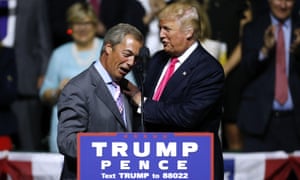
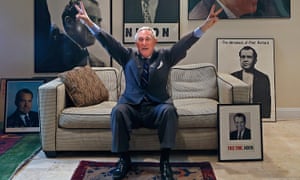
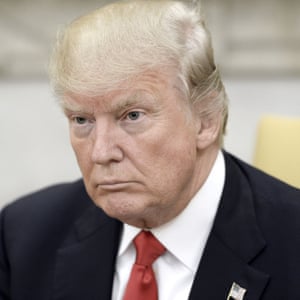
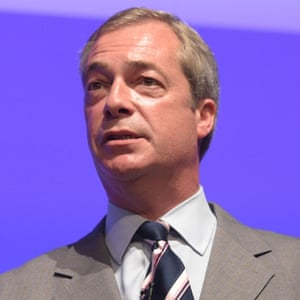

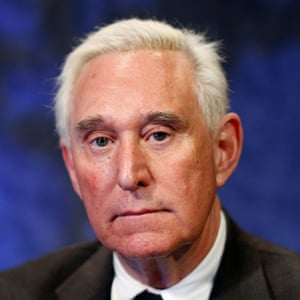
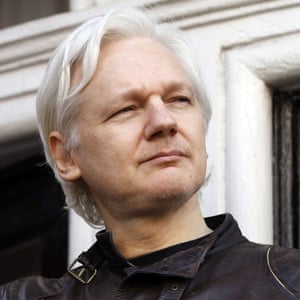


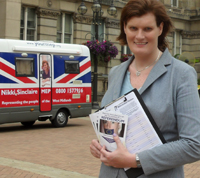

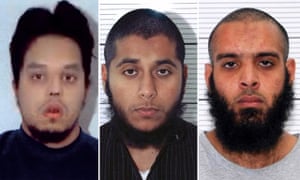
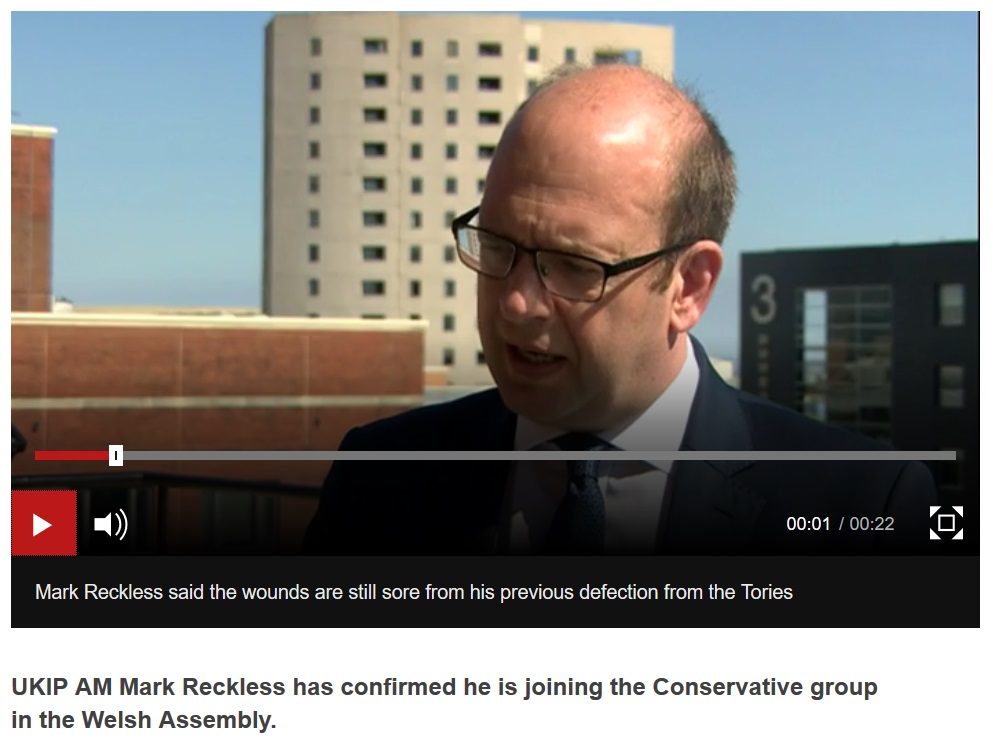
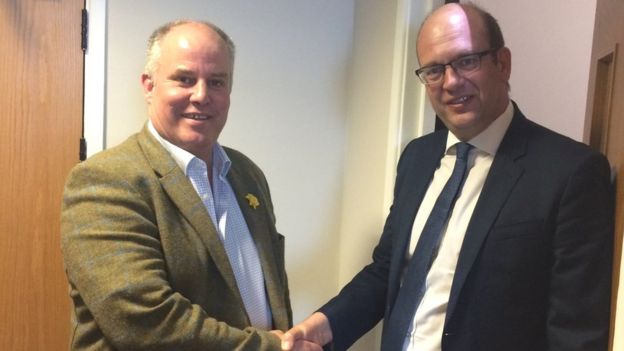

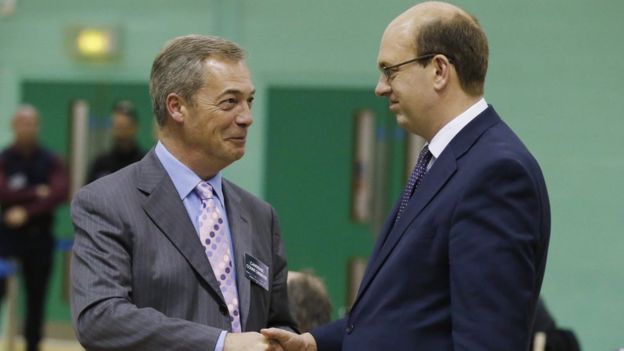


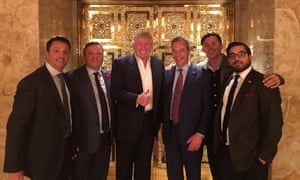
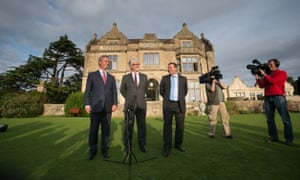


 Ukip-vs-EUkip