Ukip-vs-EUkip

We aim to inform YOU & provide an archive re: Ukip to TRY to make it fit for purpose

  • GOOGLE TRANSLATE

  • Follow me on Twitter

  • TWITTER N.I.Bs.

  • PAGES:

  • Just Say NO to EU

    TO VIEW: Just CLICK The Picture

  • FleXit A WAY FORWARD

    TO VIEW: Just CLICK The Picture

  • HoC – EU Exit Plan

    TO VIEW: Just CLICK The Picture

  • EU_Referendum.com

    TO VIEW: Just CLICK The Picture

  • JUNIUS On UKIP

    JUNIUS is a Blog authored by informed individual in The EU 'Team UKIP'; Supporters of UKIP over many years who seek to expose corruption & make UKIP genuinely elec table for the informed!

    TO VIEW: Just CLICK The Picture

  • REFERENDUM & How To Win!

    TO VIEW: Just CLICK The Picture

  • Greg LANCE-WATKINS Greg_L-W@BTconnect.com

  • Contact YOUR Political Servants

    Contact Your Politician
    writetothem.com
  • GLOBAL WARMING, Heaven and Earth

    PLIMER, Proff. Ian

    TO VIEW: Just Click The Picture

  • January 2026
    M T W T F S S
     1234
    567891011
    12131415161718
    19202122232425
    262728293031  
  • Flying Spaghetti Monster

    TO VIEW: Just CLICK The Picture

  • The EU In A Nutshell

    ROTHERHAM, Dr. Lee & STARKEY, Dr. David

    TO VIEW: Just Click The Picture

  • The EUropean PARLIAMENT

    CORBETT, Richard; JACOBS, Francis & SHACKLETON, Michael

    TO VIEW: Just Click The Picture

  • The European Union

    BOMBERG, Elizabeth; CORBETT, Richard & PETERSON, John

    TO VIEW: Just Click The Picture

  • GLOBAL WARMING, The Real Disaster

    BOOKER, Christopher

    TO VIEW: Just Click The Picture

  • The GREAT DECEPTION

    NORTH, Dr. Richard & BOOKER, Christopher

    TO VIEW: Just Click The Picture

  • The MANY NOT THE FEW

    Dr. Richard NORTH

    TO VIEW: Just Click The Picture

  • MINISTRY of DEFEAT

    NORTH, Dr. Richard

    TO VIEW: Just Click The Picture

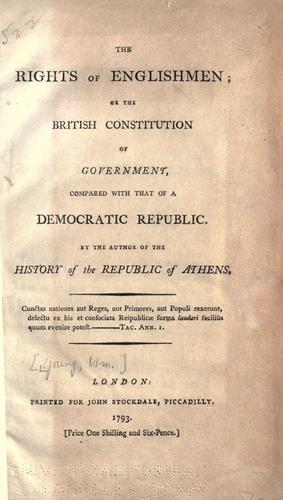
  • The RIGHTS of ENGLISHMEN

    YOUNG, William - 1793

    TO VIEW: Just Click The Picture

  • The ROTTEN HEART of EUROPE

    CONNOLLY, Bernard

    TO VIEW: Just Click The Picture

  • SCARED to DEATH

    BOOKER, Christopher & NORTH, Dr. Richard

    TO VIEW: Just Click The Picture

  • Ten Years on

    ROTHERHAM, Dr. Lee

    TO VIEW: Just Click The Picture

  • VIGILANCE

    MOTE, Ashley (MEP rtd.)

    TO VIEW: Just Click The Picture

  • Voodoo Histories

    AARONOVITCH, David

    TO VIEW: Just Click The Picture

  • WATERMELONS

    DELINGPOLE, James

    TO VIEW: Just Click The Picture

Posts Tagged ‘peter kellner’

Who might win a British referendum on Europe? AN OPINION!

Posted by Greg Lance - Watkins (Greg_L-W) on 05/10/2012

Who might win a British referendum on Europe? AN OPINION!

.

Clean EUkip up NOW & make UKIP electable!

.

The corruption of some of EUkip’s leadership, their anti UKIP claque & the NEC is what gives the remaining 10% a bad name!

.

Who might win a British referendum on Europe?
AN OPINION!
By: Peter Kellner of You.Gov. for E.C.F.R.!

.

~~~~~~~~~~#########~~~~~~~~~~
.
Hi,
before reading Peter Kelners selective opinion on the outcome of an IN/OUT Referendum do read the two main questions below and the two versions in each question.
Then ask how you would have phrased them to obtain the answer YOU want!

Read on 😉

A special relationship with Europe?

Statement A:

‘Whether we like it or not, Britain must work especially closely with the rest of Europe if it is to prosper in the 21st century. That does not necessarily mean accepting the European Union as it is. Nor does it mean that Britain must work for a ‘United States of Europe’. It does mean that, inside or outside the EU, we must recognise that we are a European nation.’

38%
I agree with both statements to the same degree
14%

Statement B:

‘As an island with a long history of connections with the rest of the world, a major role in the Commonwealth and a ‘special relationship’ with the USA, Britain has no need to give extra weight to its links with the rest of Europe. Britain is most likely to prosper if it treats the rest of Europe as no more important to us than any other part of the world.’
35%

Neither / Don’t know
13%

Pro-EU v anti-EU

Statement A:

‘For all its faults, the European Union is a pioneering example of the way different countries can work together for mutual benefit. Over the past half century, the EU has helped Europe to become more peaceful, democratic and prosperous than at any time in the continent’s history.’
25%

I agree with both statements to the same degree
8%

Statement B:

‘The EU has failed. It is expensive, inefficient and overbearing. It stops the governments of member states from doing the things they need to do improve the lives of their citizens. The EU has had nothing to do with Europe being more peaceful, democratic and prosperous than it used to be.’
52%

Neither / Don’t know
14%

Source; YouGov; sample 1,743; Fieldwork: August 20-21, 2012

.

Worried Nationalists, Pragmatic Nationalists and Progressive Internationalists – Who might win a British referendum on Europe?

By Peter Kellner – October 2012

In a democracy, public opinion always matters; but British attitudes to Europe matter more than usual. This is partly because a referendum on Britain and the EU in the next few years is a distinct possibility; partly because Europe is an especially divisive issue on the political Right, with the United Kingdom Independence Party threatening to overtake the Conservatives at the European Parliament elections in 2014; and partly because any major change in the way the EU works requires the consent of all EU members, so Britain has a veto – and all the main parties have promised that they will wield the veto unless they have public consent.
YouGov has conducted fresh research for ECFR into the roots of British attitudes to Europe. It finds that the attitudes of millions of voters to the EU are intimately linked to their view of Britain itself, to their view of how our society is evolving, and extent to which they want Britain to engage with the rest of the world generally.
However, before we examine these results, two initial points should be made.
The first is that Britons are consistently more Eurosceptic than the people of any other major EU country. For example in the Eurobarometer survey conducted earlier this year only 27% of Britons were very or fairly attached to the EU, last by a significant margin out of all member states (the EU average was 46% with the other five largest members registering between 60% and 45%). 72% of Britain were ‘not very’ or ‘not at all’ attached (the EU average was 52% with the other five largest states between 34% and 53%). Even though enthusiasm for the EU has waned in the countries hardest hit by the economic crisis (such as Spain, Italy and even Greece), they still remain keener Europeans than the British.
The second point is that millions of Britons think the issue of Europe matters a lot to Britain – but not to them and their families. Again, this is supported by polling. In a YouGov poll in August 2012 Britons named Europe as the fourth most important issue facing the country (of twelve that were listed, behind the economy, immigration and asylum, and health), but only the tenth most important for them and their families.
These two points raise important practical questions about the way public opinion might evolve in a referendum on Europe – either a straight in/out referendum on British
membership of the EU, or a vote on revisions to the EU treaties, or a general election in which Europe were a central issue. Such a contest would almost certainly raise the saliency of Europe in voters’ minds, probably a lot. Would our national scepticism weaken, or persist, or become more intense?
History provides one direct comparison – the referendum held in June 1975 on whether Britain should stay in the Common Market (as it then was). Then, as now, the Prime Minister, then Labour’s Harold Wilson, had a problem managing party divisions. Then, as now, most voters wanted to leave the Common Market (as it then was). Then, as now, polling (specifically, a Gallup Poll in November 1974) suggested that if the Prime Minister renegotiated the terms of Britain’s membership and recommended acceptance of the new terms, opinion would swing in favour of British membership.
Wilson did talk to his European partners, and did claim a great victory (though dispassionate observers could find very little change in Britain’s membership terms). And voters duly rewarded him with a 2-1 majority for staying ‘in Europe’.
Suppose that this time, a referendum were held after the Eurozone crisis fades, and David Cameron were able to say that he has been able to negotiate a deal that protects Britain’s interests. What then?
In July this year, YouGov asked this question: ‘Imagine the British government under David Cameron renegotiated our relationship with Europe and said that Britain’s interests were now protected, and David Cameron recommended that Britain remain a member of the European Union on the new terms. How would you then vote in a referendum on the issue?’
This time, 42% say they would vote to stay in, while 34% would vote to leave. Tory voters swing right round, from 58-29% for leaving the EU when we ask the conventional in-out referendum question, to 55-34% for staying in, if that is what the Prime Minister recommends.
This suggests that now, as in 1975, public opinion is not completely fixed. However, we tested just one hypothesis. The precise nature and context of any vote is hard to predict; and in any event, people are not always good predictors of their own attitudes two or three years ahead. Our results indicate the potential for volatility, not the certain outcome of an intensely-fought referendum campaign.
What we CAN do is explore the sources of public attitudes to Europe. Why do people think as they do about Britain and the EU? This is what YouGov’s fresh research for ECFR has sought to find out. We asked people to consider eight pairs of statements and say, in each case, which they agreed with more. Two pairs explored attitudes to Britain; another two, recent and future trends about life in Britain; two looked at attitudes to the world as a whole; the final two specifically considered Britain and Europe. The main table shows the results.
The roots of British attitudes to Europe
Here are some pairs of statements. For each pair, please indicate whether you agree more with Statement A or statement B.
%
Traditions v values
Statement A – ‘The best things about Britain are to do with its history, geography and traditions – things like the monarchy, the countryside, warm beer and cricket on the village green, and our history of standing alone against Hitler in the Second World War.’
44
I agree with both statements to the same degree
25
Statement B – ‘The best things about Britain are to do with its values of tolerance, democracy and fair play – things like free speech, the right to protest, and the way we have welcomed people from all over the world who wish to settle here.’
21
Neither / Don’t know
10
Has Britain been going to the dogs?
Statement A – ‘Taking everything into account – especially modern technology (such as the Internet and mobile phones), rising life expectancy, more interesting jobs, the huge choice of food, clothes, culture and leisure opportunities that previous generations could only dream of – life in Britain today is generally better than it was 30 or 40 years ago.’
40
I agree with both statements to the same degree
16
Statement B – ‘Taking everything into account – especially large-scale immigration, high unemployment, unruly schools, drug pushing, drunken hooligans, lax moral standards and gang wars in many cities – life in Britain today is generally worse than it was 30 or 40 years ago.’
37
Neirther / Don’t know
7
Optimism v pessimism
Statement A – ‘Despite Britain’s current economic problems, I am basically confident about the long-term future. Our children’s generation is likely to end up enjoying a better standard of living than our generation, just as our generation has broadly been better off in material terms than our parents’ generation.’
23
I agree with both statements to the same degree
9
Statement B – ‘I am not at all confident that the pattern will continue, of each generation being better off than its parents’ generation. I fear that our children’s generation will find it harder throughout their lives than ours to enjoy a reasonable standard of living.’
59
Neither / Don’t know
9
British exceptionalism?
Statement A – ‘It’s understandable that people throughout the world are patriots who are proud of their own country. But Britain’s history and character make our country special. We really do have more reason to be proud of our country than people in most other countries have reason to be proud of theirs.’
25
I agree with both statements to the same degree
15
Statement B – ‘It’s natural to be proud of one’s own country, but if we are honest we should recognise that no country is fundamentally superior to any other. People in much of the world have just as much reason to be proud of their country as we have to be proud of ours.’
52
Neither / Don’t know
8
Can Britain go it alone?
Statement A – ‘In today’s world, with global trade and global companies, there are severe limits to what Britain can achieve on its own. We must work closely with other countries and with global institutions such as the United Nations, the Commonwealth and the World Trade Organisation if we are to maximise our influence and prosperity’
40
I agree with both statements to the same degree
13
Statement B – ‘The case for global rules and institutions is often overstated, and their so-called benefits an illusion. Britain is perfectly able to decide for itself how best to run its affairs and relate to other countries. Britain should seek to control its destiny without worrying about the rest of the world.’
35
Neither / Don’t know
12
For or against overseas aid?
Statement A – ‘It is in Britain’s interests to help the world’s poorer countries to become better off. This would be good for British exports and British jobs – and reduce the danger of conflict and terrorism. For these reasons there is a strong practical as well as moral argument for maintaining our spending on international development.’
32
I agree with both statements to the same degree
11
Statement B – ‘Money spent on international aid is largely wasted. It supports corrupt regimes and ends up doing little or nothing to support development or reduce conflict or terrorism. There is neither a moral nor a practical case for such spending. Britain should look after itself, and leave poorer countries to sort themselves out.’
48
Neither / Don’t know
9
A special relationship with Europe?
Statement A – ‘Whether we like it or not, Britain must work especially closely with the rest of Europe if it is to prosper in the 21st century. That does not necessarily mean accepting the European Union as it is. Nor does it mean that Britain must work for a ‘United States of Europe’. It does mean that, inside or outside the EU, we must recognise that we are a European nation.’
38
I agree with both statements to the same degree
14
Statement B – ‘As an island with a long history of connections with the rest of the world, a major role in the Commonwealth and a ‘special relationship’ with the USA, Britain has no need to give extra weight to its links with the rest of Europe. Britain is most likely to prosper if it treats the rest of Europe as no more important to us than any other part of the world.’
35
Neither / Don’t know
13
Pro-EU v anti-EU
Statement A – ‘For all its faults, the European Union is a pioneering example of the way different countries can work together for mutual benefit. Over the past half century, the EU has helped Europe to become more peaceful, democratic and prosperous than at any time in the continent’s history.’
25
I agree with both statements to the same degree
8
Statement B – ‘The EU has failed. It is expensive, inefficient and overbearing. It stops the governments of member states from doing the things they need to do improve the lives of their citizens. The EU has had nothing to do with Europe being more peaceful, democratic and prosperous than it used to be.’
52
Neither / Don’t know
14
Source; YouGov; sample 1,743; Fieldwork: August 20-21, 2012
Different people will find significance in different findings: the widespread pessimism about the prospects for the next generation, for example, or the popularity of British traditions, or the divided views about whether Britain should work especially closely with the rest of Europe; or – most relevant to this analysis – the two-to-one majority regarding the EU as fundamentally a failure rather than a success.
However, the main reason for asking these questions together is to explore the connections among these attitudes. How far, if at all, do our attitudes to the EU flow from specific concerns about the way Brussels works, and how far from views about the state of Britain itself and/or our optimism or pessimism towards the future and/or our wider sense of whether Britain should engage with the rest of the world or try to keep it at bay?
Two statistical techniques help us to answer these questions. One is bivariate correlation analysis, the other cluster analysis. Let us consider these in turn.
With correlation analysis we count how frequently answers to different questions coincide. Suppose we conducted poll on television and asked whether people like or dislike (a) Doctor Who and (b) the X factor. If everyone who liked one programme liked the other, then correlation analysis would yield a coefficient of plus one. If, on the other hand, all Dr Who viewers hated the X Factor, and vice versa, then we would have a coefficient of minus one. If there were no link between the two views, then the regression coefficient would be zero.
Now let’s apply this to the data in our survey. The strongest correlations with attitudes to the EU concern Britain’s general place in the world. Supporters of overseas aid tend to be pro-EU; opponents of overseas aid are overwhelmingly anti-EU. The correlation coefficient between the two is 0.5 – which statisticians consider a high figure. It’s a similar story, with almost exactly the same coefficient, when we compare attitudes to the EU with those to Britain’s place in the world generally. The more strongly people agree with the view that Britain must work closely with global organisations such as the United Nations, the more likely they are to be pro-EU.
There is also a clear, though lesser, correlation between how we view the EU and whether we think Britain has grown better or worse in the past 30-40 years. By three-to-one, pro-EU respondents think Britain has improved, while by five-to-three, those who regard the EU as a failure think Britain has got worse. The correlation is 0.3. A similar figure applies when we compare expectations for the future, and whether or not our children’s generation will be better off than ours: Those who are pro-EU divide evenly between optimists and pessimists, while those who are anti-EU are overwhelmingly pessimistic.
This correlation analysis takes us some way down the track of understanding the different forces at work on public attitudes to Europe. But we need to delve further, for these forces are not wholly independent of each other. For example, supporters of overseas aid are more likely than opponents to be optimists. One way to analyse these factors together is to do cluster analysis. The computer examines the pattern of responses, and creates clusters of broadly like-minded respondents. When we do this, we find that most Britons belong to one of three groups:
Worried nationalists (WNs): 42%. They tend to have a traditional view of Britain, are pessimistic about the future and, were Britain a castle surrounded by a moat, would want the drawbridge up most of the time, in order to keep the rest of the world at bay. They tend to dislike overseas aid and think Britain should not bother too much with the global bodies such as the United Nations. The vast majority of them think the EU has been a failure.
WNs divide evenly between Labour and Conservatives. 15% of them support UKIP (twice the national average) and just 5% are Liberal Democrats (half the national average). They are slightly more likely than the general population to be women and to read the Sun or the Mail, and less likely to have a university degree.
Pragmatic nationalists (PNs): 23%. Like the WNs, PNs tend to have a traditional view of Britain, but tend to be less pessimistic about the way Britain is heading. They are divided about the merits of overseas aid, but tend to think Britain does need to co-operate with global institutions. Were Britain a castle, they would lower the drawbridge more often than the WNs, to allow more contact with the outside world. They are divided on whether the EU has been successful, but tend not to have strong feelings either way.
PNs also divide evenly between Labour and Conservative. The share of Liberal Democrats is in line with the national average; but only 3% would vote UKIP. Otherwise, their demographic profile is similar to that of Britain as a whole.
Progressive internationalists (PIs): 25%. Here, “progressive” is used not so much as a left-of-centre label, but in the sense of holding a view that history tends towards greater prosperity and enlightenment. Their view of Britain tends to be rooted in values more than tradition; they generally think Britain is a better place today than was a generation ago but are less certain about the future. Overwhelmingly, PIs think Britain must play a full role in global institutions, most support our international aid programme and, by three-to-one, they think the EU is a success story. They are happy for the drawbridge linking Britain to the rest of the world to stay down.
Two-thirds of PIs would vote Labour (52%) or Lib Dem (14%); just 23% would vote Conservative. They are more likely than the national average to be men, to have university degrees and to read the ‘broadsheet’ newspapers.
It should be stressed that these groups are not completely homogeneous; and there are another 10% of the electorate that don’t fit any of them (though this last group tends to have no clear views of these issues, and few of them are likely to vote in any election or referendum). Even within each group, there are some people who fit most but by no means all of the descriptions given. For example, there are internationally-minded optimists who reject the traditional view of British life and approve of overseas aid, but still dislike the EU. However, there aren’t very many of them.
The broader lesson is that those who seek to persuade Britons either to love or to hate Brussels by stressing the precise wording of EU treaties, or the details of the Common Agricultural Policy, or the merits of the Working Time Directive, are wasting their time. Few people think about the EU in these terms; and the few who do are probably committed
enthusiasts for, or utterly hostile to, the whole project; so their votes are locked up. For most people, attitudes to the EU are shaped by two broad things: their view of Britain itself, and how far they are at ease with the direction in which our society is heading. As with so much else in politics, fear is a big driver of public attitudes. At the moment, the fear factor is working hard for the EU’s opponents.
This analysis suggests two big implications.
First, Worried Nationalists comprise by far the biggest single group. In a referendum on whether to leave the EU, Worried Nationalists give the anti-EU lobby a head start. Although they could be outvoted if virtually all the Pragmatic Nationalists lined up against them with the Progressive Internationalists, I find it hard in practice to see how the British would vote to stay in the EU unless a fair number of nationalists could be lured from the “worried” to the “pragmatic” column.
Although we don’t have this kind of data for 1975, there can be little doubt that this is a big part of what happened 37 years ago. Many voters who started out both disliking the Common Market and fearful of Britain’s future, ended up fearing that Britain would be worse off out in the cold. They decided on pragmatic grounds to swallow their dislike of “Europe” and vote to stay in. If an in-out referendum is held in the next few years, the pro-EU lobby will need to achieve the same shift and change the way the fear factor works.
Secondly, if the WN column can be reduced to, say, 35% or less in a referendum campaign, then the PNs will become the swing group. Their votes will decide whether Britain leaves the EU or stays in. As in 1975, the fear factor will loom large. But this is part of a wider point. By its nature, pragmatism is concerned more with practical and often short-term outcomes, rather than big visions and long-term dreams. PNs are unlikely to be swayed either by those who summon the spirits of Shakespeare, Agincourt and Elizabeth I – or by those who wax lyrical about peace in Europe and the continent’s shared cultural heritage. “Rule Britannia” and “Ode to Joy” might stir the partisans, but they will leave the pragmatists cold. To them, the big picture will matter far more: which is more likely to boost jobs, prosperity and our children’s future: maintaining our partnership with our European neighbours or arranging a divorce?
In short, campaigning by both sides is likely to be scrappy and negative. It may be the least bad way to decide Britain’s relations with the rest of Europe, but only a wild optimist could think it a glorious way.
Peter Kellner is a journalist, political commentator, and President of YouGov.

You can view this as a downloadable .pdf at CLICK HERE
.

Regards,

Greg_L-W..

~~~~~~~~~~#########~~~~~~~~~~

TO LEAVE THE EU

What is the Exit and Survival Plan for these United Kingdoms to maximise on the many benefits when we Leave-The-EU. It is the DUTY of our Politicians and Snivil Cervants to ensure the continuity, liberty and right to self determination of our peoples – they have a DUTY to protect against crime and secure both our food and our borders.

They also have a duty to put in place contingency plans for the collapse of The EUro & The EU or the wishes of the peoples of Britain to Leave-The-EU.

NONE of these DUTIES has a single British politician upheld for over 40 years. They have drawn their incomes fraudulently and dishonesty.

Politicians are failing to tell the truth, but so are almost all wanabe Politicians, the Main Stream Media and Snivil Cervants.

The fact is that even if EVERY British MEP wanted change in The EU it would achieve NOTHING, at very best if they ALL agreed they would then  still have less than a 10% say in the governance of Britain by The EU.

Every single British Politician, of EVERY Party, elected since before we joined the EUropean Common Market, has promised to change The EU’s CAP – In 40 Years they have achieved absolutely NOTHING towards that unanimous promise!

To try to put a value on OUR Freedom is as futile as floccipaucinihilipilification and as odious as the metissage of our societies, as we rummage in the ashes of our ancestors dreams, sacrifices and achievements, the flotsam of our hopes and the jetsam of our lives, consider the Country and Anglosphere which we thus leave our children and the future, with shame!

Regards,
Greg L-W.
01594 – 528 337

PLEASE POST THIS TAG AS FOLLOWS: ON YOUR eMAILS & BLOGS, FORUM POSTINGS & MAILINGS – GET THE MESSAGE TO THE PEOPLE IT IS OUR BEST HOPE AS WHOEVER IS APPOINTED WILL MAKE NO DIFFERENCE AS PROVED!

I SUGGEST – since there is clearly no political party of repute, advocating or campaigning to Leave-The-EU for these United Kingdoms and restoration of our independent sovereign, democracy, with Justice & the right to self determination in a free country & minded that membership of The EU is sucking out the life blood and identity of our Country in a counter patriotic manner and at a cost in hard cash of some £53 Million a day we must consider:

Denying the self seeking & meaningless wanabe MEPs and the no longer relevant MPs the Mythical Mandate for which they clamour.

Diktat is imposed from The EU but Law should be made at Westminster, for our Country & our Peoples, by the peoples of our Country.

It is time that the entire mechanism of governance in these United Kingdoms, which has so clearly failed our Country and our peoples, was radically overhauled and updated to democratic status – failure to change will mean when we Leave-The-EU and/or it finally collapses, as it surely will, we will be no better off as the self same self styled, self enriching clique will be all too willing to betray us as they have done relative to The EU and its fore runners.

To achieve change support rational planning as with The Harrogate Agenda and similar thinking of gravitas.

Demand a Royal Commission on the cost benefits of leaving The EU and of remaining its vassals with a clear ‘Exit & Survival Strategy‘ for implementation OR responsible contingency planning dependent on THEN holding a Referendum on IN or OUT to Let-The-People-Decide!

INDEPENDENT Leave-the-EU Alliance
&
Work With THE MIDNIGHT GROUP to
Reclaim YOUR Future 
&
GET YOUR COUNTRY BACK
Deny the self serving political clique ANY Democratic claims to legitimacy
Write Upon Your Ballot Paper at EVERY election:
.
to Reclaim YOUR Future 
&
GET YOUR COUNTRY BACK

Posted by: Greg Lance-Watkins

tel: 01594 – 528 337
Accuracy & Copyright Statement: CLICK HERE
Summary, archive, facts & comments on UKIP: http://UKIP-vs-EUkip.com
DO MAKE USE of LINKS & >Right Side Bar< & The Top Bar >PAGES<
Also:
Details & Links: http://GregLanceWatkins.Blogspot.com
UKIP Its ASSOCIATES & DETAILS: CLICK HERE
Views I almost Totally Share: CLICK HERE
General Stuff archive: http://gl-w.blogspot.com
General Stuff ongoing: http://gl-w.com
Health Blog.: http://GregLW.blogspot.com
TWITTER: Greg_LW

.

 Please Be Sure To .Follow Greg_LW on Twitter. Re-TWEET my Twitterings
& Publicise My Blogs 
To Spread The Facts World Wide
of
OUR-ENEMY-WITHIN

&
To Leave-The-EU


Enhanced by Zemanta

Posted in UKIP | Tagged: , , , , , , , , , | Leave a Comment »

Trying to make UKIP Sound Relevant

Posted by Greg Lance - Watkins (Greg_L-W) on 28/06/2012
Trying to make UKIP Sound Relevant
.

 Please Be Sure To .Follow Greg_LW on Twitter. Re-TWEET my Twitterings
& Publicise My Blogs 
To Spread The Facts World Wide
of
&
Clean EUkip up NOW make UKIP electable! 

.

The corruption of EUkip’s leadership, 
their anti UKIP claque in POWER & the NEC 

is what gives the remaining 10% a bad name!  

.

Trying to make UKIP Sound Relevant!
All that is achieved is showing them to be a shoddy, naff & undeniable failure, even accepting the results shown in just one loaded poll UKIP is so far short of votes in domestic politics, even with the claimed 13% that provides not a single seat!
It is increasingly clear UKIP is just a rich gamblers attempt at personal relevance & a self enriching seat on the EU gravy train for a clique of unprincipled rascals!

.

~~~~~~~~~~#########~~~~~~~~~~
.
 

Putting the Tories right

by

/ June 28, 2012 

The UK Independence Party is a serious threat to the Conservatives

Nigel Farage, “an exceptional anecdotalist and very good company,” has made UKIP a political force

For Peter Kellner’s YouGov charts and analysis, click here


The man who is bankrolling the United Kingdom Independence Party (UKIP) lives and works at a penthouse in the heart of Mayfair, next to the famous Italian restaurant Cipriani. Etched into the building are the words “Too many laws, too few examples.” Inside, the lift ascends to a top floor sitting room with French windows opening onto a balcony overlooking central London. A maid prepares coffee with chocolate Bourbon biscuits. Then, up some steps, in sea-blue shirtsleeves, comes the unassuming figure of Stuart Wheeler, the 76-year-old multi-millionaire who a decade ago gave generously to the Conservatives and is now donating funds to UKIP.

Led by the telegenic Nigel Farage, UKIP is a now a serious political party. This year, it has doubled its support to 8 per cent, according to YouGov figures, on the back of dislike of Europe and immigration. In April, three polls showed UKIP as Britain’s “third party,” above the Lib Dems and peaking at 11 per cent. In the May local elections, UKIP averaged 13 per cent of the vote in the seats it contested. The party appears to have clinched a place as the acceptable face of nationalism, with its rival on the right, the BNP, seen by many as racist (a charge the BNP denies).

Commentators expect UKIP to perform very well at the European elections in June 2014. Farage claims that UKIP will replace the Lib Dems as Britain’s third party—a goal that is not impossible as the Lib Dems face potential devastation at the next general election, the penalty for their coalition with the Tories. But the Conservative party, divided over Europe, has most to fear. Polls regularly show a small majority of voters in favour of withdrawal from the EU. Yet Cameron is known not to want a referendum because of the priority of the Eurozone crisis, and the likelihood that a referendum would further split the Tory party.

There are two men who count in UKIP: Farage, leader from 2006-2009 and again since 2010, and Stuart Wheeler, generous donor since 2009. They are very different characters, but both show that UKIP can no longer be dismissed in British politics.

Farage acknowledges privately that his job is made easier with the Tories in power, as the compromises of office inevitably let down some Eurosceptic Conservative voters (Peter Kellner, p35). Wheeler’s sights are firmly set on his former Conservative allies. In his gentlemanly and soft-spoken way, Wheeler attacks the “Europhile” David Cameron. Wheeler gave UKIP “about £90,000” last year. In a move that will worry senior Conservatives, he is actively wooing disillusioned Eurosceptic Tory MPs to defect to UKIP.

“I have written to five different Eurosceptic Conservative MPs inviting each of them to have lunch with me, alone, without knowing who the others were,” he says. “All five accepted.” These lunches were “all very friendly. Whether anything will come of it is another matter. I mean I didn’t actually invite them necessarily to come over [to UKIP] but… It’s a hell of a thing of course for an MP to come over because, unlike an MEP who can more or less be guaranteed a seat in the European parliament as UKIP rather than Conservatives, your chance of being elected to the Commons as UKIP is very remote, because of the first-past-the-post system.”

However, some Tory MPs face problems with changes to the boundaries of their constituencies. These include Nadine Dorries, the outspoken backbencher who has described Cameron and George Osborne as “arrogant posh boys.” Wheeler will “neither confirm nor deny” any names of his lunch guests, but does agree that those with boundary problems are potential targets. “That’s true, and those who are near retirement and don’t want to be reselected or anything—they might be possibles, yes.”

“We’d be delighted for anyone to come over but I’m not going into who I have seen and haven’t seen,” he adds. Asked about Dorries he does say: “Well I suppose she has somewhat, I don’t know, well, from what I read, she may have rather burnt her boat with the Conservative party.”

Wheeler, whose background is Eton, Oxford and the Welsh Guards, is credited with inventing “spread betting” on financial markets (allowing people to place wagers on movements in asset prices without actually owning them). He made £90m, as widely reported, in 2000 after floating IG Index, the company he founded in 1974, on the stock market. He sold his final holdings in 2003, and says that “my income is way below my outgoings.” But he is a huge asset for any party, especially in a system which has no caps on individual donations or state funding. In the run-up to the 2001 general election, Wheeler gave £5m to the Conservative party under William Hague’s leadership, becoming the party’s biggest ever donor. But by 2009, he was disillusioned with Cameron’s leadership and announced he would be voting UKIP in the European elections. Wanting to back a party that seeks withdrawal from the EU, Wheeler donated £100,000 to UKIP that year, prompting his expulsion from the Tory party. The incident has left bitterness, with Wheeler claiming that Eric Pickles, then party chairman, “lied” about the way in which he was expelled. Pickles said he called Wheeler; Wheeler says he was sent an email.

Wheeler does not give money only to political causes. “The thing I hate most in life is torture, so 90 per cent of what I give to charities as opposed to political parties does go to the human rights organisations [such as Amnesty International] and it’s torture rather than any other human right that I’m concerned about.” He got involved in Tory politics under the leadership of Hague, who fought the 2001 general election with the slogan “24 hours to save the pound.” “I really didn’t get much interested in politics at all until I was invited to dinner with William Hague at White’s.” Now, however, he is scathing about Hague, Osborne and Cameron, primarily but not only over Europe. “I just think [the Tories] got it very very wrong, and they were not doing anything to protect our interests in the EU, for all they said they were going to. I just thought they were being useless about it and it was much better to support UKIP.”

Cameron is too pro-European for Wheeler. “I’m not being sarcastic when I say I don’t know why he is so Europhile. I literally don’t know.” Does he really think Cameron is “Europhile”? “I do really. Before the last election, people were saying ‘I know that Cameron’s not making very Eurosceptic noises but once he’s in power you’ll see’—well we haven’t seen, absolutely not.”

I put it to Wheeler that Cameron could be said to be one of the most Eurosceptic of Tory leaders, the only one to withdraw from the European People’s Party, the mainstream centre-right group. “Well, he took years to fulfil his promise to do so.” In any case, for Wheeler, the goal is more fundamental: exit and the reclaiming of sovereignty. “I strongly feel we should be out of Europe. But while we’re in it Cameron has made no effort on several important matters, most importantly the regulation of the City of London which is our biggest single earner and produces tax money.”

On the wider domestic agenda, does Wheeler agree with Norman Tebbit and David Davis who have written in Prospect and elsewhere of the Cabinet’s “cronyish” style? “From what I can make out, that does seem to be the case. But also Cameron’s judgement is fantastically bad. How could he have appointed [Andy] Coulson [the former News of the World editor who became Cameron’s head of communications]? And then—what’s he called—Jeremy Hunt [the culture secretary]? Hunt may or may not have done some things he shouldn’t have done, but he had made his [pro-Murdoch] position clear before he took that post, and so it was absolutely obvious that he shouldn’t have been appointed to it. It is obvious Cameron made a gigantic blunder.”

His wider problem with the government is “its pure incompetence. I mean this business—shaming as a British citizen—that people should have to wait three or four hours at British airports to get in; completely foreseeable, very nasty for the people and very bad for our reputation. How on earth did it happen?”

On the coalition, Wheeler echoes the view expressed by Tories on the right: that the Liberal Democrats are too influential. The Lib Dems, he says, “would be destroyed if there was an election. So, I think either he is just frightened when he shouldn’t be, or it’s a convenient excuse for doing what he wants anyway.”

Wheeler would consider giving money to the Tories again only “if they gave us a definite in or out [referendum]. But they would have to be much more gutsy on other things. They really are lacking in determination and a vision of where they want to go.” I ask whether he has had any approaches to return to his former party. “No, they just say, ‘Oh Stuart, we’ve got to get you back in the fold one of these days.’ But not so much recently because of things I’ve said.”

Wheeler says he is committed to UKIP, and he expects his party to do better than ever. “I mean it’s fantastic… Outside London we got 13.8 per cent where we stood. One interesting point is that the polls put us at 8 or 9 per cent on that morning, and so there may be something like not wanting to admit that you’re voting UKIP.” He adds that some polls still do not include UKIP as a separate option, offering only the three main parties and “others.” Wheeler believes that the polls “underestimate our support.”

UKIP’s short-term strategy is to force the government into holding a referendum on EU membership. “I’m sure Cameron would absolutely hate it—but the stronger rumour is that Labour is going to back it,” Wheeler says. It is true that Ed Miliband is being lobbied by Ed Balls and others to outflank the Tories and back a referendum. Miliband has yet to make up his mind, but his new head of policy, Jon Cruddas, also backs an in-or-out vote. “It would be a vote-winner I think,” Wheeler says, “because irrespective of which way you vote, most people do want a referendum on it, so I think if Labour does it, the Conservatives may be forced to.” However, on 6th June the Labour leader indicated he was minded not to call for a referendum soon.

The debate about whether to back a referendum cuts across political divides. David Owen, the former leader of the Social Democratic Party (which in 1988 merged with the Liberal Party to form the Liberal Democrats), has proposed a two-question poll, on whether or not to remain in an integrating EU with a view to eventually joining the euro, and whether instead voters would prefer to be “part of the single market in a wider European community.”

Wheeler agrees that the eurozone turmoil would help the “No” cause. But he points out that in the UK’s last Europe referendum in 1975, “the polls showed 6-4 for coming out and the result was 2-1 for staying in.” Though Europe is his great cause, Wheeler emphasises that UKIP projects a wider agenda. “We’re very strong on immigration—we’ll have people who want to work if we need them but not otherwise. The country’s full for the moment. We’d cap it for five years, and so I think we’re much better than the Conservatives on that. Grammar schools we are in favour of. Low taxes we are in favour of. We are sceptical about global warming, and I think that the amount of money that is being spent on that is absolutely astronomical, for a country that can’t afford it.”

* * *

This wider platform is emphasised by Nigel Farage, UKIP’s leader. Farage, who once built his own brokerage firm, believes small businesses and manufacturing are the keys to rebuilding the economy. He dismisses Osborne as having “never had a job” and says the country is being run “by a bunch of college kids.”

I meet Farage at “Europe House,” the headquarters of the EU Commission in London, which also happens to be the site of the old Tory HQ in Smith Square where Margaret Thatcher waved triumphantly from the windows on election nights. Here, Farage and his two press officers have their London base along with other MEPs from rival parties. Before long, we retire to the local pub, the Marquis of Granby, frequented by Tories.

A regular on Question Time, Farage is well known as a campaigner on Europe. Like other outsiders in politics, such as George Galloway and Tommy Sheridan, he has a perma-tan (which is real, from travelling around Europe) and an easy way with ordinary people. But Farage is also an exceptional anecdotalist and very good company, full of insights and gossip about senior politicians. As he sips a pint of real ale (“like a good Burgundy, you never know how it will taste”) and smokes Benson & Hedges cigarettes outside the pub, Farage receives messages from his family about the garden benefiting from the early summer rain. He is a fishing enthusiast and reads widely in military history and politics. When I ask whether he favours proportional representation he says that, having read Roy Jenkins’s report into “AV plus,” that is the system he prefers.

A one-time Tory, Farage was a founding member of UKIP when it was first created in 1993. In 1999, he was elected to the European parliament as MEP for the southeast of England, a position he retains. UKIP was still seen by many as a joke, however, never more so than in 2004 when the Yorkshire and the Humber UKIP MEP Godfrey Bloom declared memorably: “I want to deal with women’s issues, because I just don’t think they clean behind the fridge enough.” That same year, Farage recruited the TV presenter Robert Kilroy-Silk, who was the party’s MEP for the east Midlands. This looked like a masterstroke, but a year later Kilroy, who sought the leadership, resigned, claiming the party was a “joke” and “sitting on its backsides in Brussels.” The then UKIP leader Roger Knapman said he would “break open the champagne,” adding, “It was nice knowing him, now ‘goodbye’.”

It was not until 2006 that Farage took on what proved to be a turbulent leadership, with the aim of changing the perception of UKIP as a “far-right” party. He may not have succeeded fully, but he has dispelled the widespread perception that it is racist. I last spoke to him in 2008, when his party and his own leadership were in crisis, riven with plotting. An unlikely moderniser, Farage was having his own “Clause IV moment”: a battle to expel British National Party infiltrators and broaden the party’s appeal. The battle was bruising, but helpful. Farage had conducted private polling to find out what put people off voting UKIP. He found that he needed to reach out to those who felt they might be “isolationist,” or a closet racist party.  Farage’s UKIP calls for a five year halt to immigration, but has no policy towards those already here. The BNP on the other hand has gone from a policy of “repatriation” of ethnic minorities in the UK to “voluntary repatriation.”

Farage’s breakthrough came in 2009, the year he now says marked the “real beginning” of UKIP. Following the expenses scandal and public alienation from all three main parties, UKIP began soaring in the polls. In May that year, a YouGov poll for The Sun showed UKIP on 15 per cent, only 5 per cent behind the governing Labour Party.

At the European elections in June, UKIP’s seats in the European parliament went up by one to 13. The party beat Labour to second place, winning 16.5 per cent, or 2.5 million votes. Despite this, Farage stepped down as leader, ostensibly to fight the Buckingham seat against the Speaker, John Bercow, at the 2010 general election. He says now that “it was not really about Bercow,” and that he needed a break from the  infighting and management.

In what he tells me was a life-changing experience, Farage was in a light-aircraft crash during the campaign. He walked away from the upturned plane, badly injured and with blood pouring down his face. Farage reveals that “the accident has changed me a bit.” He says he had a short fuse, that he was “the kind of guy” who had shouting matches with other drivers. And now “I don’t let the little things worry me any more.”

In August 2010, while still recovering from his injuries, Farage got a call from his successor as leader, Lord Pearson of Rannoch, who announced he was standing down. Farage urged him to stay, but knew the decision had been made. He stayed up all night smoking before the deadline for deciding whether to stand again. Even at breakfast he had doubts, he says, but he did stand, and won by a huge margin—60 per cent to the runner up’s 20 per cent. Farage, whose decision was influenced by Alex Salmond’s example in serving as SNP leader for a second time, says that this time he has the mandate to lead the party in his own way.

This means more public meetings, at which Farage excels. Every month, he conducts talks around the UK, with jokes, banter and arguing. He is not short on invitations from around Europe and says that “I could spend my whole time travelling.” Social media has been of great use. His appearances inside the European parliament are a hit on YouTube, including the time that he accused Herman Van Rompuy, EU council president, of having “all the charisma of a damp rag and the appearance of a low-grade bank clerk.” Under the best clips, Farage, who has 35,000 followers on Twitter, receives hundreds of messages of support, some from people in other EU countries, including Greece.

Farage may be on his way to fulfilling his ambition to be an MP—with the help of Wheeler, who plans to target key marginal seats. Pollsters suggest most UKIP voters will “return” to the Conservatives come the general election. It remains doubtful that UKIP will overtake the Lib Dems in the Commons.

At times in our conversation, Farage appears rueful, frustrated and even disdainful about his party. In the past, UKIP has had a toxic element. But through reform, popular public appearances and by broadening its base, Farage has made it a serious force. The next big challenge is the European elections in June 2014. Asked how UKIP will do, Farage says: “We aim to win. We aim to win and cause an earthquake in British politics.”

To view the original article CLICK HERE

It is astonishing just how You Gov has stayed in business when its polls so consistently fail to be representative in the ballot box – clearly we have come no closer to prediction than the ‘Swingometer’ of Bernard Braden .

After almost 20 years even with the ridiculously inflated poll claims of 13% NOTE that does not include the seats where UKIP achieved ZERO% so is an utterly meaningless example of how to lie with statistics!.
UKIP would have to double this 5 to stand ANY chance of winning a Westminster seat and the reality is that out of around 19,500 seats UKIP has achieved less than 30 of any relevance and that includes their near irrelevant MEPs who have become the joke of The EU parliament and are not just largely ignored but have ZERO relevance in decision making!

Regards,

Greg_L-W..

~~~~~~~~~~#########~~~~~~~~~~
 

 INDEPENDENT Leave-the-EU Alliance

&
Work With THE MIDNIGHT GROUP to
Reclaim YOUR Future 
&
GET YOUR COUNTRY BACK
Deny the self serving political clique ANY Democratic claims to legitimacy
Write Upon Your Ballot Paper at EVERY election:
.
to Reclaim YOUR Future 
&
GET YOUR COUNTRY BACK

Posted by: Greg Lance-Watkins

tel: 01594 – 528 337
Accuracy & Copyright Statement: CLICK HERE
Summary, archive, facts & comments on UKIP: http://UKIP-vs-EUkip.com
DO MAKE USE of LINKS & >Right Side Bar< & The Top Bar >PAGES<
Also:
Details & Links: http://GregLanceWatkins.Blogspot.com
UKIP Its ASSOCIATES & DETAILS: CLICK HERE
Views I almost Totally Share: CLICK HERE
General Stuff archive: http://gl-w.blogspot.com
General Stuff ongoing: http://gl-w.com
Health Blog.: http://GregLW.blogspot.com
TWITTER: Greg_LW

 Please Be Sure To .Follow Greg_LW on Twitter. Re-TWEET my Twitterings
& Publicise My Blogs 
To Spread The Facts World Wide
of
OUR-ENEMY-WITHIN

&

To Leave-The-EU
 
Enhanced by Zemanta

Posted in UKIP | Tagged: , , , , , , , , , , , | Leave a Comment »

Conservative Home Over Eggs the UKIP threat …

Posted by Greg Lance - Watkins (Greg_L-W) on 29/04/2012

Conservative Home Over Eggs the UKIP threat …
.

 Please Be Sure To .Follow Greg_LW on Twitter. Re-TWEET my Twitterings
& Publicise My Blogs 
To Spread The Facts World Wide
of
&
Clean EUkip up NOW make UKIP electable! 

.

The corruption of EUkip’s leadership, 
their anti UKIP claque in POWER & the NEC 

is what gives the remaining 10% a bad name!  

.

Conservative Home Over Eggs the UKIP threat as clearly UKIP have proved themselves to be unfit for purpose – ANY purpose other than perhaps in aiding The EU to undermine the credibility of a EUroSceptic cause in these United kingdoms!

As a EUroRealist I find UKIP represents absolutely no British values which I would espouse to with its self serving, self enriching, racially and religiously intolerant clique in leadership bribing a claque of supporters to keep them on the Gravy Train!

.

~~~~~~~~~~#########~~~~~~~~~~
.
Hi,
there is a relatively interesting comment about UKIP and the polls (makes a change from Roger Knapman UKIP & The Poles!) which I have reproduced from Conservative Home where is you wish to read all comments you can read on the internet.

Cameron’s ratings have collapsed, UKIP could cost the Tories 30 seats… but there is SOME good news in the opinion polls

By Tim Montgomerie
Follow Tim on Twitter

I won’t comment here on the biggest poll of the weekend – over at Majority Conservatism Paul Goodman provides a comprehensive review of Lord Ashcroft’s mega poll on the political attitudes of ethnic minority Britons.

Cameron-Opinion-Poll

The more regular opinion polls are not good for the Conservative Party. I summarise them within today’s newslinks (scroll down this page). In today’s Sunday Times (£) Peter Kellner of YouGov makes for gloomy reading:

“The Prime Minister is no longer a clear asset to his party. Immediately before the Budget, 44% thought he was doing well, while 49% thought he was doing badly. His net rating, minus 5, was pretty good for a Prime Minister in mid-term. Now his rating is minus 31 (well 32%, badly 63%). Only Gordon Brown can match such a collapse in popularity, when he scrapped plans to hold a snap election in October 2007. It is not a happy precedent.”

Here’s how respondents to the latest YouGov poll rate Cameron (PDF):

  • 42% see the PM as competent, 47% as incompetent (-5%);
  • 41% see him as strong and 44% as weak (-3%);
  • 42% as likeable and 46% as dislikeable (-4%);
  • 39% say he’s in control of his government and 47% say not (-8%);
  • 23% see him as in touch, 69% as out-of-touch (-46%);
76% say Cameron doesn’t understand how ordinary people live and most of this group say it’s because of his privileged background (50%) rather than other factors (26%).UKIPMr Kellner focuses on the threat that UKIP poses to the Tories. Noting that, as of today, UKIP is 10% in the latest YouGov survey and 1.4 million former Tories have transferred to the party, he proposes a scenario where they could “crucify” the Tories:

“Suppose the economy continues in the doldrums. Suppose Cameron’s ratings stay on the floor. In 2014, a year before the next general election, Europe’s voters will decide who represents them in the European Parliament. Voting will take place under a proportional system that helps smaller parties – and the anti-EU UKIP most of all. Last time, in 2009, it came second, ahead of Labour. Unless the Tories recover, I would not bet heavily against UKIP topping the poll in 2014, or coming close… UKIP would have the credibility it has always craved. Under our first-past-the-post system for electing MPs, it might end up with too few votes to win many seats for itself – but quite enough to scupper the Tories. Suppose it wins over just 2,000-3,000 unhappy Tories in each of the key marginals. This kind of division on the Right would be enough to cost Cameron up to thirty seats, and hand victory to Ed Miliband. If the shift to UKIP is much greater, Labour could win by a landslide.”

The YouGov survey isn’t ALL bad for the Conservatives, however:

  • By 36% to 28% David Cameron and George Osborne are more trusted to run the economy than Ed Miliband and Ed Balls;
  • By 54% to 27% voters accept that “big” spending cuts are necessary and would be being implemented whoever was in power;
  • Only 32% blame the current government for the double dip recession – 29% blame global factors including the Eurozone, 17% blame the last Labour government’s legacy and 10% blame the banks for not lending enough. 

Sunday, April 29, 2012

To which I have responded:
Hi,

mid term polls are ALWAYS staggeringly unreliable & as Neil Kinnock will tell you they ain’t much use at elections either!

One huge benefit of pollsters is they carry the clout with politicians with their perceived power to get their odious wives jobs way beyond their experience or ability.

Now let us consider the polls of the last few days where Cameron has fared ill – it is all very well to see him denounced and denigrated but with no credible alternative whatever the polls say is absolutely irrelevance.!

Then of course there is the myth of UKIP that pops up like a bad smell whenever someone wants to have a pop at one of the two political parties that ARE British politics.

For all UKIP’s 10% this weekend let us not forget their track record when despite having been at 15% some time ago they have a record of serial failure in domestic politics.

Consider that ina one horse race their leader came a resounding THIRD beated by an independent of little merit and less known, despite his wearing of a dolphin outfit!!

UKIP has NEVER done well in ANY domestic election and despite th3ere being some 19,500 seats available by election in Britain you will note UKIP has NEVER held one of any note and currently has less than 30 on district councils or above (including  MEPs)!

I wonder if it is their association with some of the most vile extremists in EU politics in their EFD Group which harbours, racists, anti Jewish, anti homosexual, Holocaust deniers and advocates of violence as a political tool!

The cyber stalking, low grade abuse by members of its NEC and staff may well show what they would be like in any authority as with their serial corruption and dishonesty which are well documented.

It has been shown that a part of its leadership policy is to lie to its members to cover-up for its misdemeanours and crimes as with Derek Clark MEP and Nigel Farage it is also well documented that Gerard Batten MEP is all too willing to abuse his position and waste Police time to seek to suppress free speech and discussion of his overt antipathy to Muslims which borders on incitement to race hate based upon his own superstitions and fears and that he has also obtained a gagging order to prevent the goings on in Courty where he is facing the Court on issues of racial discrimination etc. we are given to understand.

Then again it may well mitigate against UKIP that one of Farage’s ‘friends’ was drunk in an MPs flat and stole his Blackberry, correspondence and House of Commons Pass, then we have the turncoat Tory Bursnell advocating witholding the vote from the unemployed and supported by Alexandra Swann an ex Tory now acting on Roger Helmer’s staff (I’ll bet the Tories were glad to see the back of these misfits!

I wonder do the pollsters foment results to suit the BBC agenda as we are all well aware of just how useful an ent6ertainer Nigel Farage has become – would that UKIP could find a leader with ability beyond that of stunts and childish outbursts!

It is a tragedy, for those of us who are implacably opposed to being vassals of The EU betrayed by our politicians and civil service (for their own gain) that UKIP has become so befouled as to be unfit for purpose, particularly when the LibLabCon are marching to the same tune backed by a corrupt and simpering BBC andf much of the media who have become to fat and over blown to represent any view other than that which feeds them the most public money from the lowest grade of political class for many generations.

They say a Government is at its best with a strong opposition – little wonder the present government requires the shibboleth of the mythical threat of UKIP rattled at them by the pollsters to even show signs of waking up!

UKIP is no threat to politicians of any stature as they lack ANY gravitas or competence – Well perhaps they are then a threat to the sad spectacle of those we see bickering like children in Parliament!

We are clearly bereft of leadership in the LibLabUKIPCon and since it is not leadership we want but sound representation our position as a Country is unsurprisingly calamitous bankrupt in all but name by 13 unlucky years of economic illiteracy and self enriching betrayal we now find ourselves with unconvincing Hooray Henrys for Governance as our industry is syphoned off by our EUropean enemies.

Regards,
Greg_L-W.

. .
~~~~~~~~~~#########~~~~~~~~~~
 

 INDEPENDENT Leave-the-EU Alliance

&
Work With THE MIDNIGHT GROUP to
Reclaim YOUR Future 
&
GET YOUR COUNTRY BACK
Write Upon Your Ballot Paper at EVERY election:
(IF You Have No INDEPENDENT Leave-the-EU Alliance Candidate) .
to Reclaim YOUR Future 
&
GET YOUR COUNTRY BACK
Posted by: Greg Lance-Watkins
tel: 01594 – 528 337
Alternate & Future Site: http://UKIP-vs-EUkip.com
DO MAKE USE of LINKS & >Right Side Bar<
 Also:
General Stuff: http://gl-w.blogspot.com  
TWITTER: Greg_LW

 Please Be Sure To .Follow Greg_LW on Twitter. Re-TWEET my Twitterings
& Publicise My Blogs 
To Spread The Facts World Wide
of
OUR-ENEMY-WITHIN

&

To Leave-The-EU
 
Enhanced by Zemanta

Posted in UKIP | Tagged: , , , , , , , , , | 1 Comment »