Only one major pro-Leave donor refuses to distance himself from controversial £435,000, which bankrolled DUP’s Brexit spending spree.
Richard Cook, chair of the secretive group that channelled £435,000 to the DUP, is interviewed at his home by Channel 4’s Alex Thomson. Image used under Fair Use: Channel 4. All rights reserved.A number of major political donors have denied they are the source of a controversial £435,000 donation to the DUP’s Brexit campaign, openDemocracy can reveal today – with only one person refusing to distance themself from the secret donation.
openDemocracy has investigated a list of key figures in relation to the donation, and all apart from one have either denied involvement or have made public statements indicating opposition to Brexit. The only person we contacted who has told us he will not comment is Henry Angest, a banker and longstanding Conservative party donor, who is known to be a supporter of Brexit.
Continuing secrecy raises pressing questions about transparency in UK politics.
There is no evidence to suggest that Angest, nor any of the other figures we have contacted, are the source of the £435,000. Nor is there any suggestion that whoever gave this unprecedented sum to the DUP’s Leave campaign broke any laws.
But the continuing secrecy raises pressing questions about transparency in UK politics – particularly as Northern Ireland’s Democratic Unionist Party now holds the balance of power in parliament, propping up Theresa May’s minority government as it negotiates Brexit.
The UK government announced earlier this year that it will change the law to end donor secrecy in Northern Ireland, but has rejected calls to backdate the law to 2014, so that the source of the DUP donation could be revealed. Government and DUP sources have rejected accusations that this is ‘protection’ for the DUP, as part of their £1 billion deal to keep the Conservatives in power.
One consistent clue
Northern Ireland’s Democratic Unionist Party (DUP) has repeatedly refused to reveal the source of the cash, which was spent on lavish pro-Leave campaigning in the weeks before Brexit. But we have consistently been given one clue as to where the money came from: that those behind the donation are passionate supporters of the Union between the four nations of the UK.
After openDemocracy first revealed the scale of the secret donation, DUP leader Arlene Foster was grilled about it on the BBC Northern Ireland show ‘The View’. She said that the money came from “an organisation in England that wants to see the Union kept”. Later that month, under continued pressure, her party disclosed that the money came from “pro-Union business people”, via a little-known group called the Constitutional Research Council (CRC). Glasgow-based Richard Cook, who chairs the CRC, has claimed that the group was set up to promote the Union, and has also revealed that Scottish people are among the donors.
openDemocracy has since investigated every major political donor who fits this profile. In particular, we contacted everyone who gave £25,000 or more to oppose independence in the run-up to the 2014 Scottish referendum, and asked each donor from that group (apart from those already on record as Remain supporters) if they were the source of the DUP donation.
The findings of our investigation are below.
Ruling out Remainers
‘Vote to Leave the EU’. Flickr/David Holt. CC-by-2.0.In February, we discovered that the £435,000 had been channelled to the DUP via a little-known group, the Constitutional Research Council (CRC). The DUP Brexit campaign manager Jeffrey Donaldson MP has described the CRC as “a group which supports constitutional pro-Union causes”. He added: “they believed, as did we, that Brexit would be good for the Union and bad for those who oppose it.”
Our first step was to eliminate from our enquiries all the pro-Union donors who have also – vocally or financially – supported the Remain campaign. These include Harry Potter author JK Rowling, who gave a million pounds to the pro-Union Scottish campaign, Better Together, and has also spoken repeatedly in public about her support for EU membership. Donald Houston, whose firm Raindance Investments Ltd gave £200,000 to the pro-Union campaign in 2014, also contributed to the Remain campaign. The billionaire banker Bruno Schroder made significant donations to Better Together, the Remain campaign, and the Kensington Conservative party.
Ian Taylor’s company Vitol, the world’s largest oil trader, was fined $7 million in 2007 for paying $13 million in kickbacks to Iraqi officials during the Saddam Hussein era. Taylor is also the majority shareholder in Harris Tweed Hebrides and chairman of the board of the Royal Opera House. He was a major donor to Better Together before the Scottish independence referendum, and also to the Remain campaign in 2016.
Orion Engineering is also an important player in Scotland’s oil industry, led by Alan Savage. The firm, which specialises in recruitment, gave £50,000 to Better Together ahead of the Scottish referendum. The firm has not responded to our attempts to contact Savage, but given that the firm has also supported the Liberal Democrats (opponents of Brexit), and in 2015 Savage wrote that “being part of the European Union is fundamental to my business”, and that “leaving the EU is a completely absurd idea”, we have ruled him out of our enquiries.
“Mr Sansom knows nothing about this shower”
Next, there were those pro-Union donors who told us that they supported the Remain campaign, or vocally distanced themselves from the DUP deal.
Author Christopher Sansom is reported on the Electoral Commission website as having given £200,000 to Better Together (though The Scotsman has previously put the figure at £294,000). Speaking to openDemocracy via his agent, he confirmed that he “knows nothing about this shower”, and was a Remain supporter.
Conservative peer Andrew Fraser is reported on the Electoral Commission website as having given £100,000 to Better Together of which he was treasurer, and also gave £20,000 to the “Let’s Stay Together” campaign (again, this number has been reported in the Scotsman as being higher). He was ennobled in David Cameron’s resignation honours, and, when asked by openDemocracy if he supported a Remain vote said, “I certainly did”.
The Scottish businessman Alan McFarlane, who is chairman of the advisory board of the think tank “Reform Scotland” and founder and senior partner of Edinburgh based investment management company Dundas Partners LLP, gave £20,000 to the Unionist “Vote No Borders” campaign, and also £10,000 to the “WSF2014 Ltd” pro-union campaign. Asked about the Constitutional Research Council, he told openDemocracy “I know nothing about them”, and sources confirmed that he was a Remain supporter.
Angus MacDonald, who made his fortune in the financial information industry and now works in recycling in Scotland, ran his own pro-Union campaign in 2014. He confirmed that he had “no idea about any of this”. The Constitutional Research Council chair Richard Cook also works in the waste management industry in Scotland, but MacDonald said he had “never heard of Richard Cook.”
The Earl of Seafield is the chieftain of Clan Grant and one of Scotland’s biggest landowners. It was the previous Earl of Seafield who, as Scotland’s Chancellor, signed the Act of the Union in 1707, famously saying, “there’s ane end of ane auld sang”. The current Earl made a donation of £100,000 under the name “Sir Ian Seafield” to the Better Together campaign, while his Reidhaven Trust Estate Ltd made a further donation of £20,000. Asked about the DUP donation, his spokesperson confirmed that “Lord Seafield does indeed know nothing about this”.
Banker Ivor Dunbar, former co-head of global capital markets at Deutsche Bank, gave £50,000 to Better Together in 2012. Dunbar is chairman of the Scottish based gap-year charity Project Trust, and has told openDemocracy he knows “nothing about the matters to which you refer”.
Jimmy Milne is chairman and managing director of the Balmoral Group, a major player in the Scottish oil industry. His firm gave £58,000 to Better Together, but his spokesperson also confirmed that “he has no knowledge of the CRC or Richard Cook so is unable to assist with your enquiry”.
The Buccleuch Estates Limited, the company owned by the Duke of Buccleuch, gave a total of £55,724 to various pro-Union campaigns ahead of Scotland’s referendum, but confirmed to openDemocracy that they know nothing about the £435,000 donation to the DUP.
Sir David Garrard, a major Labour donor and Better Together supporter to the value of £25,000, told us that “I can confirm that I have never given directly, or knowingly indirectly, a penny piece to the DUP”.
Sir Edward Percy Keswick Weatherall’s family fortune comes from its controlling share of the bank Jardine Matheson, which played a notable role in the 19th century Opium Wars, an episode of British history so bloody that it caused William Gladstone to say at the time that he lived “in dread of the judgments of God upon England for our national iniquity towards China”.
Weatherall made a donation of £50,000 to Better Together ahead of the vote in Scotland in 2014. He has told openDemocracy that he was not involved in any donation to the Constitutional Research Council, and has never heard of the organisation or of its chair, Richard Cook.
Mark Bamford, whose family firm owns the iconic heavy-machinery company JCB gave a £74,747.47 donation to a group called the Scottish Research Society ahead of the 2014 referendum. openDemocracy investigations have ascertained that The Scottish Research Society’s registered address was a flat in Edinburgh which belonged to Christopher Monckton, the former UKIP deputy leader and prominent climate change denier (and subject of previous openDemocracy investigations). However, Bamford responded to our queries saying “I am sorry I am unable to assist and any donations that may have been made are in the public domain.”
Malcolm Offord ran his own pro-Union campaign, named “Vote No Borders”, to which he personally donated £20,000, and which attracted a number of other substantial donations. Offord previously worked in the City, and moved back to Scotland to establish his own firm “Badenoch & Co”.
Badenoch’s office sits at the heart of Edinburgh’s New Town on the top floor of a building otherwise occupied by the firm Murray Capital, owned by the controversial former Rangers owner David Murray. Together, they face across Charlotte Square to Bute House, the official residence of the First Minister of Scotland.
In 2016, Offord spoke in favour of a Leave vote, and he is well connected with the Unionist, political and business worlds in Scotland. However, his office has told us that he knows nothing about the donation to the Constitutional Research Council and the DUP.
The Marquess of Salisbury and Stalbury trustees
Hatfield House. Imaged used under Fair Use: http://www.hatfield-house.co.uk/. All rights reserved.Stalbury Trustees, who gave to Better Together, are regular donors to the Conservative party. Their trustees include the Marquess of Salisbury, a former leader of the Conservatives in the House of Lords who is known to have supported a Leave vote. Salisbury has long taken an interest in Northern Irish Unionism, and, in 2010, hosted talks between the Conservatives and Northern Irish Unionist parties, including prominent DUP figures, at his home, Hatfield House, in Hertfordshire.
The Marquess of Salisbury is also a donor to the think tank Open Europe. As openDemocracy has previously revealed, one Open Europe former staff member, Christopher Howarth, is now responsible for the European Research Group – the secretive pro-Brexit MP group which received funding from the Constitutional Research Council when it was chaired by the now Brexit minister, Steve Baker. Another former Open Europe staffer, Raoul Ruparel, now works as a Special Adviser in the Department for Exiting the EU alongside Steve Baker, the former ERG chair.
‘No one involved with Stalbury is aware of the specific donation which you mention.’
openDemocracy wrote to Mr Ulric David Barnett, who is secretary of the trust (and lists his profession as “gentleman”). We received a phone call from the mailroom of a legal firm named Forsters, in Mayfair. The address belongs to them, and they initially claimed they knew no one of that name. However, we eventually managed to establish that the trust is, in fact, a client of the firm. After emailing and telephoning the relevant lawyer, we finally received this statement:
“I can tell you that Stalbury has made no donation to the Constitutional Research Council, nor, directly or indirectly, to the Democratic Unionist Party and no one involved with Stalbury is aware of the specific donation which you mention.”
The distillers William Grant and Sons, who produce whiskies including Glenfiddich and Balvenie, donated £135,000 to Better Together, and £25,000 each to the separate pro-Union campaigns “Vote No Borders”, run by the businessman Malcolm Offord, and £25,000 to the campaign run by the previously mentioned Angus MacDonald. After chasing up our letters to them, we received a phone call from Jack Irvine, CEO of Media House International, who told us that he had arranged the Better Together donation, and that “I can assure you there was no connection” between the company and the Constitutional Research Council or the DUP.
The Vestey family
There is one major Unionist donor who has not responded to our repeated attempts to contact him.
The Vestey family are heirs to a vast meat processing fortune, and one of their firms, Western United Investment Management Ltd, gave £40,000 to Better Together. Lord Samuel Vestey is Master of the Horse in the Royal household, and perhaps best known in the UK for the ‘horse meat scandal’, in which his firm supplied horse meat, labelled as beef, to a number of major outlets in 2013. In Australia, he is notorious for the more serious allegation that he used Aboriginal people as “virtual slaves”, leading to the iconic “Wave Hill Walk Off” in 1966 and remembered in the Australian protest song, “From little things, big things grow”. Both Vestey and his father served in the Scots Guards.
We have been unable to establish whether Lord Vestey took a firm public position on the EU referendum, but in an interview with Farmers’ Weekly in April this year he talked about how difficult Brexit would be for farmers, and worried about the shock to British voters as a result of what he called a “divorce settlement” – not language traditionally associated with Leave supporters.
The Vesteys have not responded to our repeated attempts to contact them.
Henry Angest and Arbuthnot Latham
There is one major donor to the Unionist cause in 2014 who is known to have supported Brexit, and who has refused to deny involvement in the DUP donation.
Sir Henry Angest, Chairman and Chief Executive of Arbuthnot Banking Group PLC. Image used under Fair Use: Arbuthnot Banking Group PLC. All rights reserved.Henry Angest is a Swiss-born banker with an estate in Bridge of Cally, Perthshire. He is chairman and chief executive of the private bank Arbuthnot Latham, owner of the firm Flowidea, and a former treasurer of the Conservative party. He has given over £1.9 million to the Conservative party and made headlines when he was given a knighthood by David Cameron, causing what the Daily Mail called a “cash for titles storm”. He made headlines again when, in 2013, it was revealed that Secure Trust Bank plc, of which he was chair, owned the controversial high-cost loans company Everyday Loans, which was reported to charge interest at an average of 74.8% APR. His bank sold the company in April 2016.
Angest’s firm Flowidea gave £100,000 to Better Together in 2014, and £10,000 to the “North East says No” campaign, against devolution to the North East of England, in 2004. His Arbuthnot Banking Group gave £20,000 to the Vote No campaign in the referendum on the Alternative Vote in 2011. In 2016 alone, Arbuthnott gave £68,500 to the Conservative party, Flowidea gave £185,000 and Angest himself gave £2,000 to the Perth and Kinross Conservatives.
Angest publicly backed Brexit, and, we are told, has long been involved in the Eurosceptic movement. Despite being a prolific donor to the causes he believes in, neither he, nor Flowidea, nor Arbuthnot, nor any of the 22 companies he is currently or has ever been a director of, are listed with the Electoral Commission as having registered any donations to any of the Leave campaigns in Great Britain.
However, investigations by The Observer in 2010 showed that he had given funds in 2006 to the Freedom Association – a right-wing group which has a number of ties to the Constitutional Research Council, through which the DUP donation was channelled. Steve Baker, the current Brexit minister, was a member of the Freedom Association until “around 2013”, the organisation told openDemocracy. Baker took a donation from the CRC in December 2016 for his work with the European Research Group. As openDemocracy has previously revealed, Richard Cook, CRC chair, has spoken at Freedom Association events, and was the Scottish representative of the Campaign Against Political Correctness – an organisation with very close links to the Freedom Association. In 2007, the two key DUP MPs, Jeffrey Donaldson and Sammy Wilson, were involved in a Freedom Association ‘fact-finding mission’ to Northern Ireland. Donaldson was the DUP’s Brexit campaign manager.
There is one major donor to the Unionist cause in 2014 who is known to have supported Brexit, and who has refused to deny involvement in the DUP donation.
Angest, like the Marquess of Salisbury, has also previously funded the group Open Europe, whose former staff members (as mentioned above) include Christopher Howarth, who now runs the CRC-funded European Research Group, and Raoul Ruparel, now a special adviser in the Department for Exiting the EU.
Finally, Mr Angest has also been a donor to the controversial organisation Atlantic Bridge, which brings together the British and the American neo-Conservative right and whose UK director was listed in 2009 as the Scottish businessman Adam Werritty, whose links to Liam Fox caused the latter to resign in disgrace as defence secretary in 2011.
Angest’s office eventually responded to our attempts to contact him, saying that they “have no comment on this matter”. We informed him that he was the only known Brexit-backer in our survey not to distance themselves from this donation, and asked again if he wanted to comment. His office didn’t reply.
We have no evidence to suggest that Henry Angest is the source of the DUP donation, and he is welcome to contact us to clarify the matter.
To view the original of this article above CLICK HERE
‘Substantial’ fine linked to DUP’s secret Brexit donors
Former minister demands answers on £6,000 fine, questioning legality of DUP’s mystery source of Brexit cash
DUP leader Arlene Foster and UK prime minister Theresa May. Image, gov.uk, fair use.
A former Europe minister has today called for a “full and proper investigation” into a controversial £435,000 donation towards the DUP’s Brexit campaign, as new details emerge of a substantial fine linked to the transaction.
Theresa May’s allies in parliament, the Democratic Unionist Party (DUP), have always insisted that the donation, channelled via a secretive group known as the Constitutional Research Council (CRC), complied fully with the law.
However, openDemocracy has now learned that a £6,000 fine imposed by the Electoral Commission and paid in full last month was connected to the CRC. Labour MP Chris Bryant has written to the Northern Ireland Secretary, James Brokenshire, stating that it “cannot possibly be right” for details of one of the highest-ever fines imposed by the Electoral Commission to be kept secret.
“Failures by a regulated entity”
The Electoral Commission revealed on its website last month (as first spotted by The Detail) that it had imposed a £6,000 sanction connected to a political donation in Northern Ireland, but gave no name, offence, or summary of the decision. The Commission stated only that it imposed the penalty due to “failures by a regulated entity” but could not “disclose further information” because of legal restrictions.
Bryant has asked Brokenshire to confirm who the “regulated entity” is, and whether the fine relates to the unprecedented £435,000 donation given to Mrs May’s Westminster allies, the Democratic Unionist Party (DUP), in order to campaign for Brexit.
The £435,000 donation – a much larger sum than the DUP has ever spent on an electoral campaign in its history – attracted particular controversy because almost none of the cash was spent in Northern Ireland. Yet the donor secrecy laws which apply to Northern Ireland, and not the rest of the UK, have allowed the donors(s) to remain anonymous.
In his letter to the Northern Ireland Secretary, Bryant says of the Electoral Commission’s £6,000 fine:
“Whatever the rights and wrongs of maintaining secrecy about financial donations in Northern Ireland, it cannot possibly be right to keep secret the details of a regulated entity being found to have broken electoral law and being fined a substantial amount. No other judicial or quasi-judicial decision of this nature is kept secret in the UK.”
“No comment”
The Electoral Commission’s office in Belfast would make no comment on their own investigation nor on the casework that led to the high-level fine.
However, political sources in Northern Ireland with knowledge of the Commission’s affairs have confirmed to openDemocracy that the substantial sanction was connected to the Constitutional Research Council (CRC) – the secretive group that channelled the £435,000 to the DUP in Belfast.
The £6,000 fine was paid in full to the Commission on August 30.
openDemocracy contacted the CRC’s chair, Glasgow-based Richard Cook, and asked him to confirm details of the fine; why his organisation had been sanctioned by the Electoral Commission, and what part of Northern Ireland’s electoral law had been broken. He was also repeatedly asked why both he and the DUP had insisted no laws had been broken, and when he had learned that the Commission was investigating the cash transfer.
Throughout the conversation, Mr Cook was given multiple opportunities to dismiss the listed £6,000 fine as nothing to do with the Constitutional Research Council or the DUP. He declined to do so, or to make any further comment.
Although current electoral rules in Northern Ireland allow political parties to protect the identities of donors and funding, the government is expected to announce this will soon change.
However the UK government’s policy strategy on full transparency is likely to be highly influenced by their £1 billion deal with the DUP. The Conservative party’s minority government is being propped up in parliament by the DUP, and any change which exposed the DUP-CRC donation arrangement is likely to be resisted.
Rather than backdate transparency rules to 2014 – which would reveal the source of the £435,000 DUP cash – Brokenshire announced earlier this year that the change, which will be made through secondary legislation, would only apply to donations and loans received after 1st July 2017.
Government and DUP sources have denied that this is ‘protection’ for the DUP, as part of their deal to keep the Conservatives in power.
‘A full and proper investigation?’
Last month the Electoral Commission published details of a £3,500 fine on UKIP related to campaign expenditure.
In June, the Commission fined the owner of Butlin’s, Peter Harris, £12,000 for breaking spending return rules. Mr Harris spent £420,000 on the Leave campaign in last year’s EU referendum.
Also in June, the DUP were fined £4,000 for failure to complete campaign expenditure returns for the 2016 Assembly elections.
Bryant’s letter to Mr Brokenshire regarding the mystery £6,000 fine pointedly ends: “Does the fine relate to the DUP’s donation from the CRC? Will you launch a full and proper investigation into how the money was spent? And will you ensure that the truth comes to light?”
This is day two of openDemocracy’s week-long #BrexitDarkMoney series. See yesterday’s revelations here and our reasons for publishing this series here.
We need your help to expose the DUP
Theresa May is desperately clinging to power, relying on the DUP, the hard-right party that has blocked same-sex marriage, and kept abortion illegal.
Worse still, they’re bankrolled by dark money – we’ve exposed the shady group behind their lavish pro-Brexit campaigning, but they’re still refusing to name their secret donors. Now they hold the balance of power at Westminster, it’s even more vital that we find out who their paymasters are.
Can we return to Europe after Brexit?Since the referendum, opponents of Brexit have tried to prevent it. Now that it seems definite, for the first time Remain supporters debate how to reverse it once it has taken place. Join the discussion with Caroline Lucas MP, Clive Lewis MP, Anthony Barnett & Suzanne Moore moderated by John Harris. Tuesday 31 Oct 2017, 7.30 – 9.15, in London.
Who is bankrolling Britain’s democracy? Which groups shape the stories we see in the press; which voices are silenced, and why? Sign up here to find out.
To view the original of this article above CLICK HERE
The self-styled ‘bad boy’ who bankrolled the Leave campaign appears to have exaggerated his wealth. So how did he pay for his Brexit spree?
Arron Banks in 2014, when he pledged £1million to the UK Independence Party. Ben Birchall/PA Images. All rights reserved.
In September 2013, the man who bought Brexit – Arron Banks – was in trouble.
For the past two years, financial regulators in Gibraltar had been scrutinising his insurance under-writer, Southern Rock. They had discovered it was keeping reserves far below what was needed.
This was a serious problem. Banks claimed he had already provided £40 million to plug the hole. He also told the regulator he would step down as a director, but has since been required to find an eye-watering £60 million in extra funding.
A year later, these financial worries seem to have completely evaporated. Banks had begun buying diamond mines, investing millions into chemical companies and wealth management firms, setting up loss-making political consultancies, and most famous of all – funding the United Kingdom Independence Party (UKIP).
One question remains though. If Banks was in such a tight spot in September 2013, how did he manage to be so generous the following year?
Over the past four months, openDemocracy has conducted an in-depth review of Bank’s business dealings since he first started out in business in the early 2000s. As well as his own public statements about the sources of his wealth, we have spoken to his former employers, and obtained and reviewed court documents. There are of course a number of perfectly innocent ways that Banks could have obtained the extra funds, but given Banks’ significance to British politics, what have found so far is extremely troubling.
“Quite good at persuading people to buy things they didn’t want to buy”
Banks had started out selling vacuum cleaner appliances door to door in Basingstoke in the late 1980s. “I was quite good at persuading people to buy things they didn’t want to buy,” he told the New Statesman in October 2016. He also briefly worked as an estate agent, and ran a failed bid to become a Conservative councillor. He married young and was soon the father of two daughters.
After leaving school with few qualifications, he had eventually found himself in a junior position in the Lloyds’ insurance market. This is where Banks gained his first exposure to the industry, where syndicates of insurers spread risks between themselves and traded financial assets to cover their positions. Banks spent seven years at Lloyds’, working his way into a junior underwriting position before he moved to Bristol, following a split from his first wife.
If Banks was in such a tight spot in September 2013, how did he manage to be so generous the following year?
It is here the cracks in Banks’ biography start to appear. Banks has claimed he was promoted and rose to lead his own sales team at Norwich Union – now part of Aviva. However, Aviva say they have no record of Banks ever having worked for Norwich Union. He has also claimed to have worked for Warren Buffett around this point in his career. We asked Buffett about this. He replied. “I have no memory of ever hearing of the name Arron Fraser Andrew Banks. He certainly never worked for me.” Further checks across the Berkshire Hathaway group, made by Buffett’s office, yielded no evidence he had ever worked for any of his subsidiaries. In a letter delivered by his lawyers, Banks declined to comment on either of these points.
In 1998, Banks got taken on by a tiny broker focussed on motorcycle insurance run from offices above a shop in the sleepy village of Thornbury. He was granted a 20% shareholding in the fledgling business. In November 2000, he resigned as a director of the firm, and two months later, sold his shares for £251,000.
Shortly afterwards, Banks met the woman who was to become his second wife, a Portsmouth-based Russian called Ekaterina Paderina. According to the Sunday Times, Paderina’s former husband had been interviewed twice by Special Branch because they suspected her of working for the Russian government. Ekaterina moved to join Banks in Bristol but stayed on the electoral roll in Portsmouth until 2008, still registered to a council flat overlooking the naval base. When Portsmouth Council found out she should not have been entitled to the flat because she was living with Banks, council officials reportedly demanded a cash payment be made by the Banks family in recompense.
Banks and Ekaterina wed in 2001 and in the autumn of that year Banks set up his own insurance company, with financial backing from his relatives and from the Northern Irish insurance tycoons, Leslie Hughes and James Bowers. The business focused on motorcycle, motorhome and van insurance.
The new businesses were also the first he formed with two men who would become his long term business partners, the Australian solicitor Jim Gannon and the accountant Paul Chase-Gardener.
In June this year, the Financial Times published their own analysis of the overlapping businesses of Arron Banks, the “Bad Boy of Brexit”, and its editor Lionel Barber quite reasonably asked on Twitter: “but how rich is he really?”.
Banks fumed in a tweeted reply: “I founded and sold a listed insurance business for £145m! Not even mentioned – no FT, fake news.” That listed company was Brightside.
The amounts Banks has given to British politics are extraordinary.
The amount Banks made from the sale of Brightside is crucial to understanding whether Banks is really as rich as he says he is.
Company documents we have reviewed show Banks made £22 million from share sales, £1.2 million in salary from serving as the group’s CEO and Chief Insurance Officer, and just £270,000 in dividends.
So when Banks had told the Financial Times in 2015 he was worth £100 million, where did this valuation come from? More importantly, if he only made £22 million from Brightside share sales – where did all this cash for Brexit campaigning come from?
The amounts Banks has given to British politics are extraordinary. A total of £6 million in loans, still outstanding, was made to Leave.EU. He famously pledged £1 million to UKIP in 2014, at a time when the organisation’s finances were stalling. Without Banks, the political potency of the party may well have fizzled out. In 2016, his company, Better for the Country Ltd, also bought almost £2 million in pro-Brexit merchandise and donated it to Grassroots Out, another Brexit campaigning group. In total, his political contributions have come to nearly £10 million.
That would mean he might have given away almost half of what he made from Brightside to political causes. That seems amazingly generous.
“Serious and widespread failings”
As his own tweeted rebuke of the Financial Times suggested, central to the Banks mythology is the sale of Brightside Plc. in 2014. The buyer was private equity firm Anacap. Although he tweeted that the sale had been for £145 million, it was reported at the time as being worth only £127 million. How much, though, did Banks get?
The story starts in 2001 when Banks set up Group Direct, which was the principal operating company for his insurance brand Commercial Vehicle Direct. Group Direct made losses of over £400,000 in its first two years of operation, before finally turning a profit in 2004.
By 2006, overall debts had increased to £34 million, but the group appeared to be growing strongly, with turnover of £20 million. Banks began to aim for a public listing of the group. The same year, he became a director of Brightside, at that time a recently formed debt management service aimed at the personal insolvency market. Crucially, Brightside was already listed on AIM, the junior stock exchange.
In June 2008, the original Banks insurance group took part in a transaction known as a ‘reverse takeover’, in which a listed company takes over a much larger unlisted company. This allows the unlisted company to obtain a listing on a stock exchange quicker than usual. Under the terms of the deal, Brightside duly bought the three companies which constituted Group Direct. The £50 million valuation put on these companies seemed high but the deal did not boost Banks’ bank account – as the consideration for the deal was in Brightside shares.
Then, in 2008, the financial crisis hit. As with many businesses, Banks’ lending facilities came under pressure. But Banks was still able to raise money from Brightside’s shareholders: in 2009 and 2010 the company raised a total of £29 million, attracting investors with its eye-catching growth rate and ambitious plans to acquire other companies.
Two of the assets Banks’ firm acquired were the little-known insurance brands “E-Car” and “E-Bike.” The price was an initial £15.5 million, with £19.1 million deferred, based on future profitability.
In fact, both brands were owned by Southern Rock Insurance, a company of which Banks, Gannon and Chase-Gardener collectively owned 72%.
Two other companies, “E Systems” and “E Development” were bought for a further £17 million in 2011. At the time E Development had net liabilities of over £500,000. E-systems had been set up just months before the sale by Banks, and Brightside IT director Simon Jones. It had no other customers than Brightside.
These acquisitions seem hard to justify, but in documents sent to Brightside shareholders notifying them of the proposed purchase of E-Systems and E-Development, the company stated that they had received undertakings from Banks and his fellow directors that the funds would be used to shore up the firms under-writer, Southern Rock, and thus allow Brightside to continue trading. And this is, indeed, what happened.
However, within the year Banks was fired from his role at Brightside. He famously recounted how he punched his partner and friend, Jim Gannon, in the face, when the solicitor broke the news to him.
Banks remained a shareholder in Brightside and in 2013, sold a tranche of his shares for £6 million to a competitor, Markerstudy, which was said to be contemplating a bid for the company. After conducting due diligence and negotiating with the Brightside board however, Markerstudy declined to make a full bid, with their CEO describing Brightside as “over-valued”.
In 2014, the investment firm Anacap arrived and thought differently. They bought Brightside in its entirety, paying £127 million to take control.
Anacap have since alleged in court that the new management team discovered “serious and widespread failings” throughout the company, many dating from Banks’ time as CEO and Chief Insurance Officer. All of the purchases of Banks’ companies (E-Car, E-Bike, E-Systems, and E Development) were confirmed to be worth far less than had been paid for them. The software supplied by E-systems was said to barely function and the Brightside website was hacked and remained inoperable for over a month. Court documents obtained during our investigation allege widespread failings, including an incendiary allegation that the company was “in breach of its banking covenants and insolvent on a net asset basis.” There were also, according to the same documents, no correct systems in place for the handling of client funds.
All of the purchases of Banks’ companies were confirmed to be worth far less than had been paid for them.
For an insurance company, this was a particularly serious problem. Anacap replaced several senior staff and board members including the CFO, Paul Chase-Gardener. Over £35 million of value had to be written off from the Brightside balance sheet, in part because Anacap deemed the E-Car, E-Bike, E-Systems and E-Development purchases had been grossly overvalued. Within a year of the takeover, the new owners also had to plough in an additional £40 million to prevent the business from going bust. Further large write downs were made in 2015. Court documents show that £12 million had to be inserted in a failed attempt to repair the IT system alone, with numerous other consultants brought in to clear up the problems the new owners found.
openDemocracy asked Banks to comment on Anacap’s view of the value of these businesses. He declined to reply to our specific questions, instead sending a copy of a letter which his lawyers wrote to the BBC in May of this year. In this letter his lawyers say: “The offer from Anacap to acquire Brightside was announced in May 2014 nearly two years after Mr Banks had left the company.”
In 2016, Anacap began legal action against Chase-Gardener and Brightside’s auditors for failures to adequately manage the business and present accurate financial reports. With the assistance of his brother Jonathan, a Hong Kong based lawyer, Banks was able to settle out of court in May 2015. Privately, many of the new senior management team brought in by Anacap wanted to pursue the case against him. As part of their settlement with Banks, Anacap were able to extricate Brightside from contracts with other Banks controlled businesses, such as Southern Rock, which they described as “onerous.” The case against Chase-Gardener is still being pursued in the High Court, where Anacap are seeking £20 million in damages from him. The auditors, BDO (now part of RMS Tenon), are facing a claim of around £50 million.
Southern Rock in difficulty
Arron Banks with former UKIP leader Nigel Farage. Ben Birchall/PA Images. All rights reserved.While at Brightside, Banks had been able to partly re-finance the ailing Southern Rock, through buying E-Cars, E-Systems, E-Development and E-Bike from the Gibraltar based group. But the Gibraltar Financial Services Commission had also passed their report to the Financial Conduct Authority in London for review.
The authorities in London concurred with the Gibraltar regulator’s findings, that Southern Rock had been trading without sufficient reserves, and in 2013 Banks voluntarily recused himself from the FCA register. He stepped down as a director of Southern Rock in 2014. Both regulators had effectively barred him from holding a position of control within an insurance business.
He also had to balance the books. While the funds from the sale of E-systems and E-development were passed to Southern Rock, this still left the business short of the capital needed to fund its loss reserves as the company struggled with high claim levels and a challenging market. He told Private Eye he had agreed to find £40 million to re-capitalise the business. Banks claims that Southern Rock is now a profitable company. The letter from his lawyers to the BBC, forwarded to openDemocracy, says “Southern Rock Insurance Company Limited recorded a profit of £42 million in its latest set of filed accounts (2015).”
Banks frequently boasts about running an insurance business. The reality is that he is not permitted, at the moment, to run his own insurance company.
In fact, the accounts show an underlying loss of £27.9 million on its underwriting and insurance activities in 2015 – and while the company did report a profit of £41.5 million overall, this came only after selling the rights to the “ancillary income” on its motor insurance policies for £17.5 million, and the rights to the “finance arrangement fees” for £60.2 million to another company owned by Banks, Isle of Man-based ICS Risk Solutions. Ancillary income is an umbrella term for any money an insurance company makes on top of ordinary under-writing risks, for example from instalments or administration charges.
Given Southern Rock had only written 197,000 motor insurance policies at this time, paying nearly £78m for these rights seemed a high valuation. These assets had also not been recorded in the Southern Rock balance sheet prior to their sale, and resulted in the company booking a large capital gain. Crucially, it was the value of these sales that enabled Southern Rock to meet its obligation under the solvency regulations, and post a profit in its accounts for this year.
Whether Southern Rock will be able to do the same next year, which will likely be required under the terms of capital restructuring deal mandated by the regulators, is unclear. Banks strongly contests the assertion that Southern Rock is in difficulty, pointing out that the Gibraltar regulator, Southern Rock’s independent auditors and the London-based Financial Conduct Authority have approved the arrangements, and that all the payments to date from ICS Risk Solution, which Southern Rock relies on to remain solvent, have been made on time and in full. The letter from his lawyers states: “The future solvency of [Southern Rock] is not dependent on any particular future transaction.”
As for the regulators’ demand that Banks “voluntarily” recuse himself, he has abided by the ruling, but appointed his Hong Kong-based brother in his stead. His name and signature still appeared on a 2014 annual report filed at Companies House, where he was named as a “director.” “This mistake arose from an administrative error,” he told us in a written statement, “which was corrected as soon as it was detected. Once the error was noted, the accounts were withdrawn and resubmitted to Companies House.” He continues to control Southern Rock and Eldon Insurance, owner of the GoSkippy brand, through his holding company ICS Risk Solutions.
Banks frequently boasts about running an insurance business. The reality is that he is not permitted, at the moment, to run his own insurance company. A letter from the Financial Conduct Authority concerning the investigation into his insurance activities, dated 17th July 2017, states that “Mr Banks does not have FCA approval to carry out an operational executive role at Eldon Insurance Services Ltd,” his new firm.
Banks’s Isle of Man-based ICS Risk Solutions is a curious organisation too. In theory, this is the ultimate holding company for Banks’s insurance empire. Yet according to a source with good knowledge of its finances, ICS Risk Solutions has just £1 million in assets, and still owes £60.2 million in monthly instalments, to Southern Rock. These payments are expected to continue until December 2020. A letter from Banks’ lawyers confirming this also said “there is no reason to doubt that the remaining outstanding amounts will be paid in full and on time,” and that Southern Rock is required to report monthly to the Gibraltar authorities, “to confirm the payment of each monthly instalment,” and so “any failure to pay would be immediately apparent.”
Banks’ present financial status is then somewhat unclear, and sometimes dependent on buying assets from one company, in order to shore up another company he himself holds a stake in. But it does seem clear that his claimed worth of £100 million is hard to justify. In the letter sent to openDemocracy, Banks claimed his worth could be even higher than £100 million, saying that he would “broadly agree” with an analysis made by the Sunday Times Rich Times list that his net worth could instead be some £250 million. When asked to explain how he accounts for all this extra wealth, Banks declined to comment.
A Lazarus-like recovery
Banks’s finances seem to have had a remarkable recovery in early 2014. But based on a full review of all the publicly available information about his companies, it is unclear where this money could have come from.
He first had to settle a tax bill with HMRC for £1.86 million, a cheque which he subsequently sent to the Guardian newspaper to prove he was paying his taxes.
In April 2014, the MailOnline reported how Banks had raised eyebrows when he bought £2 million of shares in an AIM-listed chemicals company called Iofina – a sector he had shown no prior interest in. The company produces iodine in an industrial process which takes place alongside fracking. It had never turned a profit and swallowed up large amounts of capital as chemical prices shrank due to reduced demand. Banks’s investment is nursing a huge loss.
In June 2014, he set up Chartwell Political, a PR company which would go on to work on the Leave campaign with Jim Pryor, a former Tory party spokesman who had also worked on FW deClerk’s campaign against Nelson Mandela in South Africa and former Sunday Mirror editor Bridget Rowe, a close friend of Nigel Farage. The company would rack up losses of over £300,000 by June 2015.
Banks would go on to spend a total of £9.6 million of his personal fortune funding the organisations which arguably clinched Brexit. This accounted then for half of his lifetime earnings.
The next month, in July 2014, Banks bought more shares in STM Group plc, which offers “wealth preservation solutions,” and specialises in setting up offshore trusts and companies. He bought over £600,000 worth of shares – on top of an existing shareholding. This brought his total share value up to £1.5 million.
By September 2014, Banks had also bought a loss-making, family-run jewellery shop in Bristol, for an undisclosed sum, and lent the firm some £200,000, and by February 2015 he was the owner of four diamond mines in South Africa.
The diamond market had fallen sharply since the financial crash and big players, such as de Beers, began to withdraw from older mines picked clean and requiring huge investment to return to profitable production. Many of these mines had changed hands several times in the years since. One of the mines Banks picked up had collapsed in value from a reported £12 million valuation in 2005, to as little as £200,000 by the time Banks bought.
One of the four mines also remains closed, according to Banks’s website, another contains just “tailings,” meaning there little more than piles of waste to scrabble through. What exactly motivated Banks to buy these mines remains unclear.
Crucially, October 2014 also marked the time Banks began his extraordinarily lavish political spending campaign, with his first £1 million pledge to the United Kingdom Independence Party. Interestingly, Banks never came fully good on this promise – dripping in just over £400,000 in cash instalments over the next six months. Nevertheless, Banks’s 2014 spending alone, or what can be seen of it from publicly available records, came to an estimated £5 million. This was a very large sum given the pressure he was under from the Gibraltar regulators. We also estimate it to be just under a quarter of his total gross earnings of £22m – from his various businesses – since 2001.
Nor did his political spending slow down. Banks would go on to spend a total of £9.6 million of his personal fortune funding the organisations which arguably clinched Brexit: Leave.EU, UKIP and Better for the Country Ltd (set up by STM Fidecs). This accounted then for half of his lifetime earnings – an amazingly generous amount.
One of his most lavish donations was some £2 million to Grassroots Out via Better for the Country Ltd, which was categorised to the Electoral Commission as “non-cash” – a designation usually reserved for the provision of office space or in-kind services to political parties. In reality, even this “non-cash” donation cost Banks significant amounts of hard cash. In a letter to openDemocracy, Banks’ lawyers say Better for the Country bought “merchandise, leaflets, billboards, pens, badges and other paraphernalia,” before donating all of this to Grassroots Out.
In early 2016, he used Better for the Country to make cash donations to Trade Unionists Against the European Union, and another pro-Brexit group called Veterans for Britain. Banks also provided £100,000 to Martin Durkin, a climate change sceptic and producer of “Brexit: The Movie,” a controversial online documentary produced to support the campaign. The sum was equivalent to a third of the documentary’s reported budget.
These donations were all the more remarkable because his new insurance company, founded after Banks left Brightside, was now also requiring large amounts of investment, according to industry experts. Eldon Insurance achieved a profit of just £281,000 on a turnover of £33.6 million in 2015.
Earlier this year, Banks attempted a £200m fundraising effort for Eldon, according to the Times, but was unable to raise the finance from City investors and abandoned the listing. Profits fell further in 2016, to just £165,000. Earlier this month, Banks announced he was attempting a second public listing, and aiming for a valuation of some £250m. He claims to be forecasting a dramatic increase in profits – anywhere between £25m and £28m for the year. To support this claim he provided the Mail on Sunday with unpublished figures showing the profits for the first six months of the year. We asked for a copy of these, but his spokesperson did not respond.
To drum up business, Banks’ insurance brand GoSkippy now advertises heavily on Leave.EU’s websites, social media and email marketing. However there are numerous reports of poor customer service, onerous terms obfuscated in confusing small-print and administrative failings by the company, some of which have left motorists unaware that they were no longer insured. In response, Banks commented that “Eldon works very hard on complaints and actively reviews its processes off the back of both internal and external audits of both customer service quality and compliance with regularity requirements,” saying their main brand GoSkippy had complaint levels below 3 per 1000 customers, and that a maximum of 4 per 1000 was the industry guideline.
Southern Rock, despite its difficulties both before and after the regulators’ intervention, has until very recently been the principal under-writer of both Banks’ Go Skippy brand and the Debenhams Insurance brand. The letter from Banks’ lawyers points out that the recapitalisation plan designed to allow Southern Rock to meet its solvency obligations were approved by the regulator and the company’s independent auditors and that they have a perfect record of delivering their monthly payments to date on time and in full.
It is clear, however, that the company only posted a profit last year by relying on the £60 million generated from selling rights to other companies controlled by Banks. To continue to trade on a solvent basis in the years to come, Southern Rock will need to have a profitable underlying business, or have additional cash injections.
And Banks’ own Eldon Insurance, which owns GoSkippy, now plans to move its business from Southern Rock – instead setting up a “managing general agent” called Somerset Bridge, which will be arranging under-writing services from a different Gibraltarian under-writer, backed by a Bermuda-based reinsurer.
The fabric of our democracy
Interestingly, our review of Banks’ business empire also shows a huge cross-over between the key figures in Leave.EU and Banks’ businesses. Leave.EU’s Chief Executive Officer Liz Bilney serves on the board of numerous Banks’ companies.
Leave.EU’s director of communications, the Belizean diplomat and close associate of Lord Ashcroft, Andy Wigmore, was appointed to the board of Southern Rock in 2014 and joined Eldon Insurance in December 2015, despite having no background within the industry.
Crucial to maintaining the fabric of democracy in Britain is understanding where large donors have made their money, and just as importantly, how.
Banks holds a substantial share in Manx Financial, an Isle of Man banking group controlled by Leave.EU’s early backer and co-founder Jim Mellon. The meagre profits of Manx Financial have not yet provided dividends to its investors – including Banks.
Crucial to maintaining the fabric of democracy in Britain is understanding where large donors have made their money, and just as importantly, how.
Our review of the publicly available records for Banks’ business empire, and his own public statements, has revealed a patchwork of legal disputes, regulator interventions, and poor corporate governance. Two of Banks’ claimed previous employers have denied he ever worked for them. The value of his businesses are materially lower than Banks’ own inflated boasts and, while still a wealthy man, was he wealthy enough to give so much to the Brexit campaign, without some other undisclosed source of income?
How Banks could afford to give so lavishly remains a mystery. There is no doubt that Banks did more than most to make Brexit happen – the question is, how could he afford it?
MP calls for inquiry into Arron Banks and ‘dark money’ in EU referendum
Ben Bradshaw raises concerns over ‘foreign interference’ and says there are questions over wealth of leave campaign’s biggest backer
The money given by Arron Banks to Leave.EU in the run-up to the referendum was the biggest donation in British political history. Photograph: Jonathan Brady/PA
A Labour MP has said there are “real questions” about how much Arron Banks – the entrepreneur who bankrolled Brexit – is worth as he called on the government to investigate the possible role played by “dark money” in the EU referendum.
Speaking in parliament, Ben Bradshaw said there was “widespread concern over foreign and particularly Russian interference in western democracies”. He described as “very worrying” a series of investigative reports published this week by the Open Democracy website into the funding of the Leave campaign.
The money given by Banks to Leave.EU in the run-up to the referendum was the biggest donation in British political history. The Bristol-based businessman says he contributed almost £9m in cash, loans and services to pro-Brexit causes. It is impossible to determine what impact – if any – his donations had on the result.
Banks has previously claimed he is worth £100m. An estimate by the Sunday Times puts his fortune at £250m. However, an analysis by Open Democracy suggests the actual figure may be considerably lower.
Bradshaw asked the leader of the Commons, Andrea Leadsom, if she had seen the reports “about the role of dark money in the EU referendum campaign”. They included “revelations of illegal donations” and “new questions today over the real wealth of Arron Banks, the main financial backer of leave”.
Bradshaw urged parliament and the Electoral Commission to examine these claims “very carefully”. Given the Kremlin’s role in influencing elections elsewhere, they should “reassure the country that all the resources spent in the referendum were from permissible sources”, he told MPs.
According to Bradshaw, the “illegal” donation to Brexit was made via the Democratic Unionist party in Northern Ireland. The person behind the £435,000 payment made in 2016 before the referendum remains a mystery. Rules have now been changed to introduce greater transparency, but it is unclear who – or what – lay behind these funds.
The analysis by Open Democracy says that in September 2013 Banks’s financial affairs were in trouble. His underwriting business Southern Rock was under scrutiny from financial regulators in Gibraltar and had reserves below what was required. Banks said he invested £40m in the business to plug any shortfall and resigned as a director.
“A year later, these financial worries seem to have completely evaporated. Banks had begun buying diamond mines, investing millions into chemical companies and wealth management firms, setting up loss-making political consultancies, and most famous of all – funding Ukip,” Open Democracy wrote.
The article adds: “One question remains though. If Banks was in such a tight spot in September 2013, how did he manage to be so generous the following year?”
There are a number of perfectly innocent ways that Banks could have obtained the extra funds, Open Democracy admits. Much of his wealth is held in opaque offshore jurisdictions including Belize, the Isle of Man, the British Virgin Islands and Gibraltar, making an assessment of his fortune difficult.
Banks didn’t immediately comment. His spokesman has previously described his businesses including Southern Rock as profitable and sustainable, and says that Banks “broadly agrees” with the £250m estimate of his fortune.
Replying for the government, Leadsom described Bradshaw’s question as “incredibly important” and said that any specific information concerning wrongdoing should be referred to the Electoral Commission.
“I absolutely share his concern that all donations should be permissible and legal,” she said.
I try to make every effort to NOT infringe copyrights in any commercial way & make all corrections of fact brought to my attention by an identifiable individual
Lay readers understand the special meaning of words used by lawyers, the Court of Appeal has said, dismissing a libel claim over a Crown Prosecution Service press release.
The judgment in Bukovsky v Crown Prosecution Service states that the appellant, was charged in 2015 with a number of offences, including making indecent photographs of children contrary to section 1 of the Protection of Children Act 1978. The charges were related to images allegedly downloaded and stored on his personal computer.
Vladimir Bukovsky Source: PA Images Photographed in 2015
A press release stated that the defendant, Vladimir Bukovsky faced five counts of ‘making an indecent photograph’. Bukovsky brought an action for defamation on the grounds that an ordinary reader might understand the words to mean that he had been directly involved in, or at least present at the scene of, the sexual abuse of children. The claim was struck out in the High Court by Mr Justice Warby, now head of the Media and Communications List, last year.
On appeal, Greg Callus of media and communications set 5RB argued the ‘hypothetical ordinary and sensible reader’ would not understand that the word ‘making’ had a particular meaning in the context of a criminal statute which included downloading.
However, Lord Justice Simon, giving the lead judgment, backed the High Court’s decision. He said a ‘crucial feature’ of the words complained of was the context of the publication – in this instance, an announcement by a prosecuting authority of a decision to prosecute the appellant in which the words used ‘directly reflected the statutory language’.
‘Words can have a special meaning when used in statutes and by lawyers,’ Simon said. The phrase ‘making a photograph’ does not necessarily imply that the maker was present at the time the photograph or image was made, he added. The fact that the phrase is not in ordinary usage would alert the lay reader to the technical nature of the statement.
Lord Justice Peter Jackson and Lord Justice Gross agreed.
Bukovsky, a prominent former Soviet dissident and critic of the current Russian government, denies all charges. He is due to appear in court in February 2018.
I try to make every effort to NOT infringe copyrights in any commercial way & make all corrections of fact brought to my attention by an identifiable individual
Ukip party leader Henry Bolton following his speech during the Ukip National Conference at the Riviera International Centre in Torquay
New Ukip leader Henry Bolton named the party’s new ‘shadow cabinet’ today – and what a bunch they are
Long-serving (two weeks, five days) Ukip leader Henry Bolton today unveiled his new ‘shadow cabinet’ – inviting mockery for a party with zero MPs and 1.8% of the vote.
But that didn’t stop the New European from answering the big question: who on earth are these people? Here’s your guide to the faces sitting around Mr Bolton’s big table…
Margot Parker, deputy leader and aid and international development spokesperson
MEP for the East Midlands since 2014. The party’s women and equalities spokesperson under Paul Nuttall, she said the issues “need to be promoted without patronising tokenism, virtue-signalling and political correctness”. According to party funder Arron Banks’ diaries, she once fell into the swimming pool of his sprawling country estate outside Bristol – bought from Mike Oldfield of Tubular Bells fame – while wearing “full billowing evening regalia”.
Jim Carver, assistant deputy leader
MEP for the West Midlands since 2014. Born in the same hospital as Nigel Farage, Mr Carver made his money in the family’s umbrella business. “The chances are that, whenever you see a bookmaker’s umbrella on racecourses across the UK and Ireland, it will be Jim’s work,” boasts his website. Quit as the party’s foreign affairs spokesperson earlier this year in protest at what he called Ukip’s “vile” policy on banning the burka (having previously quit a senior party role will be a theme in this list).
Mike Hookem, assistant deputy leader, fisheries spokesperson and veterans spokesperson
MEP for Yorkshire and the Humber since 2014. Best-known for what he euphemistically described as a “tussle” with Steven Woolfe in the European Parliament last year which left the leadership contender prostrate and in hospital. Stood for Grimsby in the general election earlier this year but lost his deposit after describing the town as “poor” and “full of working-class people”. Quit as a party whip in protest at Anne Marie Waters standing for the leadership.
Paul Oakden, interim chairman
A former Conservative who was fired as the agent for MP Andrew Bridgen in 2008 after allegedly spending too much time on dating sites during work hours. Mr Bridgen described him as a “Walter Mitty” character who listed his occupation as a pilot on the site, MingleVille, and posted a picture of himself with a grey Aston Martin which actually belonged to the MP. Mr Oakden countered he had been training for a pilot’s licence at the time so it was not strictly untrue.
Jonathan Arnott, Treasury spokesperson
MEP for North East England since 2014. Was part of the British Stratego – a board game – team which won bronze at the 2012 world championships. Quit as Ukip’s general secretary earlier this year, labelling the party “bland and anti-Muslim”.
Neil Hamilton, leader of Ukip in Wales
Disgraced former Conservative minister who has been a member of the Welsh Assembly for Mid and West Wales since last year. Lost his parliamentary seat to BBC war correspondent Martin Bell in 1997 after being implicated in the cash-for-questions scandal. Joined Ukip in 2011 but quickly fell out with Nigel Farage. Reprimanded in the Welsh Assembly last year for saying “suicide is an option” for those sad about Brexit. Released a World Cup song with wife Christine in 2006 called ‘England are Jolly Dee’.
David Coburn, leader of Ukip in Scotland
MEP for Scotland since 2014. Former art dealer and city trader who was banned from Wikipedia in 2015 after attempting to edit his own page 69 times in six days. Among many other slips, he has caused controversy by comparing SNP minister Humza Yousaf to convicted terrorist Abu Hamza, dismissed First Minister Nicola Sturgeon as “helmet hairdo” and claimed Scottish Nationalists all “loathe the English”. On women, he has philosophically said: “A woman is a special sort of a man. They are a man that can produce children.”
Peter Whittle, spokesperson for Ukip in London
Leader of Ukip’s two-strong team in the London Assembly since last year. An openly gay former journalist who had been considered the favourite to win the party’s latest leadership battle.
Ray Finch, MEP delegation leader and foreign and Commonwealth affairs spokesperson
MEP for South East England since 2014. Former Hampshire councillor and cable TV engineer whose favourite show is Whatever Happened To The Likely Lads (“a great piece of social commentary on the changes in our class system in the 60s and 70s”). Quit the party’s national executive last year after Steven Woolfe was excluded from the leadership contest.
Jane Collins, home affairs spokesperson
MEP for Yorkshire and the Humber since 2014. An equine physiotherapist who was ordered to pay £54,000 High Court defamation damages to three Labour MPs earlier this year over remarks she made about Rotherham’s child abuse scandal. Has called for “indigenous” children who are in contact with the Roma Slovak community to receive vaccines.
Peter Jewell, justice spokesperson
Former director and trustee of the Magistrates Association who was accused of involvement in a plot to try to become interim party leader with Nigel Farage’s blessing last year. Was employed in the diamond and jewellery trade in South Africa. Told the Kidderminster Shuttle in 2015: “I am not a political prostitute and will only stand for the county of my birth”, meaning Worcestershire. Stood for Richmond and Twickenham, in London, in the general election earlier this year.
John Bickley, immigration and integration spokesperson
Cheshire businessman who was forced to apologise last year for retweeting a cartoon with the slogan “if you want a jihadi for a neighbour, vote Labour”, saying he had not realised its connection to the racist slogan used in the in the 1964 general election campaign in Smethwick. Took nearly £100,000 of EU cash to prop up his computer software business in 2006, saying his stance was not hypocritical because he was not a member of Ukip at the time.
Richard Bingley, cyber and terrorism spokesperson
Former Labour press officer and councillor who defected to Ukip in 2014, Mr Bingley is a university lecturer who teaches security management at Buckinghamshire New University.
Christopher Mills, business spokesperson
Millionaire hedge fund boss and party donor. Managing partner of Harwood Private Equity who is personally worth £85m according to the 2017 Sunday Times Rich List.
Ernie Warrender, small business spokesperson
South-west businessman described by Country Squire magazine as having “a penchant for classic cars and Elgar” as well as being “eccentric” but a “good egg”.
William Dartmouth, trade and industry spokesperson
MEP for South West England & Gibraltar since 2009 and a hereditary member of the House of Lords, where he goes by his proper title of William Legge, 10th Earl of Dartmouth. A stepbrother of Diana, Princess of Wales, he was educated at Eton and Oxford before taking up a career as a chartered accountant. Regularly rails against what he calls “the political establishment”.
Andrew Charalambous, employment spokesperson
Businessman who was exposed in 2014 as claiming to hold a “fake” degree and a professorship at an unaccredited academic institution. He removed mention of the professorship from his website along with claims that he “is a qualified Barrister-at-Law” and a “Fellow of the Royal Society of Arts”. Mr Charalambous said that the claim about his professorial post “shouldn’t be on” his website and that the “website people take stuff from various places and they put that on there”.
Jill Seymour, transport and infrastructure spokesperson
MEP for the West Midlands since 2014. Came under fire in 2015 for using taxpayers’ money to pay the rent on an office owned by her husband.
Jonathan Bullock, energy spokesperson
MEP for the East Midlands since earlier this year, Mr Bullock is a former Kettering councillor who defected from the Conservatives in 2012. Worked in advertising and public relations before joining the European Parliament in August upon the retirement of Roger Helmer this year. Has said chlorinated chicken is “completely edible“.
Stuart Agnew, agriculture spokesperson
MEP for the East of England since 2009, Mr Agnew is a Norfolk farmer who has described climate change as a “scam”. Would have been the far-right Anne Marie Waters’ deputy had she won the leadership, having likened the anti-Islam campaigner to Joan of Arc. Has claimed women who want to have children lack the ambition to “go right to the top”.
Julia Reid, environment and health spokesperson
MEP for South West England since 2014. Dr Reid is a diabetes laboratory researcher who was a member of the SDP who rejected the party’s alliance with the Liberals. Joined Ukip in 1993. Dismissive of climate change.
David Meacock, culture and arts spokesperson
Musician and councillor who sparked outrage in 2014 after he “publicly humiliated” a six-year-old, sending out a group email accusing a small child of taking his son’s toy. In the email chain he added that “more naming and shaming” would perhaps result in less delinquency and “young lives being wasted”. Made further local headlines in 2015 after branding a mother a “nasty spoilt brat” for cancelling her 10-year-old son’s piano lessons with him. Leads the Ukip choir, whose version of the Dad’s Army theme music goes : “Who did you think you were kidding Mr Cam’ron? No we were not thick poor plebs.”
Tim Aker, communities and local government spokesperson
MEP for the East of England since 2014. Previously previously campaign director for Get Britain Out and a coordinator for the TaxPayers’ Alliance, he quit as Ukip’s head of policy in 2015.
Star Anderton, equalities and disabilities spokesperson
Dudley councillor and fibromyalgia sufferer who uses a wheelchair. Suspended as a prospective Conservative council candidate in 2011 after posing with a golliwog in a picture on her Facebook page as part of a campaign against “the politically correct brigade”. Said at the time: “I have a lot of black and Asian friends and as children we had golly dolls and we never once thought of them as racist.”
Gerard Batten, Brexit spokesman
MEP for London since 2004, Mr Batten is a founding member of Ukip and party secretary from 1994 to 1997. A British Telecom salesman, he has said that non-Muslims should have a “perfectly rational fear” of the faith, which he described as a “death cult” steeped in violence. Also believes the EU was conceived by Nazi Germany and the Bilderberg Group is a “shadow world government”. Has claimed some parts of Britain are “more like enclaves of Pakistan, Bengal or India than English cities”. Likes wearing pink suits.
David Allen, electoral reform spokesman
Brief leadership candidate this year who pulled out early and endorsed Henry Bolton, his crowdfunding campaign for the tilt raised £40. Otherwise a man of mystery.
Bill Etheridge, sports spokesperson
MEP for the West Midlands since 2014. Was the other half of Star Anderton, and was similarly suspended by the Conservatives after their joint golliwog stunt, joining Ukip shortly afterwards. Made headlines again in 2014 when he highlighted the speaking style of Adolf Hitler during a public speaking seminar he gave to members of UKIP’s youth wing. According to Etheridge, Hitler he was “the most magnetic and forceful public speaker possibly in history” who “achieved a great deal” in relation to convincing people. He later clarified that “Hitler and the Nazis were monsters”.
To view the main input of the article above CLICK HERE
Regards,
Greg_L-W.
~~~~~~~~~~#########~~~~~~~~~~
Posted by: Greg Lance-Watkins
tel: 44 (0)1594 – 528 337
Calls from ‘Number Withheld’ phones Are Blocked
All unanswered messages are recorded.
Leave your name & a UK land line number & I will return your call.
I try to make every effort to NOT infringe copyrights in any commercial way & make all corrections of fact brought to my attention by an identifiable individual
you may well find this lengthy article well worth reading – you will note I have already brought many of these facts to your attention in earlier posting, you can of course check much of it by using the sidebars on this site and utilisation of the >SEARCH< box on this site – for instance do enter Arron Banks in the search box or George Cottrell and see what revelations that provides.
You may also find entries at CLICK HERE and also HERE of interest.
About
George Cottrell
Farage with Cottrell in June 2016
Born
George Swinfen Cottrell October 1993 (age 23)London, England
Criminal Charges
Conspiracy to commit money laundering, money laundering, wire fraud, mail fraud, blackmail and extortion.
The articles below are copied from the web site https://georgecottrell.wordpress.com/ This is NOT my web site and I have no control over its content, nor am I wittingly in contact with its owner or controler(s), therefore I can not vouch for its absolute accuracy however many of the facts I know to be correct and none have I noted to be, to my knowledge inaccurate, therefore I present it in good faith and in the belief that it presents accurate facts.
Make of it what you will. I was interested to note the details of criminality & links with Russia and money laundering which I was aware of and note that it confirms the details which I was aware of!
On Friday, August 18th 2017 Cottrell and Farage were photographed together outside a London pub.
In addition to the security detail they were joined by Farage’s French mistress Laure Ferrari currently investigation by the European Anti-Fraud Office.
Cottrell departed with Farage and Ferrari in chauffeur driven Range Rover.
On October 1st 2014 Arron Banks, an obscure insurance executive, announced a £1 million donation to Nigel Farage’s United Kingdom Independence Party an alliance that would go on to disrupt global politics.
Banks pictured with Farage announcing a £1 million donation
In the subsequent three years Banks’ has increased his fortune by hundreds of millions, accumulated an offshore insurance empire, obtained diplomatic status, bankrolled Brexit, befriended Trump and become a diamond mine proprietor – many times over.
While growing his consumer motor insurance company Southern Rock in 2013 Banks was introduced by his Bermudan lawyer to Apex Fund Services in Grand Cayman to discuss some reinsurance opportunities. Coincidentally Apex were the custodians of a secretive multi billion dollar money fund administered by a cluster of Nevis foundations.
This highly suspect arrangement was being represented by an army of securities lawyers and accountants however one connected entity was being fronted by a then 19-year-old George Swinfen Cottrell: T1 Group. Cottrell has never disclosed his exact role beyond describing himself as a “junior advisor” because T1 Group was never regulated, licensed or authorized to transact securities.
Banks and Cottrell both own houses in Gloucestershire and Mustique
Never more than six feet away from Banks is his permatan right hand man Andrew Wigmore, a well connected Belizian diplomat and fixer. Wigmore is a serial strawman – a nominee shareholder and registered representative for hundreds of entities. Protected from prosecution by his diplomatic immunity he illegally shelters offshore wealth from tax authorities and shields assets from creditors. Wigmore was formerly an associate of Boris Berezovsky, an exiled Russian billionaire, who was a business partner of Cottrell’s mentor Scot Young.
Connections to Russia are well established
It is unknown whether Banks or Wigmore ever met or engaged in business with Cottrell prior to October 2014 when Cottrell, who had recently been terminated by Banca Privada d’Andorra, was employed by Precision Risk and Intelligence – a company owned and controlled by Banks.
Sources within the United Kingdom Independence Party have confirmed that Cottrell’s noticeable involvement began during the 2015 general election when he was dispatched to a target constituency to coordinate the local campaign. The candidate, a prominent businessman, Jamie Huntman was a key ally of Banks and was referenced repeatedly in The Bad Boys of Brexit.
Huntman was unsuccessful in his bid for office but not for want of money, invoices seen by this blog indicate that statutory spending limits were grossly exceeded – a criminal offense. Larger invoices were routinely countersigned by Cottrell in addition to the local agent. Cottrell, as many suspected then, was no more than Banks’ representative, spending the millions his boss had donated.
It was just before midday on November 11th 2010 when Paul Castle threw himself under a tube train in what was an apparent suicide. Earlier that morning his life had been threatened by Russian mobsters, representing one of his many dangerous creditors.
Paul Castle, a multi-millionaire property mogul and polo playing friend of Prince Charles was doing a favor for an old friend when he agreed to give the young, recently expelled, George Cottrell some work experience. Castle was an acquaintance of Cottrell’s aristocratic, former Penthouse Pet mother Fiona who had once dated Prince Charles.
A little after a month following Cottrell’s unceremonious dismissal from his exclusive boarding school — due to his illegal gambling proclivities having been uncovered — he was walking to Castle’s Brook Street office for what was meant to be a short informal interview prior to his first day. Upon Cottrell’s arrival, it was apparent that Castle was otherwise engaged, a shouting match had broken out on the staircase which was being blocked by heavies. Castle was in a tense negotiation with a notorious Singaporean hard money lender.
Scot Young was quick to respond to Castle’s pleas for help, interrupting his lunch and rushing over from nearby Mount Street, Young was able to placate this creditor by promising full settlement the next day — in cash. Embarrassed by what Cottrell had witnessed and sensitive to the fact that Cottrell’s father was also a creditor Castle proposed that the interview be conducted over lunch. That afternoon Cottrell, Castle and Young decamped to Scott’s restaurant and spent the rest of the day drinking champagne to forget.
Nothing would ever be the same; 48-hours later Castle would be dead, and Young fearing for his life would go in to hiding.
The exact events leading up to Cottrell’s subsequent business dealings with Young two years later are shrouded in secrecy and have been deliberately obfuscated.
Cottrell never qualified high school and was therefore ineligible to attend university, he gained an internship at a small specialist corporate finance house a year hence but this does not explain the protracted gap. Interestingly Cottrell was appointed a director, for one day, of an entity called Upsilon Investments which was registered to one of his offshore trust properties in Kensington. He was listed as a co-director with an individual named Vivian Combs a name that has appeared as a nominee director for a Young linked shell entity. The precise activities of Upsilon are not immediately clear, no financials were ever filed and its nature of business was classified as “financial intermediation not elsewhere classified.”
Young’s history of money laundering, tax evasion and other criminal activity is suitably documented. An infamous fixer for the super-rich, he had extensive Russian contacts and links to organized crime. He was jailed in January 2013 for contempt of court relating to his efforts to conceal a supposed multi-billion-pound fortune.
Starting in late 2012 Cottrell based himself out of an office located at 44 Hertford Street, the same building which accommodated Young’s office. The peculiar arrangement was located on two upper floors, meanwhile the ground floor setup involved an airport-style metal detector for a short while allegedly to “screen contractors.” Much of the floor space was consumed by filing cabinets and company registrar folders occupied every inch of shelfing. The main boardroom, located at the front of the building, was converted in to Cottrell and Young’s joint office shared only with lingering stale cigarette smoke.
During Youngs incarceration it has been difficult to identify anyone who would have been tasked with managing his complex affairs, recent deaths in his inner circle were not just limited to Castle. This blog has been made aware of a supposed mutual legal assistance treaty seeking information relating to Cottrell’s involvement around this time with Young.
Cottrell and Young were regular fixtures at Scott’s restaurant, which they nonchalantly referred to as the “cafeteria” given its proximity to their office, and at Boujis nightclub in South Kensington near Cottrell’s residence. Given the degree of scrutiny Young was subject to his inexperienced protégé would have made an excellent conduit to repatriate his offshore wealth.
It wasn’t to last; by April 2014 Cottrell had finally been identified by the U.S. Department of Treasury while on December 8th Young would plummet four stories on to iron railings in an alleged suicide.
Shortly after the initial publication of this blog Cottrell granted an exclusive tell-all interview to The Daily Telegraph.
Although nearly 3,000 words in length the article fails to identify or explain the extent of Cottrell’s criminality.
Scroll down for the full analysis:
George Cottrell was a minor aristocrat, a UKIP fundraiser and member of Nigel Farage’s inner circle, a self-made millionaire and a compulsive gambler, all by the age of 23. And then US federal agents caught up with him… He tells William Cash about his spectacular fall from grace
Seated in a dark suit with a glass of claret in front of him at lunch recently in the Sydney Arms in Chelsea, George Cottrell describes the evening of 23 June 2016 as ‘the best night of my life – something I’ll never forget’.
On that day of the EU referendum poll, indeed throughout that overheated political summer, Cottrell had been in the ‘jump seat’ at Nigel Farage’s side, working as his aide-de-camp, gatekeeper and campaign fixer – from booking his helicopters to letting Simpson’s Tavern in the City know that Nigel was on the way for what he likes to call a ‘PFL’ (Proper F—ing Lunch).
At the age of just 23, Cottrell is accustomed to the high life: he’s the nephew of Lord Hesketh, the aristocratic former Tory minister and F1 racing-team owner, and his mother Fiona – once a Penthouse Pet of the Month – was romantically linked to Prince Charles in the late 1970s.
On referendum day, Cottrell decided that the best way for Farage’s inner entourage – including donor Arron Banks – to calm their nerves was a PFL at Zafferano, an Italian restaurant in Belgravia. Once the third bottle of chianti was opened, the mood improved. ‘We spent most of the time talking about what would happen if we lost, and Arron told me I was a pessimist and that we would win. But Nigel was pretty brooding throughout.’
However, when Sunderland voted for leave by a bigger than expected margin, Cottrell sensed a betting opportunity. ‘At 10pm, I couldn’t believe I was still getting 9/1 [for a majority leave vote],’ he says. ‘We were in our campaign office and I was tracking all the major stock indices, the dollar and pound currency markets. When it got to 3am, I was getting my managers out of bed to get me another 50 grand on here, another 50 grand there, to short sterling. I just couldn’t help myself.’
Tim Shipman claims in his book All Out War that Nigel Farage conceded the referendum at 10 pm to enable his inner circle to profit.
Cottrell won a six-figure sum that night but promptly ‘lost most of it the next day, on some horse running called Exit Europe or something like that. I was a compulsive, habitual, addicted gambler.’ Generous but self-effacing, with a sharp memory, Cottrell relates the events of that day and night with the self-assurance that the English public-school system produces – a chauffeur brought him to lunch, and only later did I realise he had bodyguards in attendance.
Cottrell continually boasted about his gambling escapades and his “whale” status at various casinos. Cottrell’s prolific gambling also enabled him to mask his personal tax affairs by repatriating his illegally obtained, untaxed offshore wealth in the form of casino chips which would be redeemed for cash. Cottrell had a covert security detail in 2011/12 that was exclusively Russian.
Just three weeks after the referendum vote, this appetite for high stakes nearly ended up with Cottrell gambling away two decades of his life to a maximum security US jail. Having attended the Republican convention in Cleveland in July, he was confronted by eight armed federal Inland Revenue Service (IRS) agents as he got off a plane in Chicago, with Nigel Farage just behind him. He was handcuffed and detained in a local federal jail. Back in Britain, ‘Posh George’ – as he is known within Farage’s inner circle – became big news: the Daily Mirror headline was ‘Farage aide faces 20 years for blackmail drug plot’.
Until now, Cottrell has given no interviews about what happened when he stepped off that plane in Chicago and disappeared for eight months into the bowels of the US justice system, holed up with gang leaders and murderers.
Cottrell conducted his interview with The Telegraph shortly after the initial publication of this blog. He was interviewed by William Cash a former UKIP candidate and son of British MP Sir Bill Cash. The Telegraph is owned by the billionaire Barclay brothers who incidentally are significant UKIP donors.
‘Prison life was fascinating and had I not have been to boarding school it would have been infinitely harder,’ says Cottrell. ‘I was housed in maximum-security facilities in Chicago and Arizona. I was placed with murderers, rapists, paedophiles, assassins, Isil terrorists, cartel kingpins and even a Mafia boss. I had to fight for my life on an almost daily basis. I still have fractured ribs today.’ Due to his case’s media profile, for the majority of his nine-month incarceration he was provided with his own cell.
Cottrell’s special treatment was no doubt facilitated by his political connections and $2,000 per hour attorney.
It was a bewildering fall for a the scion of a landed Yorkshire family. He was educated in Mustique followed by Malvern College, which he left aged 16 after being reprimanded for a gambling habit so bad that he was reading the Racing Post at 12 and betting illegally in bookies. Unsurprisingly, Cottrell says, he fell out with his family over the episode.
Cottrell was disinherited from a £250 million family trust fund following his expulsion from his exclusive British boarding school, Malvern College.
The habit at least gave him a head for numbers and complicated financial trades, and he was offered a job raising capital for a corporate finance house. This led to him, aged just 19, helping to set up a multibillion-pound private office in Mayfair for a well-known ‘international’ family. ‘I was the youngest person there by a long way,’ he says. ‘They took me under their wing, and I was taught the ropes, so to speak.’
Cottrell interned at Maxim Corporate Finance following his expulsion from Malvern College. He was listed as a director for ARA Capital, an entity controlled by Russian billionaire and Putin ally Roman Abramovich.
He learned about the murky and complicated world of ‘shadow banking’, secret offshore accounts and sophisticated financial structures in such jurisdictions as Panama, Andorra and Switzerland. He did well, and was soon working as a London-based banker for an offshore private bank (which was under investigation by the US authorities as a ‘foreign financial institution of primary money-laundering concern’). It was these skills that landed Cottrell an unpaid role in 2016, running Nigel Farage’s private office at UKIP’s Mayfair headquarters and, in the run-up to the EU referendum, as a chief fundraiser for the party. The young Cottrell moved into Farage’s glass office and had ‘my Berry Bros wine collection stashed in the cabinet’.
Cottrell fraudulently concealed and disguised ultimate beneficial ownership information during the formation of these financial structures. Cottrell on at least one occasion submitting stolen passport information on a Form A declaration.
His contribution? To ‘successfully raise millions’ during campaigning, and he says, ‘It was very important for [donors] to have face time with Nigel, and that’s where I came in. My role with fundraising meant that I was also looking after Nigel.’
Cottrell illegally financed UKIP and Leave.EU by soliciting and accepting impermissible donations.
Cottrell’s often reckless temperament may help to explain the unusually close bond between him and Farage. Did he view Nigel as a father figure?
‘Yes,’ replied George. ‘In many things. I mean, I still do.’
Did Farage know how bad his gambling problem had become? ‘Yes. It was out of control. I’d saunter to the William Hill round the corner with a Harvey Nichols bag with 50 grand in it, to have a bet on the 2.05 at Lingfield on a horse I knew nothing about. I was neglecting work, friends, family, girlfriends. It was all-consuming.’
Cottrell would regularly carry aroundlarge amounts of cash often in sealed casino packets of £5,000.
How did it affect him when he lost?
‘It didn’t really. It happened so regularly’.
Despite the losses, Cottrell managed to maintain a millionaire lifestyle from the age of 18 to 21, with a concierge looking after him 24 hours a day. ‘I always managed to fund my gambling,’ he says. ‘Later on, I was earning millions and losing millions.’
Cottrell was illegally earning money by facilitating tax evasion and money laundering. Cottrell would charge a basic 10% plus a percentage of anticipated tax savings.
His role at the offshore bank was to bring in new custom and he quickly learnt how private bankers did business with clients. ‘No business cards. No emails. Meetings in person. Lots of travel. Most of our correspondence was done by mail.’ And rule number one: never meet clients in the continental United States. ‘We were not licensed to operate there and we were under scrutiny,’ adds Cottrell.
Cottrell would maintain little or no paper trail as he was fully aware of his criminal conduct. Cottrell failed to gain FCA, SEC and CYSEC authorization.
The offshore ‘leading-edge tax solutions’ that Cottrell was putting in place were to maximise tax efficiency. They were not illegal, he claims. ‘We’re talking about people who have just completed an IPO [initial public offering], they’re about to receive hundreds of millions of dollars, and they needed the tax structures put in place and the offshore banking mechanisms to provide pension provision and the like.’
The tax structures were essentially money laundering services exclusively marketed to tax dodgers, organized crime and individuals facing bankruptcy/divorce proceedings who wanted to conceal or disguise the nature, the location, the source, the ownership, or the control of the funds or assets.
While working for the bank, Cottrell was contacted by two Arizona businessmen who wanted to sell their multimillion-dollar property portfolio and were interested in the services Cottrell’s bank could offer. They wanted to meet at the earliest possible convenience in America. ‘I checked with my boss and with compliance: that’s a no-no. I first said I couldn’t meet with them but while my more experienced colleagues weren’t willing to take the risks in North America, I was. The meeting was proposed to be in Las Vegas. And I can’t resist gambling.’
Cottrell was contracted by offshore banks as a “financial intermediary” as such internal compliance would not have screened his prospective leads unless they contacted the bank first. Cottrell was obtaining leads from a dark web user identified in court documents as “Banker”.
Cottrell flew to Vegas and met the two businessmen in their hotel suite. Dinner followed at ‘a great Michelin-star restaurant, and I get handed the wine list. I was 20 years old and hadn’t been ID’d. When the pudding arrived, one of the businessmen leaned in to the round marble table and said, “George, we’ve got something to tell you. We make about two and a half million a year trafficking cocaine from Phoenix to New York, in net profits.” So I say, “What about the property?” “Oh, we do have some.” I say, “Well, this is very interesting, what kind of margins are there on that?” Yeah, drunk me, asking a question.’
Cottrell is a alcoholic who has a habbit of ordering the most expensive wine to impress people.
The meeting continued for another 10 minutes then Cottrell took the next flight back to London. ‘It was a very scary situation when you’re sitting in front of two people who have just represented that they’re trafficking millions of dollars’ worth of drugs on a regular basis,’ he recalls. ‘I knew that I had a duty to report their serious criminality. But a colleague said, “If you do report it, we’re going to be under the microscope. If they contact you again, then you report it.”’
Cottrell was already involved in extensive criminality which could have been discovered by making a report to law enforcement.
Cottrell heard nothing. ‘I just put it down to a bad experience,’ he says.
That was back in 2014. It wasn’t until July 2016 that Cottrell stepped off that plane in Chicago and was placed under arrest. He had no idea why he was being charged. From jail, he was allowed to call the British embassy in Washington DC, who told him that the US State Department had just informed them that he had been arrested for ‘financial irregularities’. It was now 3am on Saturday morning and he was allowed one more call, to his parents in London, which ended swiftly when the phone went dead. He had no lawyer, no phone and still no idea what these ‘irregularities’ were.
Cottrell’s email and bank accounts were immediately seized upon his arrest according to reports at the time however financial court filings are still under seal.
On the eighth floor of a skyscraper federal prison in downtown Chicago, Cottrell was strip-searched, put into an orange jumpsuit and told to sleep on a metal bench, ahead of his court appearance the following day.
The next morning, he was transported to court in a police convoy. ‘I felt like I was a terrorist,’ he says. ‘I’m brought up in shackles and handcuffs, chained round my waist. And I walk into this courtroom, and a dishevelled lawyer hands me his card, and says, “Mr Cottrell, until you can arrange your own counsel, I’m a public defender. I’m going to be representing you.”’ The lawyer handed Cottrell an eight-page document in which George read that he was being charged on 21 counts including ‘conspiracy to commit money-laundering, money-laundering, wire fraud, mail fraud, blackmail and extortion. Penalties: 20 years, basically, each charge,’ he says.
Cottrell’s statutory maximum penalty was 20 years.
Cottrell was later accused of using various banks under investigation to launder dirty money for drug cartels and other criminals, and also offering his offshore expertise on the dark web. George was to learn that the two businessmen he had met in Las Vegas were in fact IRS federal agents who were ‘all wired. The whole restaurant was staffed by the Department of the Treasury and the IRS Criminal Investigations Division, and it was all one big set-up.’
Cottrell had been under investigation by FinCEN for years. Cottrell routinely used the dark web and specialist software to communicate with the offshore banks and clients. Cottrell would provide a USB device to clients to access internet banking anonymously.
His bond hearing was set for the following Tuesday.
He was sent back to a maximum-security federal jail in Chicago where 80 per cent of the population was black, and most of the rest Hispanic or Asian. ‘I was the only white person there. And I’d been wearing a suit all my life,’ Cottrell recalls. ‘If I learnt anything from watching prison shows, it was don’t show any signs of weakness or you’ll be preyed upon.
Cottrell constantly espouses racist views and slurs, as he aligned himself with UKIP he would of associated himself with a white supremacist discriminatory prison gang.
‘My second cellmate was a notorious murderer and gangster in Chicago called Paris Poe. He was responsible for the murder of several people, including an FBI informant in front of his wife, six-year-old and four-year-old.’
Fortunately for Cottrell, he was ‘invisible to these gangsters because I had no gang affiliation’. He also needed to convince his fellow inmates that he was not a sex offender. ‘When I said I was charged with money-laundering, that was fine.’
Cottrell was denied bail. Over the months, he couldn’t resist the opportunity to gamble and ran up a poker debt with the boss of an Eastern European gang called Mafia Mitsu (Cottrell’s lawyers were able to send funds to clear the debt). Then, with help from his lawyers (funded by his family), he was moved to a maximum-security prison in Arizona. There, he and his lawyers finally received the court documents with all the evidence and charges.
Cottrell’s bank accounts are subject to civil forfeiture.
In the event, the evidence against Cottrell apparently didn’t add up. Of the 21 counts against him, 20 were dismissed after he pleaded guilty to one count of wire fraud and was released at sentencing in March. While the IRS thought Cottrell was the banking linchpin of a drug cartel, it would appear that actually he was a young man making drunken claims in a Vegas restaurant. After eight months of incarceration, he was free.
Cottrell cooperated with the investigating federal agents and may be called to testify in future criminal or civil proceedings. Court documents relating to his cooperation are sealed, if Cottrell provided genuine information about his clients banking arrangements he could be entitled to a multi-million-dollar reward.
Looking back on his ordeal, how does he think Farage, his UKIP colleagues and his family regard his behaviour? There was, he says, ‘Utter shock and disbelief given how involved I was. Everybody stuck by me and supported me.’ He admits he was wrong not to report what ‘I knew to be serious criminal activity’; moreover, he was not licensed by the US Securities and Exchange Commission to offer financial advice in the US, and admits to ‘enabling and promoting aggressive tax avoidance programmes. I built my reputation on integrity and absolute discretion. This episode has tarnished many people, not just myself.’
Cottrell has now been uncovered, he personally enabled the evasion of millions of dollars of tax revenue, laundered large fortunes for criminals and funnelled illegal donations to political campaigns. He has been discredited along with all his associates.
Cottrell admits he was foolish but claims that he has learnt much. ‘My youth and inexperience were ruthlessly exploited,’ he says. ‘It was truly humbling, and has undoubtedly made me stronger. [In prison] I read a huge amount of history and political books and I assisted other inmates with legal and tax advice by hosting an informal legal surgery.’
Cottrell was fully aware of his actions, his criminal career stretched over 5 years. Although Cottrell never graduated high school he operated at C-Suite level, he is no victim just a career fraudster.
He adds, ‘I interacted with a segment of society I ordinarily would have been oblivious to. Being incarcerated made me realise how privileged I have been all my life and, while I am grateful I never had a drug addiction, I finally realised that I had a gambling addiction that was almost as damaging.’ Cottrell says he eventually kicked the gambling habit in prison. What is he doing now for a living? Charitable work, he tells me.
Cottrell has stopped gambling because his bank accounts and assets have been seized pending forfeiture proceedings.
A year after the referendum poll, Cottrell attended a lavish anniversary party held at a mansion owned by Arron Banks outside Bristol. ‘The party was fantastic and despite my unfortunate adventure, and everything I went through, I still maintain 2016 was the best year of my life,’ he says. ‘Brexit and Trump. Nothing better.’
Cottrell has been welcomed back to the inner-circle so that Farage and Banks can make sure he didn’t disclose information about the illegal donations and kickbacks he funnelled to UKIP and Leave.EU respectively.
‘Had I not been to boarding school, prison would have been infinitely harder’
George Cottrell was a minor aristocrat, a UKIP fundraiser and member of Nigel Farage’s inner circle, a self-made millionaire and a compulsive gambler, all by the age of 23. And then US federal agents caught up with him… He tells William Cash about his spectacular fall from grace
Seated in a dark suit with a glass of claret in front of him at lunch recently in the Sydney Arms in Chelsea, George Cottrell describes the evening of 23 June 2016 as ‘the best night of my life – something I’ll never forget’.
On that day of the EU referendum poll, indeed throughout that overheated political summer, Cottrell had been in the ‘jump seat’ at Nigel Farage’s side, working as his aide-de-camp, gatekeeper and campaign fixer – from booking his helicopters to letting Simpson’s Tavern in the City know that Nigel was on the way for what he likes to call a ‘PFL’ (Proper F—ing Lunch).
At the age of just 23, Cottrell is accustomed to the high life: he’s the nephew of Lord Hesketh, the aristocratic former Tory minister and F1 racing-team owner, and his mother Fiona – once a Penthouse Pet of the Month – was romantically linked to Prince Charles in the late 1970s.
On referendum day, Cottrell decided that the best way for Farage’s inner entourage – including donor Arron Banks – to calm their nerves was a PFL at Zafferano, an Italian restaurant in Belgravia. Once the third bottle of chianti was opened, the mood improved. ‘We spent most of the time talking about what would happen if we lost, and Arron told me I was a pessimist and that we would win. But Nigel was pretty brooding throughout.’
However, when Sunderland voted for leave by a bigger than expected margin, Cottrell sensed a betting opportunity. ‘At 10pm, I couldn’t believe I was still getting 9/1 [for a majority leave vote],’ he says. ‘We were in our campaign office and I was tracking all the major stock indices, the dollar and pound currency markets. When it got to 3am, I was getting my managers out of bed to get me another 50 grand on here, another 50 grand there, to short sterling. I just couldn’t help myself.’
Cottrell won a six-figure sum that night but promptly ‘lost most of it the next day, on some horse running called Exit Europe or something like that. I was a compulsive, habitual, addicted gambler.’ Generous but self-effacing, with a sharp memory, Cottrell relates the events of that day and night with the self-assurance that the English public-school system produces – a chauffeur brought him to lunch, and only later did I realise he had bodyguards in attendance.
Just three weeks after the referendum vote, this appetite for high stakes nearly ended up with Cottrell gambling away two decades of his life to a maximum security US jail. Having attended the Republican convention in Cleveland in July, he was confronted by eight armed federal Inland Revenue Service (IRS) agents as he got off a plane in Chicago, with Nigel Farage just behind him. He was handcuffed and detained in a local federal jail. Back in Britain, ‘Posh George’ – as he is known within Farage’s inner circle – became big news: the Daily Mirror headline was ‘Farage aide faces 20 years for blackmail drug plot’.
Until now, Cottrell has given no interviews about what happened when he stepped off that plane in Chicago and disappeared for eight months into the bowels of the US justice system, holed up with gang leaders and murderers.
‘Prison life was fascinating and had I not have been to boarding school it would have been infinitely harder,’ says Cottrell. ‘I was housed in maximum-security facilities in Chicago and Arizona. I was placed with murderers, rapists, paedophiles, assassins, Isil terrorists, cartel kingpins and even a Mafia boss. I had to fight for my life on an almost daily basis. I still have fractured ribs today.’ Due to his case’s media profile, for the majority of his nine-month incarceration he was provided with his own cell.
George Cottrell
It was a bewildering fall for a the scion of a landed Yorkshire family. He was educated in Mustique followed by Malvern College, which he left aged 16 after being reprimanded for a gambling habit so bad that he was reading the Racing Post at 12 and betting illegally in bookies. Unsurprisingly, Cottrell says, he fell out with his family over the episode.
The habit at least gave him a head for numbers and complicated financial trades, and he was offered a job raising capital for a corporate finance house. This led to him, aged just 19, helping to set up a multibillion-pound private office in Mayfair for a well-known ‘international’ family. ‘I was the youngest person there by a long way,’ he says. ‘They took me under their wing, and I was taught the ropes, so to speak.’
He learned about the murky and complicated world of ‘shadow banking’, secret offshore accounts and sophisticated financial structures in such jurisdictions as Panama, Andorra and Switzerland. He did well, and was soon working as a London-based banker for an offshore private bank (which was under investigation by the US authorities as a ‘foreign financial institution of primary money-laundering concern’). It was these skills that landed Cottrell an unpaid role in 2016, running Nigel Farage’s private office at UKIP’s Mayfair headquarters and, in the run-up to the EU referendum, as a chief fundraiser for the party. The young Cottrell moved into Farage’s glass office and had ‘my Berry Bros wine collection stashed in the cabinet’.
His contribution? To ‘successfully raise millions’ during campaigning, and he says, ‘It was very important for [donors] to have face time with Nigel, and that’s where I came in. My role with fundraising meant that I was also looking after Nigel.’
Cottrell’s often reckless temperament may help to explain the unusually close bond between him and Farage. Did he view Nigel as a father figure?
‘Yes,’ replied George. ‘In many things. I mean, I still do.’
Did Farage know how bad his gambling problem had become? ‘Yes. It was out of control. I’d saunter to the William Hill round the corner with a Harvey Nichols bag with 50 grand in it, to have a bet on the 2.05 at Lingfield on a horse I knew nothing about. I was neglecting work, friends, family, girlfriends. It was all-consuming.’
How did it affect him when he lost?
‘It didn’t really. It happened so regularly’.
Despite the losses, Cottrell managed to maintain a millionaire lifestyle from the age of 18 to 21, with a concierge looking after him 24 hours a day. ‘I always managed to fund my gambling,’ he says. ‘Later on, I was earning millions and losing millions.’
His role at the offshore bank was to bring in new custom and he quickly learnt how private bankers did business with clients. ‘No business cards. No emails. Meetings in person. Lots of travel. Most of our correspondence was done by mail.’ And rule number one: never meet clients in the continental United States. ‘We were not licensed to operate there and we were under scrutiny,’ adds Cottrell.
The offshore ‘leading-edge tax solutions’ that Cottrell was putting in place were to maximise tax efficiency. They were not illegal, he claims. ‘We’re talking about people who have just completed an IPO [initial public offering], they’re about to receive hundreds of millions of dollars, and they needed the tax structures put in place and the offshore banking mechanisms to provide pension provision and the like.’
While working for the bank, Cottrell was contacted by two Arizona businessmen who wanted to sell their multimillion-dollar property portfolio and were interested in the services Cottrell’s bank could offer. They wanted to meet at the earliest possible convenience in America. ‘I checked with my boss and with compliance: that’s a no-no. I first said I couldn’t meet with them but while my more experienced colleagues weren’t willing to take the risks in North America, I was. The meeting was proposed to be in Las Vegas. And I can’t resist gambling.’
Cottrell flew to Vegas and met the two businessmen in their hotel suite. Dinner followed at ‘a great Michelin-star restaurant, and I get handed the wine list. I was 20 years old and hadn’t been ID’d. When the pudding arrived, one of the businessmen leaned in to the round marble table and said, “George, we’ve got something to tell you. We make about two and a half million a year trafficking cocaine from Phoenix to New York, in net profits.” So I say, “What about the property?” “Oh, we do have some.” I say, “Well, this is very interesting, what kind of margins are there on that?” Yeah, drunk me, asking a question.’
The meeting continued for another 10 minutes then Cottrell took the next flight back to London. ‘It was a very scary situation when you’re sitting in front of two people who have just represented that they’re trafficking millions of dollars’ worth of drugs on a regular basis,’ he recalls. ‘I knew that I had a duty to report their serious criminality. But a colleague said, “If you do report it, we’re going to be under the microscope. If they contact you again, then you report it.”’
Cottrell heard nothing. ‘I just put it down to a bad experience,’ he says.
That was back in 2014. It wasn’t until July 2016 that Cottrell stepped off that plane in Chicago and was placed under arrest. He had no idea why he was being charged. From jail, he was allowed to call the British embassy in Washington DC, who told him that the US State Department had just informed them that he had been arrested for ‘financial irregularities’. It was now 3am on Saturday morning and he was allowed one more call, to his parents in London, which ended swiftly when the phone went dead. He had no lawyer, no phone and still no idea what these ‘irregularities’ were.
On the eighth floor of a skyscraper federal prison in downtown Chicago, Cottrell was strip-searched, put into an orange jumpsuit and told to sleep on a metal bench, ahead of his court appearance the following day.
The next morning, he was transported to court in a police convoy. ‘I felt like I was a terrorist,’ he says. ‘I’m brought up in shackles and handcuffs, chained round my waist. And I walk into this courtroom, and a dishevelled lawyer hands me his card, and says, “Mr Cottrell, until you can arrange your own counsel, I’m a public defender. I’m going to be representing you.”’ The lawyer handed Cottrell an eight-page document in which George read that he was being charged on 21 counts including ‘conspiracy to commit money-laundering, money-laundering, wire fraud, mail fraud, blackmail and extortion. Penalties: 20 years, basically, each charge,’ he says.
Cottrell was later accused of using various banks under investigation to launder dirty money for drug cartels and other criminals, and also offering his offshore expertise on the dark web. George was to learn that the two businessmen he had met in Las Vegas were in fact IRS federal agents who were ‘all wired. The whole restaurant was staffed by the Department of the Treasury and the IRS Criminal Investigations Division, and it was all one big set-up.’
His bond hearing was set for the following Tuesday.
He was sent back to a maximum-security federal jail in Chicago where 80 per cent of the population was black, and most of the rest Hispanic or Asian. ‘I was the only white person there. And I’d been wearing a suit all my life,’ Cottrell recalls. ‘If I learnt anything from watching prison shows, it was don’t show any signs of weakness or you’ll be preyed upon.
‘My second cellmate was a notorious murderer and gangster in Chicago called Paris Poe. He was responsible for the murder of several people, including an FBI informant in front of his wife, six-year-old and four-year-old.’
Fortunately for Cottrell, he was ‘invisible to these gangsters because I had no gang affiliation’. He also needed to convince his fellow inmates that he was not a sex offender. ‘When I said I was charged with money-laundering, that was fine.’
Cottrell was denied bail. Over the months, he couldn’t resist the opportunity to gamble and ran up a poker debt with the boss of an Eastern European gang called Mafia Mitsu (Cottrell’s lawyers were able to send funds to clear the debt). Then, with help from his lawyers (funded by his family), he was moved to a maximum-security prison in Arizona. There, he and his lawyers finally received the court documents with all the evidence and charges.
In the event, the evidence against Cottrell apparently didn’t add up. Of the 21 counts against him, 20 were dismissed after he pleaded guilty to one count of wire fraud and was released at sentencing in March. While the IRS thought Cottrell was the banking linchpin of a drug cartel, it would appear that actually he was a young man making drunken claims in a Vegas restaurant. After eight months of incarceration, he was free.
Looking back on his ordeal, how does he think Farage, his UKIP colleagues and his family regard his behaviour? There was, he says, ‘Utter shock and disbelief given how involved I was. Everybody stuck by me and supported me.’ He admits he was wrong not to report what ‘I knew to be serious criminal activity’; moreover, he was not licensed by the US Securities and Exchange Commission to offer financial advice in the US, and admits to ‘enabling and promoting aggressive tax avoidance programmes. I built my reputation on integrity and absolute discretion. This episode has tarnished many people, not just myself.’
Cottrell admits he was foolish but claims that he has learnt much. ‘My youth and inexperience were ruthlessly exploited,’ he says. ‘It was truly humbling, and has undoubtedly made me stronger. [In prison] I read a huge amount of history and political books and I assisted other inmates with legal and tax advice by hosting an informal legal surgery.’
He adds, ‘I interacted with a segment of society I ordinarily would have been oblivious to. Being incarcerated made me realise how privileged I have been all my life and, while I am grateful I never had a drug addiction, I finally realised that I had a gambling addiction that was almost as damaging.’ Cottrell says he eventually kicked the gambling habit in prison. What is he doing now for a living? Charitable work, he tells me.
A year after the referendum poll, Cottrell attended a lavish anniversary party held at a mansion owned by Arron Banks outside Bristol. ‘The party was fantastic and despite my unfortunate adventure, and everything I went through, I still maintain 2016 was the best year of my life,’ he says. ‘Brexit and Trump. Nothing better.’
This blog is dedicated to exposing convicted criminal George Cottrell. Over the next weeks and months we will be publishing evidence detailing his extensive criminal activities.
Cottrell funneled impermissible donations to various Leave organizations during the United Kingdom’s EU Referendum in 2016.
Cottrell, on at least two occasions, arranged for a UKIP donation originating from Russia to be fronted by a permissible donor.
Cottrell, using cash, repeatedly incurred sizeable EU Referendum campaign expenditure personally to circumvent reporting requirements.
Cottrell cooperated with the U.S. Internal Revenue Service in 2016 to receive a reduced sentence and collect a potential multi-million dollar “informant award” relating to federal income tax evasion that Cottrell facilitated.
Cottrell personally laundered hundreds of millions of dollars of dirty money on behalf of a transnational organized crime group.
Cottrell made a series of personal donations to UKIP that were not reported or declared.
Cottrell concealed certain account ultimate beneficial ownership information while working for Banca Privada d’Andorra, Loyal Bank and Moldindconbank.
Cottrell once worked as a fixer for a Roman Abramovich connected entity.
Cottrell, an habitual gambler, evaded income tax by purchasing casino chips from his offshore accounts before having friends redeem them for cash.
Cottrell is a Nigel Farage sycophant so much so that he placed £100,000 on him to win in the 2015 UK General Election.
Cottrell maintained a permanent room at the Dolder Grand Hotel in Zurich for the sole purpose of storing banking records and incorporation documents.
Cottrell’s £2.5 million Chelsea bachelor pad is owned by a non-existent British Virgin Islands entity.
Cottrell crashed, while driving under the influence, a £200,000 custom-built Range Rover outside Scott’s Restaurant, Mayfair and narrowly avoided prosecution.
Cottrell smuggled gold bullion from Balerna, Switzerland to a refinery in Bradford, England using NetJets.
Cottrell shared a Mayfair office with Scot Young – an alleged fixer for Russian organized crime.
Cottrell enabled and financed his girlfriends drug addiction immediately after she had left rehab.
I try to make every effort to NOT infringe copyrights in any commercial way & make all corrections of fact brought to my attention by an identifiable individual
This blog was talking of Farage’s relationship back in 2014 & his interest in ‘having a ride in a Ferrari …’ see: CLICK HERE
We have also identified other houses he has seemingly purchased in a clandestine manner either through proxy or in the name of ‘Thorn In The Side’. Some believe he has used Russian money for certain property purchases such as a property in Tuscany and another near Saint Tropez!
Read on:
Nigel Farage’s wife of 18 years moves out of the family home eight months after it was revealed he was living with his French politician girlfriend
Ex-Ukip leader, 54, has taken out new mortgage on his £600,000 Kent house to buy £575,000 property for second wife Kirsten nearby
Mail on Sunday revealed Mr Farage was living with politician Laure Ferrari, 38
Ms Ferrari met Mr Farage a decade ago as a waitress in Strasbourg
Published: 23:49, 14 October 2017 | Updated: 00:17, 15 October 2017
Nigel Farage’s wife of 18 years has moved out of the family home – eight months after The Mail on Sunday revealed he was living with French politician Laure Ferrari.
The former Ukip leader has taken out a new mortgage on his £600,000 Kent house – at the age of 54 – to buy a £575,000 property for second wife Kirsten nearby.
Friends say it is a sign that he is ‘getting serious’ with Ms Ferrari, 38, who met Mr Farage a decade ago as a waitress in Strasbourg.
Former Ukip leader Nigel Farage has taken out a new mortgage on his £600,000 Kent house – at the age of 54 – to buy a £575,000 property for second wife Kirsten (right) nearby
Nigel Farage’s wife of 18 years has moved out of the family home – eight months after The Mail on Sunday revealed he was living with French politician Laure Ferrari (pictured with Mr Farage mid-August)
She now runs the Eurosceptic think-tank the Institute for Direct Democracy in Europe, which has financial links with Ukip.
When this newspaper revealed in February that Mr Farage was sharing a secret £4 million Chelsea bachelor pad with Ms Ferrari, he said it was ‘crackers’ to suggest an affair.
Friends say it is a sign that he is ‘getting serious’ with Ms Ferrari, 38, who met Mr Farage a decade ago as a waitress in Strasbourg
I try to make every effort to NOT infringe copyrights in any commercial way & make all corrections of fact brought to my attention by an identifiable individual
The regional broadcaster has suggested the Elvis Presley tribute act, A Vision of Elvis, has sold more tickets than the erstwhile Ukip frontman for their respective shows at the Prince’s Theatre in Clacton, Essex.
As the Ukip MEP Godfrey Bloom pointed out, the problem might stem from the Farage show being £25 per head for an ‘An Evening with Nigel Farage’.
“I’m surprised anybody at all is prepared to pay £25 to listen to any politician,” Bloom told the broadcaster.
“I still do lots of after-dinner speaking and stuff, but if people are going to cough up 25, 30 or 40 quid they expect a three course meal to go with it.”
According to BBC Essex, Farage is expecting to sell hundreds more tickets before the show, and the burst of publicity may well tip the balance against ‘A Vision of Elvis’.
Well lets look at what seems to be FAKE NEWS courtesy of #Liberty Nation’
I’ve commented in black in text below:
Nigel Farage to Speak in DC
LibertyNation.com brings BREXIT Leader
Firstly Farage is not nor has he ever been so called ‘BreXit Leader’ – he was refused any part of the official Leave Campaign as it was widely believed he was damaging to the cause!
Let us remember he colluded with the criminal John Ison who was involved with Farage & carried out a series of thefts & editing of material to provide false evidence to try to have Nikki Sinclaire, who if anyone can be called the ‘Leader of BreXit’ it is she!
Nikki Sinclaire set out single handedly and using her own money to build a team who obtained a valid petition of 200,000+ signatures from members of the electorate that when presented at Downing Street forced the Government’s hand to hold a full debate of the issue of Leaving_The_EU which led to the largest revolt Cameron as PM had had in Parliament and the undertaking that an IN/OUT Referendum would be held.
You will be pleased to cnow the Police prosecution which Farage had colluded in with the criminal John Ison was shown to be a pack of lies which it does seem the Police & CPS colluded in either utterly corruptly for the Government of the day or as a result of complete incompetence it is hard to say – though there are many ‘coincidences’ which I find would indicate the former rather than the latter!
Not least of which is the failure of the police to prosecute John Ison and even possibly Farage based on the crimes John Ison admitted to in Court, further the Police have on various items outright lied to Nikki Sinclaire & her legal team, in efforts to cover their tracks and also the fact that neither the Police nor the CPS have either appologised nor have they offered any compensation for the damage done to Nikki Sinclaire nor for the destruction of her career!
Farage clearly was no ‘BreXit Leader’ in fact he did a great deal to try to prevent the public vote for BreXit besides his divisive nature!
to Washington to Speak on Trump Presidency and Populist Revolution
The so-called Donald Trump of Britain, Nigel Farage, is set to speak on Thursday, October 12 at 8 PM at the Georgetown Marriott located at 1221 22nd St NW, Washington, DC.
Pray tell: By who is Farage known as ‘The Donald Trump of Britain’ beyond his shaving mirror & his own publicity?
As leader of the UK Independence Party
Farage is no longer Leader of the UK Independence Part – he stood down a year ago & due to his failure as a leader & lack of leadership skill the ‘Cult’ he had built has all but collapsed and is already on its 6th leader since he quit! A mere 12,000 members could even be bothered to vote in the last election, which many claim was, like so many other Ukip internal elections, rigged; as the clear front runner was an extreme Islamaphobe & seen by much of the media as an outspoken racist!
and longtime member of Parliament,
Farage has stood & campaigned 8 times to be a Member of Parliament and has never been elected to the British Parliament. He has however placed himself as top of the list in the safest Ukip region & become one of several members of the largely irrelevant EU Parliament based on a list vote!
Farage stoked the Trump-like populist revolt which resulted in the dramatic, game-changing withdrawal of Britain from the European Union.
It is true that like Trump Farage did much to scrape the bottom of the barrel and play on fear & what was widely seen as overt racism to mobilise support for his ‘cult’ – in much the same way as has Macron in France, the AfD in Germany, Corbyn in the UK Labour party, Le Penn in France’s National Party and others seeking personal power and glory at any cost – argueably in a style not too dissimilar to Cuba and Chavez in Venezuela!
The Brexit uprising against the established order has already changed the face of Britain, the EU, and the US.
Schedule of events: 7 PM open bar reception – West End Lounge
8 PM Nigel Farage Speaks followed by open Q & A – Metropolitan Galleries 1-2
9 PM Dessert, coffee and photo ops/interviews with Mr. Farage – West End Lounge
I try to make every effort to NOT infringe copyrights in any commercial way & make all corrections of fact brought to my attention by an identifiable individual
I gather this is just a part of the financial chaos Ukip is in with a number of its people claiming not to have been paid since June as the EU is demanding back money that was perloined from the tax payers, even Annabelle Fuller is bleating on Twitter, whether in her own name or one of her various aliases I didn’t bother checking as Ukip is becoming more of an irrelevance daily.
Ukip’s only allegedly consequential backer Arron Banks is reported in the media as lacking in income with sources drying up, it seems and Farage’s contacts who funded him seem to have left him dependent on his ureliable income as an entertainer on LBC.
Although I will post details of consequence regarding Ukip they have become something of an irrelevance, hence the slowdown of postings. It does rather look as if it is likely that having lost so many sources of income an article shortly may well announce that Ukip is in that legally parlous state of trading when knowingly bankrupt!
United Kingdom Independence Party Ukip loses access to multimillion EU funding scheme
Failure of anti- Brussels group to register follows series of scandals
Nigel Farage, Ukip MEP and former leader, has been hit by the failure to secure EU funds
by Michael Acton in Brussels
The UK Independence party and its anti-EU allies in Brussels have lost access to their biggest source of European campaign funding following a series of scandals over alleged misuse and misappropriation of funds.
After becoming insolvent in April, the Ukip-dominated pan-European Alliance for Direct Democracy in Europe (ADDE) has now missed a deadline to register for EU funding, losing access to as much as €1.5m in 2018 alone, according to officials involved in the process.
The apparent demise of the ADDE and the loss of the funding will add to Ukip’s woes and will be a headache for the party’s new leader, Henry Bolton, its fourth in a year.
Ukip is wrestling with a weaker financial position at home as well as demands from Brussels for the ADDE to repay €172,655 allegedly misspent on national electioneering. U
kip and its European allies have denied any wrongdoing. European political parties, made up of coalitions of national parties and parliamentarians, have since 2004 been able to draw on an annual €30m pot of EU grants that can cover up to 85 per cent of party expenditure, including campaign costs for European elections.
This helped bankroll Ukip electioneering, and in past years the ADDE has used this route to receive more than €1m annually.
Roger Helmer, a former Ukip MEP, described drawing on the fund as “liberating” money from the EU. But since November, the ADDE has been embroiled in probes over how its EU support was used.
A European Parliament-appointed auditor found that almost €500,000 was inappropriately spent on national opinion polling and election campaigns in the UK and Belgium. The parliament demanded the ADDE repay €172,655. The auditor also found that almost €34,000 of funding had been wrongly claimed by the Initiative for Direct Democracy in Europe (IDDE), the ADDE’s political foundation. The ADDE has denied any wrongdoing.
The IDDE no longer has an obvious online presence and couldn’t be reached for comment.
Tighter funding rules are squeezing the support available to fringe parties in Europe.
Last year the European Parliament imposed conditions requiring applicants to have guarantees from a bank with an A1 credit rating, something the ADDE has been unable to secure. In March of this year, the party’s executive director Yasmine Dehaene resigned.
Other ADDE members include the Belgian People’s party, the Czech Party of Free Citizens, France’s Debout la France, Lithuania’s Order and Justice party, and the Swedish Democrats. All members will be cut off from EU funds.
Mischael Modrikamen, head of the Belgian People’s party, said the ADDE’s decline was a result of a politically motivated campaign against Eurosceptic groups. “There is a trend in the EU right now with a clear aim to defund all the parties that are opposed to the European project,” he said. “Since most of the ADDE’s funding comes from the EU budget, we were forced to put an end to activities. We decided we had no other choice than to appoint a liquidator.”
He said that some of the ADDE’s member parties may attempt to form a new party next year to regain access to funds. Eleven European political parties have successfully registered for the 2018 funding year, down from 16 in 2017.
It suggests the series of changes during the past three years have halted the proliferation of parties eligible for EU funding over the past decade, and have even started to reverse the trend.
The continuing controversy around party funding has highlighted wider questions about whether a top-down EU attempt to support and fund pan-European politics is realistic or desirable.
Pieter Cleppe, head of the Brussels office of think-tank Open Europe, said the rules were “opaque” and invited abuse. “Not only do people set up obscure schemes to obtain funds, it also enables the European Parliament to pick and choose who to go after, based on ideological preferences,” he said.
To view the original article eMailed to me CLICK HERE
Then a few days later & playing catch-up:
Poor Nigel Farage, what will he do without all those euros?
I wouldn’t say that Ukip’s approach to funding was slipshod….
Nigel, this is no laughing matter. Photograph: Sebastien Bozon/AFP/Getty Images
Please brace yourself for the tragic news that Ukip has lost access to a major source of European Union campaign funding. Astonishingly, it involves a scandal over Ukip’s “misuse of money” and an element of Ukip incompetence.
It seems that the Ukip-dominated Alliance for Direct Democracy in Europe (ADDE) became insolvent in April, after the EU parliament demanded that some funding be repaid after £500,000 was wrongly spent on EU referendum polling. ADDE has since missed the deadline to register for EU funding next year because it forgot to fill in the forms. Come on, we’ve all done it: it’s very easy to overlook such trifles as applying for funds that could total £1.5m.
Ukip still has access to loads-a-euros via Europe of Freedom and Direct Democracy, of which Nigel Farage just happens, by sheer, crazy coincidence, to be president. However, does this adequately compensate for the human rights disaster of an anti-EU organisation not receiving EU funding because it was too thick and disorganised to apply on time? My fellow countrymen and women: who will march with me about this – and where’s Crowdfunder when you need it?
I try to make every effort to NOT infringe copyrights in any commercial way & make all corrections of fact brought to my attention by an identifiable individual
From Wikipedia, the free encyclopedia
Jump to: navigation, search Piers Rolf Garfield Merchant
(born: 2 January 1951) & (died: 21 September 2009)
aged 58
Before he became an MP he was a journalist and marketing officer.
Merchant was educated at Nottingham High School and the University of Durham where he was Senior Man of University College’s JCR. He was first elected to the House of Commons at the 1983 general election, for the Newcastle Central constituency, he lost the seat at the June 1987 general election. He stood for Beckenham at the 1992 general election and won.
In the 2004 European Parliament election, Merchant stood for the UK Independence Party in the North East England constituency, at the top of their party list. He was not elected.
Piers Merchant worked for some years, in various capacities, for UKIP, having been at one time political advisor to Roger Knapman the UKIP leader during their sucessful 2004 election and also for a short time acted as UKIP General Secretary until a suitable individual could be found full time.
In 2005, Merchant relocated to Great Torrington in North Devon. Merchant is also a member of Mensa.
It is with regret that I inform you that in early July 2009 Piers was diagnosed as having advanced prostate cancer leading to multi site metastatic cancer, the prognosis being bleak. His wife Helen supported by their two children is with him at this time. (07-Jul-09)
It is with regret that I inform you that on 21-Sep-2009 Piers Merchant died after a short terminal illness. The cause of death was multi site metastatic prostate cancer.
Piers Merchant leaves his wife Helen and their daughter and a teenage son. Piers had faced his illness with courage, supported by his family, and leaves many friends and colleagues, Piers’ brother will find it particularly hard as their Mother had died only a matter of a few months ago after a brief terminal illness, though at a much more acceptable age.
The EUroRealist movement has lost an indefatiguable campaigner and a well informed advocate, whose contribution in UKIP has been immense. He will be remembered with affection by his many colleagues in UKIP and before that from his days as a Conservative MP and before.
It is sad that his colleagues in UKIP did so little to defend his name when he was lied about and defamed by Mark Croucher, Douglas Denny and others who claimed he had betrayed the party by being ‘Junius’ when clearly he was not nor ever wrote as part of that team as proven when he died. There were even lies put forward that he had tampered with UKIP web site to send copies of eMails to him for publication on Junius.
This was clearly all too typical of the dishonesty of UKIP’s leadership team and its odious claque of self serving low lifes.
Not ONE of UKIP’s leaders or followers spoke out in his defence, either before or after his demise!
My personal condolences to their children Alethea and Rolf and to his widow Helen Merchant (nee Burrlock) whom he married in 1977. Helen loyally stood by Piers throughout the visicitudes of a colourfull and productive life, whilst maintaining a high powered career in her own right.
Much of Piers’ life was spent in service to British liberty and democracy, though he will be remembered by many for his colourfull private life – a life too soon lost!
Further details of his life can be found if you CLICK HERE:
Piers Merchant
Piers Merchant, who has died aged 58, was a Conservative MP catapulted out of relative obscurity by being photographed locked in a passionate embrace with a blonde “hostess” at the height of the 1997 general election campaign.
7:08PM BST 23 Sep 2009
The campaign had up until that point been dominated by a succession of stories about Tory financial and sexual “sleaze”. But the photograph, taken in broad daylight in a park in the married MP’s Beckenham constituency, represented a nadir in the party’s fortunes.
The Sun, which had switched allegiance from the Conservatives to Labour just days earlier, published the photograph on its front page and accused Merchant of indulging in “an open-air sex romp”.
It identified the object of his affections as being one Anna Cox, a 17-year-old who had worked at the Casa Rosa nightclub in Soho in the euphemistically-named “hostess” business. The newspaper accused Merchant of having an affair with Cox and wrote a trenchant leader column demanding that he be “publicly horsewhipped”.
“I’m not old enough to vote – but I’m old enough to know when I’ve been used,” the paper quoted her as saying.
The story dominated the election for five days. The errant MP was dubbed “sleaze Merchant” and castigated for epitomising everything that was wrong with the rapacious Conservative Party under John Major.
His parliamentary colleagues, among whom he was almost universally well-respected, privately wondered how he could have been so stupid. The Tory high command publicly called on him to “consider his position”.
The hapless Merchant protested his innocence and told anyone who would listen that he had been set up. He insisted that the tryst had lasted for less than two minutes and that he had met Cox on no more than a handful of previous occasions. One of his few public supporters was his wife Helen, who conceded that her husband had been a “bloody fool” but said that she still loved him regardless.
Despite the uproar, Merchant held Beckenham with a respectable majority at an election in which the Tory party suffered its worst defeat since 1832. The matter might have ended there. But Merchant, determined to get to the bottom of the episode, decided that the only way to find out the truth was to befriend Cox.
He successfully achieved this by employing her as a researcher to work on a book he was writing about parliamentary sex scandals. Cox revealed, he said, that she had been recruited straight out of Soho to act as a “honey trap” by The Sun. The paper was apparently anxious to stitch up some Tory MPs as an act of fealty to its new political overlords in the Labour Party.
As chance would have it, The Sun‘s deputy news editor, Neil Wallis, was an old rival of Merchant’s from their days spent working on local newspapers in the North East. Cox had been speculatively sent along to a Tory meeting to get close to Merchant, just in case his eye for an attractive young girl got the better of his judgment.
It did. After asking if she could accompany him around the constituency as he delivered his election material, Cox then suggested they take a detour through a local park. The couple sat on a bench where, Merchant claimed, Cox made a pass at him. Unbeknown to the MP, a photographer from The Sun was concealed in a nearby ditch.
The majority of Merchant’s friends regarded his story as being so wildly improbable as to be almost certainly true. Years later, Merchant told friends, it was confirmed by Stuart Higgins, who had been editor of The Sun at the time of the exposé.
But the tale had another twist. By the time Merchant had extracted the information from Cox, the pair had embarked on an affair. Merchant took Cox to the Tory conference in Blackpool that year, and afterwards for a two-night break in York at a discreet flat owned by his former researcher, Anthony Gilberthorpe. In fact, Merchant was about to fall victim to another tabloid sting. Gilberthorpe had been paid £25,000 by the Sunday Mirror, whose journalists had wired the flat with concealed video recorders to capture the couple’s cavortings.
After the Mirror published, the ever-loyal Helen Merchant made a toe-curling appearance on the doorstep of the family home with Merchant and Cox. The wronged wife insisted that Anna was a family friend with whom she was happy for her husband to spend his nights.
Merchant quit as an MP 48 hours later by applying to become steward of the Manor of Northstead. Though he was no longer in public life, the Sunday Mirror ran photographs from his bedroom “romp” with Cox on its front page for two further weeks. Years later, Merchant wryly remarked that not even the death of the Queen Mother had merited three consecutive front pages in the paper.
Piers Rolf Garfield Merchant was born on January 2 1951, the son of a schoolmaster. After leaving Durham University in 1973, his first job was as a reporter on the Newcastle Journal.
He contested Newcastle Central for the Tories in 1979. He stood there again in 1983 and was duly elected in the first of the Thatcher landslides. It was not natural Tory territory so it came as no surprise when he lost the seat in 1987.
He became director of public affairs at the Advertising Association. But, as a committed Thatcherite, Merchant was desperate to get back into the Commons. After being rejected by seven Tory associations, Merchant only clinched the Beckenham nomination when, in the wake of Thatcher’s political assassination by the party’s left wing, he cast notes aside and spoke from the heart.
It was during the 1992-97 parliament that his ready political skills were put to good use as PPS to Peter Lilley, the then social security secretary. After resigning his seat in 1997, Merchant went to work for the London Chamber of Commerce. When the LCC’s board announced its intention to merge with the big business organisation London First, he waged a highly effective campaign to stop it happening.
Although he was notionally part of the management team charged with driving the merger through, he utilised a series of political ploys to stretch negotiations out for two years before they finally collapsed at an acrimonious EGM.
Merchant was unfailingly good-humoured about being derided as a figure of fun by the Westminster village. He became chief executive of the United Kingdom Independence Party in 2004 and was put in charge of running its campaign in the Hartlepool by-election that year.
When the party’s star turn Robert Kilroy-Silk came to campaign in the constituency, Merchant arranged for his Jaguar to be met outside the town by a huge convoy of party and media vehicles.
The former television presenter could not have been more feted by the locals if he had been the Pope. Merchant, who had orchestrated events from beginning to end, let on to nobody that Kilroy had sent him a handwritten note the day before.
“Please do not stand within ten yards of me,” it read. “Because I’m sure you’ll understand that I do not wish to be photographed alongside you.”
Piers Merchant, who had cancer, died on September 21. He married Helen Burrluck in 1977, and is survived by her, one son and one daughter.
It is terribly sad. Piers will be greatly missed by all who had the good fortune to know him, to whatever degree. My thoughts and prayers are with his family.
Ukip fighting like ferrets in a sack as usual, showing the divisions with Andy Wigmore as Arron Banks(rupt’s) puppet! Clearly Amateur Hour Amongst #Ukip Mouth Pieces As #Louise_Mensch Uses FACTS to blow them out of the water, yet again, on Twitter:
I try to make every effort to NOT infringe copyrights in any commercial way & make all corrections of fact brought to my attention by an identifiable individual
Ukip has published its sad list of leadership candidates for its election next month after the loss of their Messiah:
he was no leader but was indubitably a competent, if self serving, self indulgent and self enriching rabble rouser and undeniably he raised the rabble!
After fronting Ukip with #BreXit achieved despite the utter ineptitude and divisive nature of Farage and his bankrololer Aaron Banks who is increasingly seen to be little more than a self publicist with access to money – something of a frontman for larger influences!
You will have noticed the links that I have published and apparent influence of Russia and Russian money which is coming to light …
Those who have been listed so far as candidates are:
David Allen
Henry Bolton
David Coburn
Jane Collins
David Kurten
Marion Mason
Aidan Powlesland
John Rees-Evans
Ben Walker
Anne Marie Waters
Peter Whittle
A list all too easily perceived to be made up of nobodys, nebishes, nere do wells, chancers and clearly the irrelevant when considering their political reputations and achievements – there would seem to be no one of merit, notable competence or leadership skills but do note Ukip admits it has not performed due dilligence & vetting – howmany and who that will leave is to be announced after Ukip NEC meeting on the 11-Aug.
There may well be none left.
Even at a glance the list shows a sad potential choice with no notable choice to make!
It looks all too likely Ukip’s decline will continue & if forced to repay the funding it would seem to have perloined that decline could overnight become a collapse!
Regards,
Greg_L-W.
~~~~~~~~~~#########~~~~~~~~~~
Posted by: Greg Lance-Watkins
tel: 44 (0)1594 – 528 337
Calls from ‘Number Withheld’ phones Are Blocked
All unanswered messages are recorded.
Leave your name & a UK land line number & I will return your call.
I try to make every effort to NOT infringe copyrights in any commercial way & make all corrections of fact brought to my attention by an identifiable individual




 Greg Lance - Watkins (Greg_L-W)




 ~~~~~~~~~~#########~~~~~~~~~~
_(26917273454)_0.jpg)


Can we return to Europe after Brexit?Since the referendum, opponents of Brexit have tried to prevent it. Now that it seems definite, for the first time Remain supporters debate how to reverse it once it has taken place. Join the discussion with Caroline Lucas MP, Clive Lewis MP, Anthony Barnett & Suzanne Moore moderated by John Harris.


While at Brightside, Banks had been able to partly re-finance the ailing Southern Rock, through buying E-Cars, E-Systems, E-Development and E-Bike from the Gibraltar based group. But the Gibraltar Financial Services Commission had also passed their report to the Financial Conduct Authority in London for review.

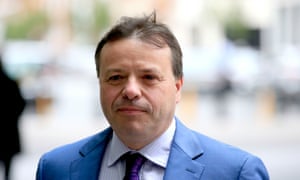
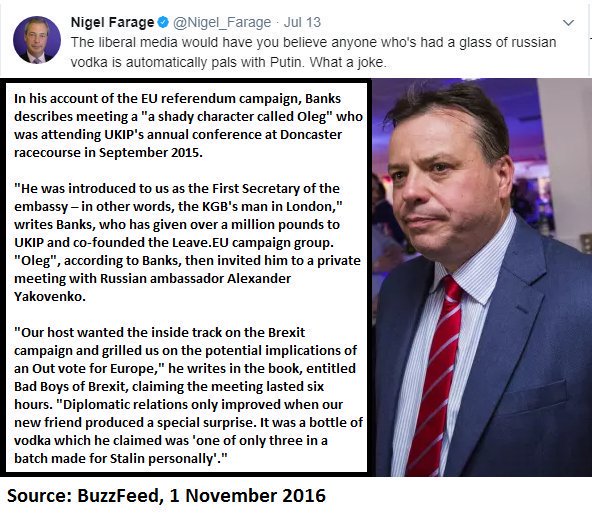




 George Cottrell


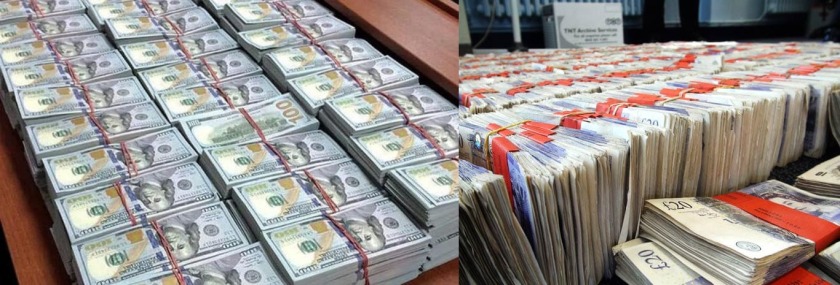


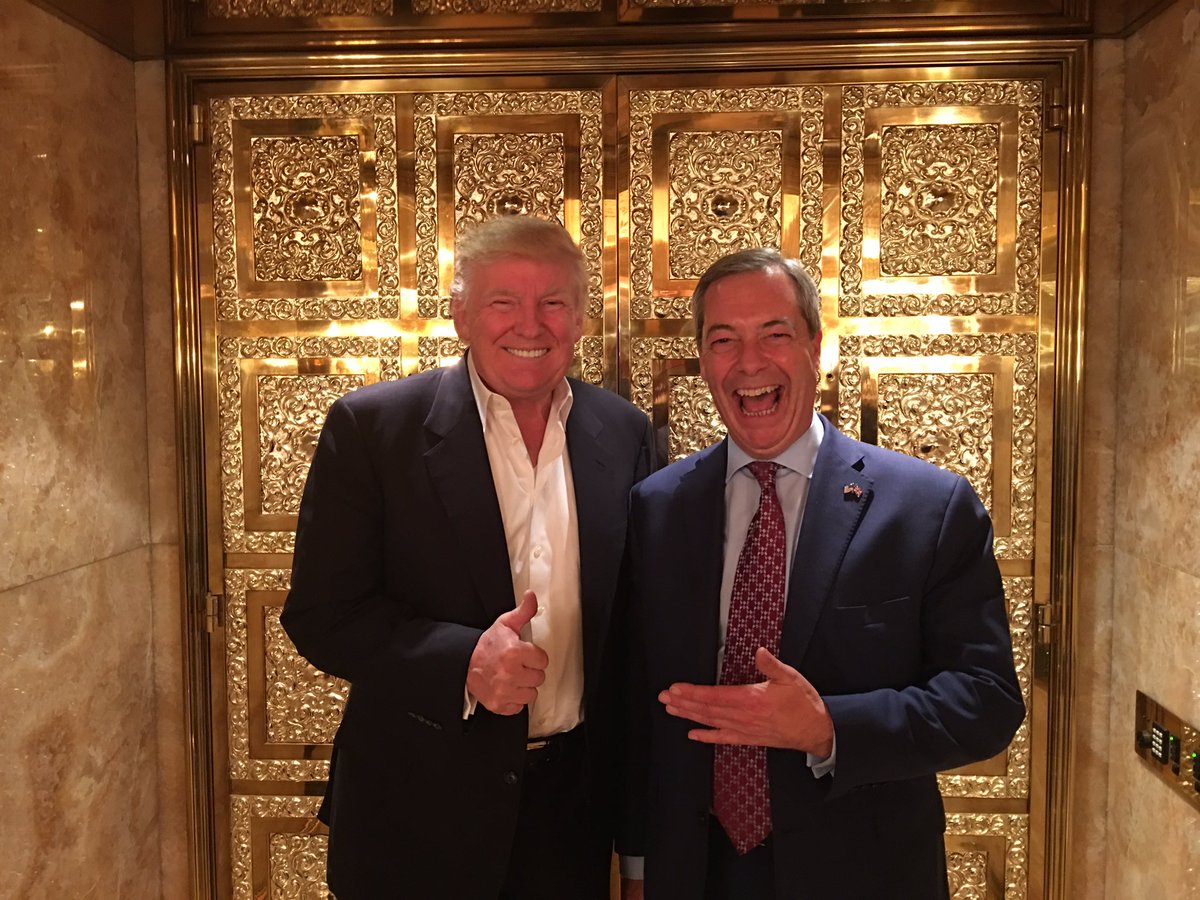




 and if you think that doubt yours is very good


 Ukip-vs-EUkip