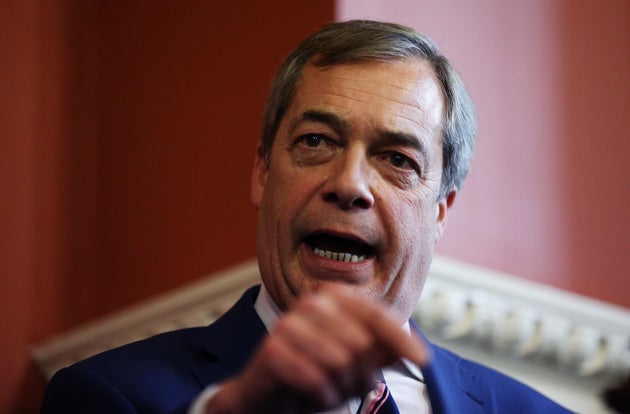
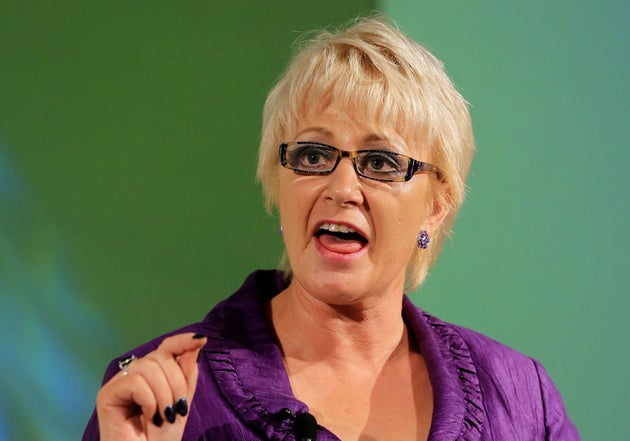
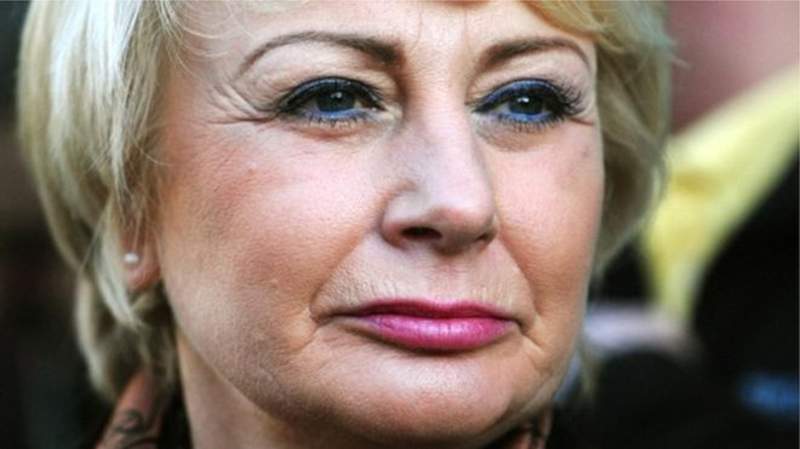
UKIP leader Gerard Batten and two other UKIP MEPs (Stuart Agnew and Jane Collins) have joined Marine Le Pen’s ENF group in the European Parliament. Batten had resigned from Farage’s more moderate EFDD group in December to sit as an independent. The far right ENF group was founded in 2014 following discussions between Marine Le Pen and Geert Wilders, and consists of a number of quasi-fascist parties across Europe.
I try to make every effort to NOT infringe copyrights in any commercial way & make all corrections of fact brought to my attention by an identifiable individual
UKIP could be wound up as a political party within a fortnight after a judge ordered it to pay a crippling £175,000 bill in legal costs for libelling three Labour MPs.
The pro-Brexit party is now facing bankruptcy in the wake of the ruling by Mr Justice Warby on Monday that it had to pay the bill within two weeks.
UKIP MEP Jane Collins falsely accused Labour’s three Rotherham MPs of covering up the town’s sex abuse scandal before the last election.
Sir Kevin Barron, John Healey and Sarah Champion sued for libel over Collins’ speech to a UKIP conference, which came a month after a report found about 1,400 children in the area had been abused between 1997 and 2013.
Collins has already been ordered to personally pay damages of £54,000 to each of the MPs.
The party is already reeling from a succession of failed leaders since Nigel Farage, saw its vote collapse in the 2017 election and is struggling to attract any donors to keep afloat.
It is currently run by interim leader Gerard Batten after former leader Henry Bolton was ousted by members following his links to a girlfriend who sent racist texts about Prince Harry’s fiancee Meghan Markle.
PA Archive/PA Images UKIP MEP Jane Collins
Although UKIP was not deemed responsible for Collins’ remarks, the High Court ruled last month that the party taken an “deliberate” decision not to settle the case before the 2017 general election.
And on Monday, Mr Justice Warby awarded costs – separately from the damages bill – of £175,000 to the three Labour MPs.
At an event in the party’s former heartland of Essex on Monday, current interim leader Batten conceded that UKIP may be “finished” unless it can find the cash.
“If we cannot raise it then the future of the party itself is in question,” he said.
Mary Newton, chairman of the Clacton branch of the party, told her local paper: “Mr Batten said we need to raise £100,000 in two weeks or that could be it. Mr Batten was just being honest and open with us about the situation.”
In a joint statement, Barron, Healey and Champion said: “UKIP’s actions behind the scenes forced the costs of this case to soar and compounded the damage from Jane Collins’ unfounded and hurtful allegations.
“This deliberate strategy hugely increased the legal costs and it is right that UKIP are today held liable for a large share of these costs.
“UKIP used the unfounded allegations by Jane Collins for political advantage.
“At the highest level UKIP knew Jane Collins’ case was ‘hopeless’ but blocked any settlement in our favour before the 2015 General Election because they believed it would win them votes.”
I try to make every effort to NOT infringe copyrights in any commercial way & make all corrections of fact brought to my attention by an identifiable individual
further to the crass debacle orchestrated by Crowther, Richardson & the Ukip NEC regarding the utter stupidity and ill considered libellous malice of Ukip’s MEP Jane Collins which I covered at: CLICK HERE
From: UKIP Regional Chairman – London <walthamforest@ukip.org>
Date: 15 February 2018 at 19:20:17 WET
To: “myword_is_mybond@hotmail.com” <myword_is_mybond@hotmail.com> Subject: Two hundred thousand pounds !
Friends and others,
There’s bad news at the end of this email. And the timing is diabolical; even, suspicious.
Many of you will have been aware “we” (UKIP) were facing being forced to pay a substantial chunk of the defamation action costs (not damages) of Jane Collins MEP, over her alleged assertion that three local Labour MPs knew, in advance or at the time, about the ongoing child abuse in Rotherham, but did little or nothing about it to intervene or stop it.
If you don’t know about this, the (attached) High Court Approved Judgement from 54 weeks ago (Neutral Citation Number: [2017] EWHC 162 (QB) ) will provide the background you need.
I am not a lawyer but, in the late 1980s, my company and I were involved in not one but two unconnected actions for defamation. In one, as the potential plaintiff and the other – in respect of words written by someone else, published without my permission and which I did not endorse or agree with – as the defendant (I was worth suing, he wasn’t). I succeeded in both matters, out of Court – and I did not use a lawyer in either of them.
On the facts known to me (a small fraction of what there was to be known) about this present matter, I could not believe that we (UKIP) would not not be held liable.
The reasons are complicated, and it may be counter-productive for them to be aired here. As far as I could tell, UKIP was bang to rights and it was self-indulgent wishful thinking that we could escape by arguing that our objectives were principally philanthropic or charitable, and not self-serving as a political party with political objectives, however noble we believe them to be.
The number of people higher-up in UKIP who told me I was being alarmist, misguided or wrong is not funny. My questions were, however, not answered to my satisfaction.
Frankly, I’ve heard this “expert advice” twaddle all too often. The experts are often not independent or not experts, especially if even I know more than they do about what they claim to be expert at.
This is the main reason I refused to stand for election to the NEC, despite many telling me I should.
Had I been successful, I would have been a Director of UKIP Ltd (the limited company underlying our party) and so would have been privy to all sorts of information which I have not been (the only information to which I have been privy, to date, has been from public domain sources including the Electoral Commission and Companies House).
I fear what I might then have found out.
Had the company subsequently become insolvent, and furthermore (a huge leap here – hopefully this does not apply, and we have been as diligent as both law and common sense dictate we should have been) been found to have been trading while insolvent, as a Director or shadow Director I could have been potentially held liable personally. Arguably, more so than most or all who would then have been my co-Directors, because given both my professional background and subsequent experience, I could not plead financial ignorance or accounting naiveté without being guilty of perjury too. While almost all company Directors are not pursued in similar cases, us being UKIP, my guesswork (for guesswork is all it was, but so far my guesswork has been 100% correct) would have been that some of our Directors would be.
The case re our share of the liability was heard last week – Friday 9th February was the second day:
Royal Courts of Justice Cause List date: 09/02/2018, Listings, Cases, hearings, UK
Well, and with exquisite “coincidental” timing, our share of the costs have been decided by the High Court a few minutes ago (in the afternoon of Thursday 15th February 2018), and it is an eye-watering £200,000:
The judge said the defamation case brought against Jane Collins would probably have been settled `quite swiftly´. This is devastating. I’ve no idea whether this decision is practicably appealable.
Shouldn’t heads roll for this – have we been misled, misguided or betrayed?
With ill-concealed fury,
Freddy
How right Freddy was and is – lets face it the legal opinions Ukip received were at best crass and at worst utterly crass if not corrupt!
Anyone who doubts this summary might be well advised to read the full judgement:
One has merely to consider which idiots put a dullard like Jane Collins on a party list within striking distance of being an MEP what talent did she have or was this just someone of influence in the party who either was or fancied their chances of bedding her!
I for one never saw one iota of talent she brought to Ukip, but then aqgain that goes for almost everyone amongst the leadership and staff of Ukip!
One has to ask why Ukip did not distance themselves from an idiot who would so freely libel anyone from a public platform in Ukip’s name – even after the event how on earth did Ukip fail to get competent legal advice let alone listen to someone, anyone, who offered to commit the Party to direct involvement in Collins’ utter stupidity!
It is my opinion that Ukip and the directors of the Party’s Limited Company were exceedingly lucky not to be found jointly and severally liable for both the libel and the subsequent costs.
Limited liability does not absolve directors party to either a Civil or Criminal action and its consequences!
Probably the most astonising fact is that there is an EGM today and at least two individuals are squabbling over which of them will take on the mantle of leader to lead this disaster! Perhaps the fact that they actually wish to be embroilled and probably participate in the debts of Ukip tells you all you need to know of their co0mpetence, judgement and ability!
Regards,
Greg_L-W.
~~~~~~~~~~#########~~~~~~~~~~
Posted by: Greg Lance-Watkins
tel: 44 (0)1594 – 528 337
Calls from ‘Number Withheld’ phones Are Blocked
All unanswered messages are recorded.
Leave your name & a UK land line number & I will return your call.
I try to make every effort to NOT infringe copyrights in any commercial way & make all corrections of fact brought to my attention by an identifiable individual
neither Ukip nor their MEP Jane Collins had a good day!
This judgement has finally been delivered after several years of it hanging over both the heads of Ukip who have been very fortunate and have had their liability limited to £200,000, I say lucky because no Court appreciates any individual or organisation trying to dupe them!
Read the full judgement and pay close attention as to how Richardson & Crowther sealed the Party’s fate with what seemed clearly, to me, to be an attempt to midlead the Court, which became apparent during ‘disclosure’.
The depth of Jane Collins’ problem is even greater due to her idiotic & unpleasant stupidity.
It looks to me as if Jane Collins managed to talk her way into owing 3 Labour MPs, who it seems offered to settle with an appology & a consequential donation to charity, for her odious & unprincipled public libel. Collins stupidly resiled on her offer and Richardson would seem to have presumed to ADVISE her to offer a risible £10,000!
ADVISE was a word that Ukip came to rue as it irrevocably locked Ukip into an element of liability, probably regardless of the NEC 12 to 1 decision to help fund Collins’ expenses.
Expenses that have ended up somewhere between £200K & £600K + expenses eventually set by the Courts at £100K each for the 3 MPs she libelled – so it sounds as if Collins has earned herself a bill that the Courts will ensure she must pay of possibly approaching a £Million, but clearly well over £500K.
Read the judgement for yourself and when you have finished remember this is just one of a number Ukip has so far accumulated with more to come seems likely!
It also looks as if part of the Ukip settlement required by the applicants includes all Ukip’s intellectual properties – presumably name, web sites, logos and the like – I can’t think of any other signs of intellect in Ukip!
Regards,
Greg_L-W.
~~~~~~~~~~#########~~~~~~~~~~
Posted by: Greg Lance-Watkins
tel: 44 (0)1594 – 528 337
Calls from ‘Number Withheld’ phones Are Blocked
All unanswered messages are recorded.
Leave your name & a UK land line number & I will return your call.
I try to make every effort to NOT infringe copyrights in any commercial way & make all corrections of fact brought to my attention by an identifiable individual
Ukip faces financial ruin from MEP’s defamation costs
Lucy Fisher, Senior Political Correspondent
February 1 2018, 12:01am,
Jane Collins, a Ukip MEP, was successfully sued by three Labour MPs she accused of ignoring child sex abuse RICHARD STONEHOUSE/GETTY IMAGES
Ukip is facing demands that it pay the £670,000 costs of a defamation case against one of its MEPs, which could push the party into bankruptcy.
Money is tight for the anti-EU party, according to insiders, after a tumultuous 18 months during which it has had four leaders and been deserted by many donors and hordes of members.
Next week the party is due in court, where it will challenge demands that it pay the costs for a slander and libel case brought against one of its senior politicians.
Jane Collins, 55, Ukip MEP for the Yorkshire & Humber region, was successfully sued by three Labour MPs whom she had accused in 2014 of ignoring child sex abuse.
She alleged in a speech at a Ukip conference that Sarah Champion, Sir Kevin Barron and John Healey, who all represent seats in South Yorkshire, had known of the exploitation and had chosen to do nothing. The remark was made after a report found that about 1,400 children in the area were abused between 1997 and 2013.
After the High Court case last February, Ms Collins was ordered to pay a total of £162,000 damages to the MPs and £120,000 towards the £196,000 legal bill within 21 days, but failed to do so. A spokeswoman for Ms Collins said last year that she could face bankruptcy proceedings if it was found that she could not make the payments she owed.
The costs have risen to £669,605 and Gerald Shamash, the solicitor representing the three MPs, said he would be doing all he can to recover the costs from Ukip. He warned that he would seek the assets, including the intellectual property, of Ukip, a limited company, if it was ordered to pay the costs and failed to do so.
Mr Healey said: “The scale of the costs is directly a result of Jane Collins’s decision not to admit she was wrong, and to fight and lose at every stage.”
Ukip insiders are fearful that the party will face bankruptcy if it is forced to pay all or part of the costs when the matter comes before a judge next week.
Adam Richardson, the party secretary, released a statement making clear Ukip’s intention to challenge any attempt to find the party liable for the costs. He said: “Ukip has been added as a party to the Jane Collins defamation case as to costs only. This is because Ukip financially assisted Ms Collins MEP with her defamation case out of a moral obligation.
“This made Ukip a ‘pure funder’ and as such Ukip should not be found liable for any costs incurred as a result of Jane Collins’s case, regardless of the amount.”
The Labour MPs’ lawyers are expected to argue that Ukip had a degree of control over the litigation.
In its latest annual accounts, for the year to December 2016, Ukip listed assets of £223,350 and liabilities of £603,980. It noted a “concerning drop in the amount being donated to the party” but insisted that the party “maintained a stable cash position” at that time.
Last year the party raised £451,055 in donations and was given £450,000 in loans, which remain outstanding. It is unclear how much the party spent during the year.
A member of Ukip’s national executive committee said: “Money is tight. We don’t have access to millions and we have to cut our cloth accordingly.”
Ms Collins could not be reached for comment.
I regret the source is hidden behind a Pay Wall
Regards,
Greg_L-W.
~~~~~~~~~~#########~~~~~~~~~~
Posted by: Greg Lance-Watkins
tel: 44 (0)1594 – 528 337
Calls from ‘Number Withheld’ phones Are Blocked
All unanswered messages are recorded.
Leave your name & a UK land line number & I will return your call.
I try to make every effort to NOT infringe copyrights in any commercial way & make all corrections of fact brought to my attention by an identifiable individual
(Privileges and immunities — Member of the European Parliament — Decision not to defend the privileges and immunities — Action manifestly inadmissible — Manifest lack of jurisdiction — Action manifestly lacking any foundation in law)
In Case T‑919/16,
Jane Maria Collins, residing in Hotham (United Kingdom), represented by I. Anderson, solicitor,
applicant,
v
European Parliament, represented by S. Alonso de León and M. Dean, acting as Agents,
defendant,
concerning, first, an action under Article 263 TFEU for the annulment of the decision of the European Parliament of 25 October 2016 not to defend the immunity and privileges of the applicant, secondly, an action under Article 268 TFEU seeking compensation for the damage allegedly incurred as a result of that decision and, thirdly, a request that the General Court should rule on the request for defence of the immunity and privileges of the applicant,
THE GENERAL COURT (Fourth Chamber),
composed of H. Kanninen, President, L. Calvo-Sotelo Ibáñez-Martín (Rapporteur) and I. Reine, Judges,
Registrar: E. Coulon,
makes the following
Order
Background to the dispute
1 In the elections held on 25 May 2014, the applicant, Ms Jane Maria Collins, was elected to the European Parliament on the list of the United Kingdom Independence Party (UKIP).
2 On 26 September 2014, the applicant made a speech at a UKIP conference in the constituency of Yorkshire and Humber (United Kingdom). On that occasion, she mentioned a child sexual abuse scandal in the area of Rotherham (United Kingdom), which is part of that constituency, and stated that she was convinced that three members of the Labour party who were elected from that constituency to the Parliament of the United Kingdom ‘knew many of the details of what was happening’. She further stated that, by failing to take action, the persons who were aware of the abuse in question had helped and encouraged the perpetrators and were just as guilty (‘the statements at issue’).
3 On 5 December 2014, before the Queen’s Bench Division of the High Court of Justice (England and Wales) (United Kingdom), the three MPs in question brought a civil action against the applicant, seeking, on the one hand, damages for libel and slander and, on the other, an injunction restraining the applicant from repeating the statements at issue.
4 On 3 May 2016, the applicant made a request to the European Parliament, on the basis of Article 7 of its Rules of Procedure, for the defence, in the proceedings referred to above, of her privileges and immunities as enshrined in Article 8 of Protocol No 7 on the privileges and immunities of the European Union (OJ 2010 C 83, p. 266; ‘the protocol’).
5 On 17 May 2016, the Queen’s Bench Division of the High Court of Justice (England and Wales) suspended the proceedings after having been informed, by the European Parliament, of the Applicant’s request for the defence of her privileges and immunities.
6 By decision of 25 October 2016, the European Parliament decided not to defend the privileges and immunity of the applicant (‘the contested decision’). The decision is reasoned as follows:
‘whereas … the request concerns the defence of the freedom of Members of the European Parliament, under Article 8 of the Protocol, from any form of inquiry, detention or legal proceedings in respect of opinions expressed or votes cast by them in the performance of their duties;
whereas this part of the request relates to the fact that [the applicant] is subject to a civil claim in the United Kingdom for damages, including aggravated damages, for alleged libel and slander, as well as to a claim for an injunction against her to desist from repeating the [statements at issue];
whereas the claim of libel and slander concerns accusations which [the applicant] made at a party conference;
whereas the parliamentary immunity conferred by Article 8 of the Protocol applies to opinions expressed by Members of the European Parliament only in the performance of their duties;
whereas statements made by Members of the European Parliament outside the precincts of the European Parliament are considered to be made in the performance of their duties only if they amount to a subjective appraisal having a direct, obvious connection with the performance of those duties …;
whereas, however, there is no direct [and] obvious connection between the [statements at issue] and [the applicant]’s duties as a Member of the European Parliament, as they do not relate to her activity as a Member of the European Parliament or to the policies of the European Union, and were made in the context of national political debate;
whereas the [statements at issue] are, therefore, not covered by Article 8 of the Protocol.’
7 On 27 October 2016, a journalist of the British Broadcasting Corporation (BBC) published an article on the BBC website setting out the background and political context of the case, the scope of the contested decision, as well as comments from a Member of the European Parliament on the matter. In its comments, the MEP in question stated that there had been, within the European Parliament, some raised eyebrows as to what he described as the apparent hypocrisy of a member of a party that wants to dismantle all European Union institutions apparently trying to hide behind one of them to avoid the decision of a court of the United Kingdom.
Procedure and forms of order sought
8 By application lodged at the Registry of the Court on 28 December 2016, the applicant brought the present action.
9 By separate document lodged at the Registry of the Court on 5 July 2017, the Parliament raised a plea of inadmissibility under Article 130(1) of the Rules of Procedure of the General Court. The applicant lodged its observations on that objection on 21 August 2017.
10 The applicant claims that the Court should:
– annul the contested decision;
– decide on her request for the defence of her immunity and privileges;
– order the Parliament to pay her compensation for the damage suffered, in the amount of EUR 10 000 for non-material damage and in the amount of EUR 25 000 for material damage;
– order the Parliament to pay the costs.
11 The Parliament contends that the Court should:
– dismiss the action as inadmissible;
– in the alternative, in the event that the plea of inadmissibility is not upheld or is reserved for the final judgment, prescribe new time-limits to enable the Parliament to submit its defence, pursuant to Article 130(8) of the Rules of Procedure;
– order the applicant to pay the costs.
Law
12 Pursuant to Article 130(1) and (7) of the Rules of Procedure, the Court may, if the defendant so requests, rule on the question of admissibility or lack of competence without considering the merits of the case. Furthermore, under Article 126 of the Rules of Procedure, where it is clear that the General Court has no jurisdiction to hear and determine an action or where it is manifestly inadmissible or manifestly lacking any foundation in law, the General Court may, on a proposal from the Judge-Rapporteur, at any time decide to give a decision by reasoned order without taking further steps in the proceedings.
13 In the present case, the Tribunal considers that there is sufficient information before it and has decided, pursuant to those provisions, to give a decision by reasoned order without taking further steps in the proceedings.
The claim for annulment
Arguments of the parties
14 The European Parliament submits that the contested decision did not bring about a distinct change in the applicant’s legal situation and that it is therefore not a measure against which an action for annulment may be brought. The purpose of the request for the defence of parliamentary immunity was not the adoption of a measure producing binding legal effects; a decision taken on the basis of such a request merely constitutes an opinion. Consequently, the Parliament took the view that the claims for annulment must be rejected as manifestly inadmissible.
15 The applicant states, first, that in her action she alleges infringement of Articles 6 and 11 of the Convention for the Protection of Human Rights and Fundamental Freedoms, signed in Rome on 4 November 1950 (‘the ECHR’), that the breach of those provisions had brought about a distinct change in her legal situation, and that that breach gave her a right of action before the General Court. On the one hand, the contested decision was intended to produce legal effects and that had been the case in practice, inasmuch as the infringement of the applicant’s right to be heard fairly and impartially caused her damage. On the other, if the contested decision were not subject to challenge before the Court, the Parliament could act without having to comply with the above provisions.
16 Secondly, the case-law is not unambiguous. In its judgment of 21 October 2008, Marra (C‑200/07 and C‑201/07, EU:C:2008:579), the Court held that the decision of the Parliament not to defend the immunity of one of its Members constituted an opinion which was not binding on national courts. In its objection of inadmissibility, the Parliament inferred from the order of 5 September 2012, Farage v Parliament and Buzek (T‑564/11, not published, EU:T:2012:403), that that case-law was well established. However, the case which gave rise to that order concerned a financial penalty imposed by the institution on one of its members. Moreover, in its judgment of 15 October 2008, Mote v Parliament (T‑345/05, EU:T:2008:440), the General Court held that a decision of Parliament lifting the immunity of one of its members was a measure which could be the subject of an action for annulment.
17 Thirdly, although the judgment of 21 October 2008, Marra (C‑200/07 and C‑201/07, EU:C:2008:579, paragraph 32), states that the protocol does not confer on the Parliament the power to determine, in cases of legal proceedings against one of its Members in respect of opinions expressed or votes cast by him, whether the conditions for applying that immunity are met, the fact remains that the Parliament did, in the present case, act as the competent authority in that regard. In those circumstances, the Queen’s Bench Division of the High Court (England and Wales) may take the view that it is not for it to examine itself whether the statements at issue are covered by the immunity provided for in Article 8 of the Protocol. The contested decision thus has an impact on the proceedings before that court.
18 Fourthly, it is apparent from Rule 7(5) of the Parliament’s Rules of Procedure that a decision of the Parliament not to defend the immunity of one of its members is subject to appeal before the General Court.
Findings of the Court
19 According to settled case-law, an institution’s reply to a request addressed to it does not necessarily constitute a decision within the meaning of the fourth paragraph of Article 263 TFEU, thus opening the way for the addressee of that reply to bring an action for its annulment. In addition, it has consistently been held that only a measure the legal effects of which are binding on and capable of affecting the interests of an applicant by bringing about a distinct change in his legal position is a measure against which an action for annulment may be brought under Article 263 TFEU. It follows that the rejection by an institution of a request addressed to it does not constitute a measure against which an action for annulment may be brought where that request did not lead to the adoption, by that institution, of a measure producing binding legal effects (see order of 5 September 2012, Farage v Parliament and Buzek, T‑564/11, not published, EU:T:2012:403, paragraph 27 and the case-law cited).
20 As regards, more particularly, a request for the defence of parliamentary immunity, it must be borne in mind that Article 8 of the Protocol provides that ‘Members of the European Parliament shall not be subject to any form of inquiry, detention or legal proceedings in respect of opinions expressed or votes cast by them in the performance of their duties’. Article 9(1) of the Rules of Procedure provides that any request addressed to the President of the Parliament by a Member of the Parliament to defend his immunity and privileges is to be announced in Parliament and referred to the committee responsible. Furthermore, it is apparent from a reading of Article 9(8) of the Parliament’s Rules of Procedure in conjunction with Article 9(9) of those rules that the discussions before the Parliament concern only the reasons for and against defence of immunity or a privilege. Finally, it is stated in Article 9(10) of those rules that the competent authority of the Member State concerned, to which Parliament’s decision is communicated, is invited to inform it of any developments and judicial rulings issued in the proceedings in question.
21 In a similar context, the Court held, in its judgments of 21 October 2008, Marra (C‑200/07 and C‑201/07, EU:C:2008:579, paragraph 39) and of 6 September 2011, Patriciello (C‑163/10, EU:C:2011:543, paragraph 39) that, even where criminal proceedings have been brought against a Member before a national court, a decision to defend immunity, adopted by the Parliament on the basis of the Rules of Procedure following a request from the Member concerned, constitutes only an opinion which does not have binding effect with regard to national judicial authorities. It necessarily follows that a decision rejecting a request for the adoption of such a decision does not constitute a measure producing binding legal effects and cannot be the subject of an action for annulment (order of 5 September 2012, Farage v Parliament and Buzek, T‑564/11, not published, EU:T:2012:403, paragraph 28).
22 The fact that no action may be brought against the contested decision is not called into question by the arguments put forward by the applicant in its observations on the plea of inadmissibility.
23 First, as regards the applicant’s argument that the contested decision was intended to go beyond the mere expression of an opinion and to produce legal effects vis-à-vis the national judicial authorities, it should be recalled that in order to determine whether an act is capable of having legal effects and, therefore, whether an action for annulment under Article 263 TFEU can be brought against it, it is necessary to examine its wording and context, its substance and the intention of its author (see order of 12 October 2016, Cyprus Turkish Chamber of Industry and Others v Commission, T‑41/16, not published, EU:T:2016:613, paragraph 33 and the case-law cited).
24 However, although, in the contested decision, the Parliament took the view that ‘there was no direct [and] obvious connection between the [statements at issue] and [the applicant]’s duties as a Member of the European Parliament’ and that ‘the [statements at issue] [were], therefore, not covered by Article 8 of the Protocol’, the Parliament thus confined itself to replying to the application submitted to it by the applicant for the defence of her immunity and privileges.
25 Secondly, while Article 7(5) of the Rules of Procedure provides that, where a decision not to defend the privileges and immunities of an MEP has been taken, that MEP may make a request for reconsideration unless an action has been brought against the decision under Article 263 TFEU. However, those rules are an act of internal organisation and cannot grant powers to the Parliament which are not expressly acknowledged by a legislative measure, in this case by the protocol (judgment of 21 October 2008, Marra, C‑200/07 and C‑201/07, EU:C:2008:579, paragraph 38).
26 Thirdly, the applicant’s claim that the Queen’s Bench Division of the High Court (England and Wales) may consider itself bound by the contested decision is purely speculative. Since the contested decision is merely an opinion, the national court is entitled to depart from it (see, to that effect, judgment of 6 September 2011, Patriciello, C‑163/10, EU:C:2011:543, paragraph 40).
27 Fourthly, as regards the applicant’s argument alleging infringement of Articles 6 and 11 of the ECHR which she claims to have suffered, it must be pointed out that it amounts, in actual fact, to inferring that the contested decision is an act adversely affecting a person on the basis of its alleged illegality. In so doing, the applicant conflates the separate issues of the admissibility and the merits of the claim for annulment, whereas the existence of possible unlawful acts does not fall within the scope of the examination of the admissibility of the action for annulment, but of its merits (see judgment of 20 May 2010, Commission v Violetti and Others, T‑261/09 P, EU:T:2010:215, paragraph 56 and the case-law cited). Consequently, the alleged infringement of Articles 6 and 11 of the ECHR, moreover not formally incorporated into EU law (judgments of 26 February 2013, Åkerberg Fransson, C‑617/10, EU:C:2013:105, paragraph 44, and of 18 July 2013, Schindler Holding and Others v Commission, C‑501/11 P, EU:C:2013:522, paragraph 32), is not sufficient to render admissible an action for annulment against an act which does not produce binding legal effects and does not therefore affect the interests of an applicant, by bringing about a distinct change in his legal position (see, to that effect, judgment of 15 January 2003, Philip Morris International v Commission, T‑377/00, T‑379/00, T‑380/00, T‑260/01 and T‑272/01, EU:T:2003:6, paragraph 87). In any event, the alleged infringement could, at most, be linked to the conduct of Parliament lacking the features of a decision. In that case, the applicant’s right to effective judicial protection is ensured by the possibility of bringing an action for damages conferred on her by Article 268 TFEU (see, to that effect, judgment of 21 January 2016, SACBO v Commission and INEA, C‑281/14 P, not published, EU:C:2016:46, paragraph 47, and of 20 May 2010, Commission v Violetti and Others, T‑261/09 P, EU:T:2010:215, paragraph 59), which the applicant moreover did in her third head of claim (see paragraph 30 et seq. below).
28 Fifthly, the case-law is not inconsistent, contrary to what the applicant claims. First of all, while paragraph 31 of the judgment of 15 October 2008, Mote v Parliament (T‑345/05, EU:T:2008:440) accepted that the contested decision constituted a measure against which an action for annulment could be brought, it related to a Parliament decision waiving the immunity of one of its Members in accordance with the third paragraph of Article 10 of the protocol, so as to make it possible to bring criminal proceedings against that Member, and not a decision finding that there were no grounds for defending the immunity of an MEP provided for in Article 8 of that protocol. Subsequently, although the order of 5 September 2012, Farage v Parliament and Buzek (T‑564/11, not published, EU:T:2012:403), did relate to an action brought against a financial penalty imposed by the institution on one of its members, the Court also ruled, in paragraphs 27 and 28 of its order, on the admissibility of the action in so far as it was also directed against a decision refusing to defend the immunity of the Member concerned. On that occasion, the Court held, in line with the judgments of 21 October 2008, Marra (C‑200/07 and C‑201/07, EU:C:2008:579), and of 6 September 2011, Patriciello (C‑163/10, EU:C:2011:543), that such a decision did not constitute a measure producing binding legal effects capable of being the subject of an action for annulment.
29 It follows from the foregoing that it is necessary to uphold the plea of inadmissibility and to dismiss the claim for annulment of the contested decision as manifestly inadmissible.
The claim that the Court should rule on the request for defence of the immunity and privileges of the applicant
30 The Parliament submits that the General Court manifestly lacks jurisdiction to hear the claim that it should itself rule on the request for the defence of the immunity and privileges of the applicant, since it is not for the Court to issue directions to the institutions or to substitute itself for them.
31 The applicant did not respond to that plea of inadmissibility.
32 According to settled case-law, the General Court is not entitled, in the context of a review of legality on the basis of Article 263 TFEU, to issue directions to the institutions or to assume the role assigned to them. That limitation of the scope of judicial review applies to all types of contentious matters that might be brought before the Court (see, to that effect, judgments of 12 July 2001, Mattila v Council and Commission, T‑204/99, EU:T:2001:190, paragraph 26; of 8 October 2008, Agrar-Invest-Tatschl v Commission, T‑51/07, EU:T:2008:420, paragraphs 27 and 28; and of 17 December 2010, EWRIA and Others v Commission, T‑369/08, EU:T:2010:549, paragraph 45), and thus also in the field of immunity and privileges granted to Members (see, by analogy, judgment of 15 June 2017, Bay v Parliament, T‑302/16, EU:T:2017:390, paragraph 45).
33 In the light of the foregoing, the claim that the Court should rule on the request for defence of the immunity and privileges of the applicant must be rejected on the grounds of manifest lack of jurisdiction.
The claim that the Court should order the Parliament to pay compensation to the applicant for the damage allegedly suffered by it
34 The Parliament submits that, in so far as the claim for annulment is manifestly inadmissible, the same applies to the claim for compensation.
35 It should be borne in mind that the action for compensation based on the second paragraph of Article 340 TFEU is an autonomous form of action in the system of remedies available in EU law, so that the fact that an application for annulment is inadmissible does not in itself render a claim for damages inadmissible (order of 13 January 2014, Investigación y Desarrollo en Soluciones y Servicios IT v Commission, T‑134/12, EU:T:2014:31, paragraph 59).
36 Admittedly, where an action for damages is actually aimed at securing the withdrawal of an individual decision addressed to the applicant which has become definitive — so that it has the same purpose and the same effect as an action for annulment — that action for damages might be regarded as an abuse of process; the burden of proving such an abuse of process lies on the party pleading it (see order of 13 January 2014, Investigación y Desarrollo en Soluciones y Servicios IT v Commission, T‑134/12, EU:T:2014:31, paragraph 60).
37 However, in the present case, the Parliament does not allege, let alone prove, that the applicant’s claims for compensation have the same purpose and the same effect as her claim for annulment, which was deemed inadmissible in paragraph 29 above.
38 The Parliament’s plea of inadmissibility in respect of the claim for damages must therefore be rejected.
39 It should nevertheless be pointed out, ex officio, that the claim in question does not meet part of the requirements laid down by Article 76(d) of the Rules of Procedure.
40 In order to meet the requirements of that provision, any application must state the subject matter of the proceedings and a summary of the pleas in law on which the application is based. That statement must be sufficiently clear and precise to enable the defendant to prepare its defence and the Court to rule on the action, if necessary, without any further information. In order to guarantee legal certainty and the sound administration of justice, it is necessary, in order for an action to be admissible, that the essential matters of law and fact relied on are stated, at least in summary form, coherently and intelligibly in the application itself. More specifically, in order to satisfy those requirements, the claims relating to compensation for the damage allegedly caused by a European Union institution must state the evidence from which the conduct alleged against the institution may be identified, the reasons why it considers that a causal link exists between that conduct and the damage which it claims to have suffered, and the nature and extent of that damage (see order of 14 July 2016, Alcimos Consulting v ECB, T‑368/15, not published, EU:T:2016:438, paragraph 42 and the case-law cited).
41 The applicant claims, first, that, ‘in refusing to defend the immunity of the Applicant under Article 8 of the Protocol, the Parliament … [has] exposed the Applicant to substantial aggravated damages in the national courts for causing proceedings to be stayed under the principle of sincere cooperation in order for the request to the Parliament to be heard’.
42 That finding does not, however, make it possible to identify with the degree of clarity and precision required by Article 76(d) of the Rules of Procedure either the nature of the damage allegedly suffered, or the extent or the existence of a sufficiently direct causal link between the alleged unlawful acts and the alleged damage. Consequently, that claim is manifestly inadmissible.
43 As regards the substance of the claim, it is settled case-law that in order for the European Union to incur non-contractual liability under the second paragraph of Article 340 TFEU for unlawful conduct on the part of its institutions, a number of conditions must be satisfied: the institutions’ conduct must be unlawful; actual damage must have been suffered; and there must be a causal link between the conduct and the damage pleaded. Since those three conditions are cumulative, the absence of any one of them is sufficient for an action for damages to be dismissed (see, to that effect, judgments of 17 January 2013, Gollnisch v Parliament, T‑346/11 and T‑347/11, EU:T:2013:23, paragraphs 210 and 211 and the case-law cited, and of 15 January 2015, Ziegler and Ziegler Relocation v Commission, T‑539/12 and T‑150/13, not published, EU:T:2015:15, paragraphs 59 and 60).
44 With regard more specifically to the condition relating to the existence of a causal link, it is met where there is a direct link of cause and effect between the fault committed by the institution concerned and the alleged damage, the existence of which the applicant must prove. In other words, the European Union can be held liable only for damage which is a sufficiently direct consequence of the wrongful act of the institution concerned, that is to say, the conduct must be the determining cause of the harm. By contrast, it is not for the Union to make good every harmful consequence, even a remote one, of the conduct of its institutions (judgments of 17 January 2013, Gollnisch v Parliament, T‑346/11 and T‑347/11, EU:T:2013:23, paragraph 222, and of 16 December 2015, Chart v EEAS, T‑138/14, EU:T:2015:981, paragraph 53).
45 It must be observed in that regard that, even assuming the admissibility of the statement in question referring to the stay of proceedings granted by the Queen’s Bench Division of the High Court (England and Wales), the damage resulting from such a stay of proceedings is directly caused by the choice, made freely by the applicant, to ask the Parliament to defend her privileges and immunities.
46 In its application, the applicant maintains, secondly, that the comment on the case by an MEP, reproduced in the article of 27 October 2016 published by a BBC journalist, involves an assessment that is damaging to her reputation and which is the direct consequence of the contested decision.
47 However, it is clear from the wording of the contested decision, as reproduced in paragraph 6 above, that, in that decision, the Parliament merely recalled briefly the background to the case and the scope of Article 8 of the Protocol, before concluding that, in its view, the statements at issue had no connection with the applicant’s activity as a Member of the Parliament or with the policies of the European Union. The contested decision is drafted in neutral terms and does not reflect any opinion unfavourable to the applicant, especially with regard to the potentially libellous or defamatory nature of the statements at issue. Furthermore, under Article 115 of the Rules of Procedure of the Parliament, Parliament’s debates are open to the public, and the texts it adopts are also made public pursuant to Article 116 of those rules. Consequently, the applicant could not have been unaware, in her capacity as MEP, that the request that she had freely chosen to introduce for the defence of her immunity and privileges would lead to the adoption by the Parliament of a decision which would be made public.
48 In those circumstances, it cannot be concluded that there is a direct link of cause and effect between the alleged illegalities committed by the Parliament at the time of the adoption of the contested decision and the alleged damage to the applicant’s reputation, since such damage could ensue, by definition, only from the press article drafted by a journalist.
49 In its application, the applicant alleges, thirdly, that she suffered financial loss as a result of the fact that, in order to bring the present action before the Court, she was obliged to pay a lawyer.
50 However, it is settled case-law that the expenses incurred by the parties for the purposes of legal proceedings before a court of the European Union are not material damage but costs (see, to that effect, judgment of 10 June 1999, Commission v Montorio, C‑334/97, EU:C:1999:290, paragraph 54, and order of 17 February 2012, Dagher v Council, T‑218/11, not published, EU:T:2012:82, paragraph 39).
51 In the light of the foregoing, it must be held that the applicant’s claims for compensation are in part manifestly inadmissible, and in part manifestly lacking any foundation in law.
52 Consequently, the action must be dismissed in its entirety, in part as it is manifestly inadmissible, in part as it manifestly falls outside the jurisdiction of the Court, and in part as it is manifestly unfounded.
Costs
53 Under Article 134(1) of the Rules of Procedure, the unsuccessful party is to be ordered to pay the costs if they have been applied for in the successful party’s pleadings. Since the applicant has been unsuccessful, and the Parliament has applied for costs, she must be ordered to pay the costs.
On those grounds,
THE GENERAL COURT (Fourth Chamber)
hereby orders:
1. The action is dismissed.
2. Jane Maria Collins is ordered to bear her own costs and to pay those of the European Parliament.
Luxembourg, 1 February 2018.
E. Coulon H. Kanninen Registrar
To view the original of this Judgement
Against Jane Collins Ukip MEP CLICK HERE
Regards,
Greg_L-W.
~~~~~~~~~~#########~~~~~~~~~~
Posted by: Greg Lance-Watkins
tel: 44 (0)1594 – 528 337
Calls from ‘Number Withheld’ phones Are Blocked
All unanswered messages are recorded.
Leave your name & a UK land line number & I will return your call.
I try to make every effort to NOT infringe copyrights in any commercial way & make all corrections of fact brought to my attention by an identifiable individual
UKIP MEP Jane Collins has thrown her hat into the ring to be the party’s next leader.
Ms Collins represents Yorkshire and North Lincolnshire for UKIP in the European Parliament.
She is currently facing possible bankruptcy after failing to pay damages to three Labour MPs over remarks she made about the Rotherham child abuse scandal.
But that has not stopped her from announcing her ambition to become UKIP’s next leader.
The role is currently vacant following the resignation of Paul Nuttall after the party’s disastrous performance in the general election.
Ms Collins, who lives in East Yorkshire, said she wanted to re-build UKIP’s reputation.
“Having watched what has happened to my party over the last few months I have decided to stand for leadership,” she said.
“The infighting and carpet-bagging going on within UKIP is quite frankly very disappointing.
“I have seen UKIP in this position before in the 90s when I worked with Godfrey Bloom and through Godfrey’s hard work and dedication throughout the region we built Yorkshire and North Lincolnshire into one of UKIP’s most strongest region’s with some great election results.
Hull-based UKIP MEP Mike Hookem with party colleague and fellow Yorkshire MEP Jane Collins
“At present we are still not out of the water with Brexit and UKIP must survive, thrive and succeed in delivering what the British public voted for delivering.
“Brexit is the start of the process and the next stage of the game for UKIP.”
Ms Collins, who was elected as an MEP in 2014, has been embroiled in controversy over comments she made in a speech at a UKIP conference a month after a report found that around 1,400 children in Rotherham had been abused between 1997 and 2013.
In the speech, she claimed Rotherham MPs Sir Kevin Baron, John Healey and Sarah Champion knew about child exploitation in the town but did not intervene.
Ms Collins argued it was a political speech which reflected her opinion that the MPs were likely to have known the issue was a serious problem.
But the MPs sued for libel and slander and in February she was told to pay £358,000 in damages and costs. She appeared in county court in Hull in May after failing to pay within the required timescale.
After the hearing was adjourned for an examination of her financial assets, a spokesman for Ms Collins said she would face bankruptcy proceedings if it was found she could not make the payments owed.
In a statement announcing her intention to stand for the UKIP leadership, she said: “Over the last few years, since becoming an MEP, I have been subjected to legal action by three Rotherham MPs which unfortunately put severe constraints on my party activities.
“My personal life has been badly affected and the party and my constituents who I have felt I had to speak up for have been let down by all statutory bodies in Rotherham.
“The case is still in the process with the European Court of Justice and police investigations are on-going.”
Ms Collins has also continued to question the case brought against her by the three MPs on her Twitter account.
Last month she tweeted: “I’m being sued for £250k for speaking up against Child Exploitation by predominantly Muslim gangs but somehow I am some aplogist. Weird.”
I try to make every effort to NOT infringe copyrights in any commercial way & make all corrections of fact brought to my attention by an identifiable individual
It relates to her being sued for libel and slander by Sir Kevin Barron, MP for Rother Valley, John Healey, MP for Wentworth and Dearne, and Sarah Champion, MP for Rotherham, over a speech she made in 2014 about the Rotherham child abuse scandal.
The High Court heard she alleged that each of the MPs knew details of the exploitation but chose not to intervene.
Today Ms Collins appeared at a private hearing at Hull County Court to discuss a demand for payment issued by the MPs’ lawyers. It is understood the MEP had requested the demand was set aside but this was not agreed at the hearing.
A spokeswoman for Ms Collins said the judge has now ordered an examination of her assets and that she will face bankruptcy proceedings if it is found that she cannot make the payments owed.
It came after Ms Collins alleged the three Labour MPs in the South Yorkshire town knew about the notorious child abuse scandal but did not intervene because of political correctness, cowardice, or selfishness.
Sir Kevin Barron, MP for Rother Valley, John Healey, MP for Wentworth and Dearne, and Sarah Champion, MP for Rotherham, sued Ms Collins for libel and slander over the speech, which she gave at Ukip’s conference in September 2014. At the time, it was a month after a report found about 1,400 children in the area had been abused between 1997 and 2013.
Ms Collins argued it was a political speech which did not contain any allegation of fact but expressed an opinion to the effect that the MPs were likely to have known sexual exploitation was a serious problem in the area.
But Mr Justice Warby ordered her to pay a total of £162,000 damages to the MPs and £196,000 in costs.
She appeared at at Hull County Court for a further private hearing on Monday after she did not meet a 21-day deadline to pay the damages and an interim payment of £120,000 costs.
It is understood the MEP had requested the demand for payment issued by the MPs’ lawyers was set aside but this was not agreed at the hearing.
A spokeswoman for Ms Collinssaid the judge has now ordered that an examination of her assets should take place before June 8. The spokeswoman said she will face bankruptcy proceedings if it is found that she cannot make the payments owed.
A further court hearing will take place at the Royal Courts of Justice in London later this year to discuss how she intends to pay.
Ms Collins was advised by her lawyer not to comment after the hearing on Monday but said no orders for costs had been issued during the proceedings.
Following the London hearing in February, the MPs said the case had been “delayed and dragged out time and again by Jane Collins’ repeated attempts to evade justice”.
The joint statement read: “She has run out of places to hide and the judge said in no uncertain terms that her behaviour since proceedings began has been unreasonable and offensive.
“Ms Collins could have admitted her mistake, withdrawn her remarks and apologised to us.”
I try to make every effort to NOT infringe copyrights in any commercial way & make all corrections of fact brought to my attention by an identifiable individual
Jane Collins outside the Royal Courts of Justice in London. She argued that the speech was political and expressed an opinion. Photograph: John Stillwell/PA
A Ukip MEP has been ordered to pay more than £160,000 in libel and slander damages, and faces an additional costs bill of £196,000, after alleging that three Labour MPs knew about the widespread abuse of children in Rotherham, but deliberately chose to do nothing.
The high court in London ordered Jane Collins to pay £54,000 each to Sarah Champion, Kevin Barron and John Healey, the MPs for Rotherham, Rother Valley, and Wentworth and Dearne respectively.
The judge, Mr Justice Warby, ordered the MEP to make an interim payment of £120,000 costs, plus the damages, within 21 days.
It is understood that Collins will have to cover the bill herself, with Ukip not expected to contribute.
Collins, an MEP for Yorkshire and the Humber, made the comments in a speech to Ukip’s annual conference in Doncaster in September 2014.
Warby said Collins claimed that each of the MPs had known many of the details of the exploitation of more than 1,400 children in Rotherham over a 16-year period, but chosen to not act.
Collins argued in her speech that the MPs had failed to speak out about the abuse, carried out mostly by Asian men, because of political correctness, cowardice or selfishness, and were thus guilty of grave misconduct.
“The abusers time and time again walked away. And why? It was because of their Asian origin,” Collins said in the speech.
Gavin Millar QC, representing the MPs, said the allegations led to his clients being targeted repeatedly on social media before the 2015 general election.
“The impact of the allegations on the claimants was extremely grave,” he said. “They caused immense damage and made the whole election extremely stressful for each of the claimants.”
In a joint statement, the MPs said the case had been “delayed and dragged out time [and] again by Jane Collins’ repeated attempts to evade justice”.
“She has run out of places to hide and the judge said in no uncertain terms that her behaviour since proceedings began has been unreasonable and offensive,” they said.
“The judge has also noted [that] the impact on each claimant’s reputation was seriously harmful, [bringing a] cascade of hostile social media response.
“Ms Collins could have admitted her mistake, withdrawn her remarks and apologised to us. Instead, she tried every trick in the book, including the absurd irony of trying, and failing, to seek immunity by hiding behind the EU institutions she is so keen for us to leave behind.”
A spokesman for Collins said she had no immediate comment on the ruling.
The court was told that Collins refused to withdraw the allegations during the 2015 general election campaign, had not apologised and had repeatedly tried to delay the litigation.
She made an offer of amends that was accepted, but the amount of compensation could not be agreed and had to come back to court.
In her defence, Collins argued that it was a political speech, which did not contain any allegation of fact, but merely expressed an opinion.
The award of £54,000 for defamation in each case was composed of £45,000 for libel and £9,000 for slander.
An official inquiry into the Rotherham abuse scandal blamed failings by Rotherham council and South Yorkshire police. The report by Prof Alexis Jay, a former chief inspector of social work, concluded that the council knew as far back as 2005 of sexual exploitation being committed on a wide scale, yet failed to act.
In a separate case, Barron and Healey won a similar libel case against the former Rotherham Ukip councillor Caven Vines. Last June, he was ordered to pay £40,000 in damages to each MP, and costs.
I try to make every effort to NOT infringe copyrights in any commercial way & make all corrections of fact brought to my attention by an identifiable individual
The EU Shows The Fundamental Lack Of Integrity Of Ukip’s Jane Collins MEP, in her fundamental dishonesty seeking to exploit her perception of EU law to protect her from the British Courts over her libel of political rivals!
~~~~~~~~~~#########~~~~~~~~~~
.
Hi,
having had the news of Jane Collins pleadings to the EU for indemnity against British Justice over her libel of 3 Labour MPs and to escape British Courts and justice with the commensurate reparations and costs amounting to a possible £1/2M rejected – I have had the verdict verified by the comments of Daily Mail journalist John Stevens
Jane Collins has a love-hate relationship with the EU (Picture: PA)
She has been an outspoken critic of the EU as a high-ranking member of UKIP.
But now the tables have turned for Jane Collins – who has appealed to the European Parliament to prevent her from paying potentially substantial damages.
In an incredible dash of irony, the UKIP MEP claimed that she has ‘immunity’ against legal action taken against her, because she is a Member of the European Parliament.
Ms Collins made libellous comments about Sarah Champion as well as fellow Rotherham MPs John Healey and Sir Kevin Barron (Picture: PA)
The High Court previously ruled that Ms Collins had libellous intentions when she accused Rotherham’s Labour MPs Sarah Champion, John Healey and Sir Kevin Barron of ‘knowing all about’ 1,400 cases of grooming and rape of young girls in the town.
UKIP colleague Caven Vines – who is not an MEP – has been ordered to pay Mr Healey and Mr Barron £80,000 after making similar claims.
However, Ms Collins’ appeal to the very institution she is campaigning against has caused proceedings in her case to be suspended.
The allegations were made by Ms Collins at the UKIP conference in September 2014, at a time when she had been selected as the prospective parliamentary candidate for Rotherham, Ms Champion’s constituency.
The judge said he thought it ‘improbable’ immunity would be granted, but acknowledged that the European Parliament would need to investigate her application.
Ms Collins took to Twitter to respond to the three Labour MPs.
“EU law has been supreme to UK law since 1988 and this is something the Labour Party by supporting the remain campaign wish to continue.
It seems bizarre these three are so keen for UK law to be supreme when it suits them but not when it suits the country.”
ALL MY BLOGS & WEB SITES are clearly sourced to me
I do NOT use an obfuscated eMail address to hide behind
I do NOT use or bother reading FaceBook
I DO have a Voice Mail Message System
I ONLY GUARANTEE to answer identifiable eMails
I ONLY GUARANTEE to phone back identifiable UK Land Line Messages
I do NOT accept phone calls from witheld numbers
I Regret due to BT in this area I have a rubbish Broadband connection
I AM opposed to British membership of The EU
I AM opposed to Welsh, Scottish or English Independence within an interdependent UK
I am NOT a WARMIST
I do NOT believe the IPCC Climate Propaganda re Anthropogenic Global Warming
I AM strongly opposed to the subsidy or use of failed technologies eg. WIND TURBINES
I AM IN FAVOUR of rapid research & development of NEW NUCLEAR technologies
I see no evidence to trust POLITICIANS at any level or of any persuasion
I do NOT believe in GODS singular or plural, Bronze Age or Modern
I value the NHS as a HEALTH SERVICE NOT a Lifestyle support
I believe in a DEATH PENALTY for serial or GBH rape.
I believe in a DEATH PENALTY for serial, terrorist, mass or for pleasure murder.
I believe in a DEATH PENALTY for serial gross child abuse including sexual.
I do NOT trust or believe in armed police
I do NOT believe in prolonging human life beyond reasonable expectation of sentient participatory intellectual existence
I believe in EUTHENASIA under clearly defined & legal terms
I try to make every effort to NOT infringe copyrights in any commercial way & make all corrections of fact brought to my attention by an identifiable individual